
Breathing and movement activate your body’s natural calm systems, helping you shift from stress to relaxation. Slow, intentional breaths stimulate the vagus nerve, signaling safety and reducing cortisol, while gentle movements discharge tension and support emotional regulation. Together, these practices strengthen your resilience over time, making calm feel more accessible and automatic. If you explore further, you’ll discover simple ways to incorporate these powerful tools into your daily routine for lasting well-being.
Key Takeaways
- Slow, rhythmic breathing activates the vagus nerve, promoting relaxation and reducing stress hormones like cortisol.
- Coordinated breath and movement shift the nervous system from fight-or-flight to rest-and-digest.
- Gentle movements release stored tension, enhance emotional regulation, and reinforce safety signals in the body.
- Regular practice strengthens neural pathways for calm, improving resilience and overall well-being.
- Combining breath and movement rewires automatic stress responses, fostering lasting calm and mental clarity.
The Biological Link Between Breathing, Movement, and Stress
Because your body is wired to respond to both breath and movement, these actions are deeply connected to how you manage stress. When you breathe slowly and rhythmically, it stimulates your parasympathetic nervous system, the part of your nervous system responsible for calming and restoring balance. This activation signals safety, helping your body shift from a stress response to a state of relaxation. Gentle movements, like rocking or shaking, also communicate safety to your nervous system, supporting emotional and physical regulation. Deep diaphragmatic breathing improves heart rate variability, which is linked to better resilience against stress and emotional stability. Biological research shows that coordinated breathing and movement can shift your body’s response from fight-or-flight to rest-and-digest. Together, these signals help your nervous system recognize safety, allowing you to feel calmer and more centered. This biological link underscores how simple actions can profoundly influence your stress levels and overall well-being.
How Slow, Intentional Breathing Activates Safety Signals
When you breathe slowly and intentionally, you activate your vagus nerve, which sends calming signals to your brain and body. This gentle rhythm encourages your parasympathetic nervous system to take over, fostering a sense of safety and relaxation. Over time, this practice rewires your nervous system to recognize safety more readily, reducing stress responses.
Activates Parasympathetic System
Slow, intentional breathing gently signals to your brain that you’re safe, activating the vagus nerve and stimulating your parasympathetic system. When you breathe slowly and deeply, your vagus nerve responds by shifting your body into a calm, relaxed state. This activation increases heart rate variability, a sign of resilience and relaxation. Lengthening your exhale to twice the inhale enhances this effect, reinforcing your body’s safety signals. As this pattern continues, your parasympathetic system takes the lead, helping reduce stress and anxiety. Regular practice strengthens your vagal tone, making it easier to stay calm during challenging moments. By consciously engaging in slow breathing, you’re effectively telling your nervous system that everything is okay, supporting a more balanced and peaceful state of being.
Signals Safety to Brain
Engaging in slow, intentional breathing sends a clear signal to your brain that it’s safe to relax. When you take deep diaphragmatic breaths, your vagus nerve is stimulated, activating your parasympathetic nervous system. This process sends calming signals that counteract stress, quieting the fight-or-flight response. Pausing briefly during exhalation amplifies this effect, reinforcing safety cues to neural pathways. Over time, consistent practice rewires your body’s stress response, fostering resilience. To deepen your understanding, consider this:
| Slow, Intentional Breathing | Activates Vagus Nerve | Sends Calming Signals |
|---|---|---|
| Deep diaphragmatic breaths | Parasympathetic system | Reduce stress response |
| Pausing on exhale | Neural pathway reset | Promote relaxation |
| Regular practice | Safety cues to brain | Feel more grounded |
| Counteracts fight-or-flight | Signal safety | Achieve calmness |
| Strengthens resilience | Mind-body connection | Inner peace |
The Role of Gentle Movement in Discharging Tension
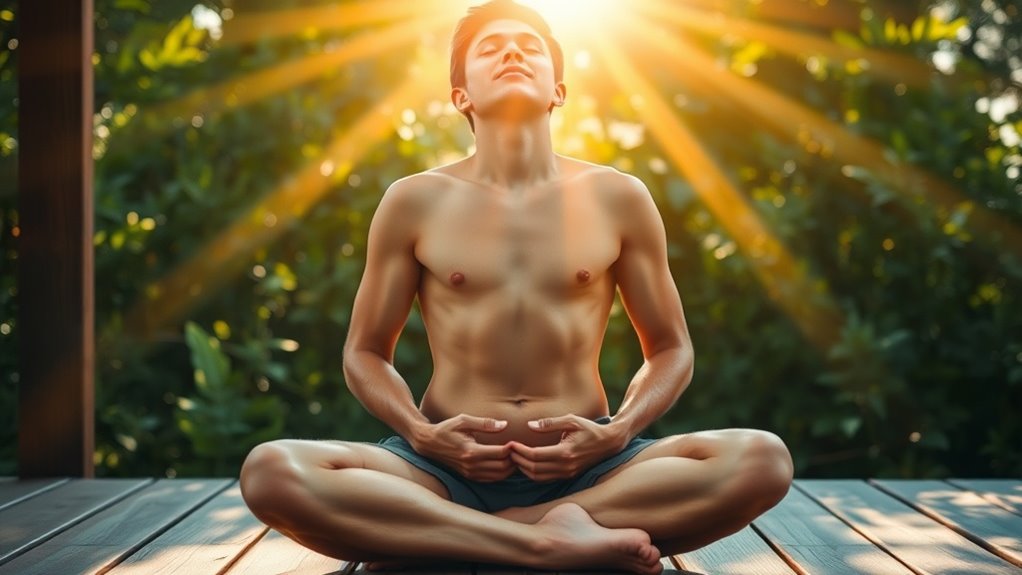
Gentle movements such as shaking or swaying play a crucial role in releasing built-up tension from both your muscles and nervous system. These rhythmic motions mimic natural infant soothing behaviors, encouraging your body to relax and feel safe. By engaging in gentle movement, you activate the vagus nerve, which enhances your parasympathetic nervous system response, fostering deep relaxation. This tension release prevents the accumulation of stress energy that can lead to anxiety or overwhelm. Incorporating regular gentle movement practices can also support emotional regulation and help reset your body’s stress response.
Here are four ways gentle movement promotes calm:
- Releases stored tension from muscles and nerves
- Mimics natural soothing behaviors for safety and comfort
- Activates the vagus nerve to deepen relaxation
- Prevents stress buildup, reducing anxiety and overwhelm
Practices That Shift Your Body From Fight-or-Flight to Calm
When you intentionally slow your breath and incorporate mindful movements, your body can shift out of fight-or-flight into a state of calm. Rhythmic, diaphragmatic breathing activates the parasympathetic nervous system, signaling safety and relaxation. Techniques like the 4-7-8 breath help slow your heart rate and lower cortisol, easing the stress response. Gentle movements such as rocking or shaking release stored tension and reinforce feelings of safety. These practices work together to rewire your body’s automatic reactions to stress, creating a more resilient nervous system. By intentionally combining breath and movement, you give your nervous system clear signals that it’s safe to relax. This shift from sympathetic activation to parasympathetic dominance isn’t just temporary—it can help build lasting resilience, encouraging a calmer, more centered state of being. Over time, these practices become powerful tools for managing stress and cultivating inner peace.
The Vagus Nerve: Connecting Breath, Movement, and Emotional Regulation
Your body’s ability to relax isn’t just about breathing or movement alone—it’s deeply connected to a specific nerve called the vagus nerve. This key part of the parasympathetic nervous system helps your body shift into a state of calm by communicating with your heart, lungs, and digestive system. When you take slow, intentional breaths, you activate the vagus nerve, lowering stress hormones like cortisol. Gentle, rhythmic movements also stimulate this nerve, enhancing your emotional resilience and helping you stay grounded.
Relaxation depends on the vagus nerve, which connects your organs and promotes calm through breath and movement.
Here are four ways the vagus nerve links breath, movement, and emotional regulation:
- It promotes relaxation by balancing the parasympathetic nervous system.
- It connects your brain to essential organs, fostering a sense of calm.
- It increases heart rate variability, indicating better emotional and physiological flexibility.
- It helps regulate emotional responses, supporting overall well-being.
Simple Techniques to Incorporate Breath and Movement Into Daily Life
Incorporating simple breath and movement practices into your day can create moments of calm amid busy routines. Whether it’s taking a few deep breaths or gently rocking while seated, these small actions can make a meaningful difference. By intentionally weaving them into daily life, you nurture a sense of balance and ease that supports your well-being.
Easy Daily Breath Practices
Simple daily breath practices can seamlessly fit into your routine, offering a gentle way to nurture calm amid busy moments. These breathing techniques help your body relax and reset, even during hectic days. To start, try diaphragmatic breathing by placing one hand on your chest and the other on your abdomen, inhaling deeply through your nose to feel the belly rise. You can also practice the 4-7-8 technique: inhale for four seconds, hold for seven, and exhale slowly for eight seconds, calming your nervous system. Incorporate gentle rocking or swaying while seated or standing to promote relaxation. Finally, take quick movement breaks like shaking out your arms and legs for 30 seconds to release tension and restore your sense of calm.
Simple Movement Routines
Integrating gentle movement routines into your daily life can considerably enhance your sense of calm and bodily awareness. Simple movements like rocking or swaying for a minute or two activate your parasympathetic nervous system, fostering relaxation. Shaking out your arms and legs for just 30 seconds helps release built-up tension, resetting your nervous system. During routine activities, incorporate slow, rhythmic movements such as torso twists or shoulder rolls to deepen your breath awareness and reduce stress. Adding seated or standing side stretches combined with deep breathing can create a sense of safety and calm. Remember to schedule brief movement breaks every hour, focusing on gentle, intentional motions. These small, consistent actions support emotional regulation and promote a peaceful, relaxed state throughout your day.
Why Consistency in These Practices Enhances Overall Well-Being
When you practice deep breathing and movement regularly, their effects become more deeply rooted in your nervous system, making relaxation feel more natural and accessible. Consistent practice strengthens neural pathways associated with calm, allowing your body to switch more easily from stress to relaxation. Over time, this leads to long-term reductions in cortisol levels and boosts emotional resilience. Daily routines that incorporate mindful movement and diaphragmatic breathing enhance mental clarity and physical health, fostering a sense of overall well-being. Committing to these practices builds a foundation for lasting calm.
Consider these benefits:
- Reinforces neural pathways for relaxation, making calm responses quicker.
- Deepens your ability to manage stress effectively.
- Improves emotional resilience over time.
- Produces cumulative benefits that elevate your baseline feelings of well-being.
Common Questions
Why Does Breathing Make You Calm?
Breathing makes you calm because it activates your parasympathetic nervous system, helping you relax. When you focus on mindful breathing, it’s a powerful stress reduction technique that signals safety to your brain. This is a key meditation benefit, as it reduces anxiety and promotes emotional balance. By practicing slow, deep breaths, you’re giving yourself a simple yet effective way to find calm amid life’s chaos.
What Is the 555 Rule Breathing?
Did you know that practicing the 555 Rule can reduce your stress levels by activating your parasympathetic nervous system? The 555 Rule breathing involves inhaling through your nose for 5 seconds, holding your breath for 5 seconds, then exhaling slowly for 5 seconds. This simple relaxation technique enhances mindful awareness, influences respiratory physiology, and promotes calmness. Regular practice can improve your emotional regulation and help you stay centered during stressful moments.
Why Is Breathing so Powerful?
Breathing is so powerful because it directly influences your mindful awareness and stress reduction techniques. When you focus on slow, deep breaths, you enhance oxygen flow to your body and brain, helping you feel calmer and more centered. It’s a simple yet effective way to regulate your nervous system, reduce anxiety, and bring a sense of peace. With practice, your breath becomes a tool to gently anchor you in the present moment.
What Is the 444 Rule for Breathing?
Ever wondered how a simple rhythm can bring deep relaxation? The 4-4-4 rule guides your mindful awareness by inhaling for four seconds, holding for four, and exhaling for four. This steady pattern helps reduce stress, calming your nervous system. With regular practice, it fosters deep relaxation and emotional resilience, making it easier to stay centered amidst life’s chaos. Wouldn’t you like to experience that peaceful calm anytime?
Summary
By gently embracing your breath and movement, you hold the keys to calming your mind and body. Think of these practices as a soothing tide, washing away stress and restoring balance within. When you make them a daily habit, you’re planting seeds of peace that bloom over time. Remember, small, consistent steps can transform your inner world, turning chaos into calm—like a garden blossoming quietly beneath the surface.