
Controlling your breath is the foundation of calm energy because it directly activates your body’s relaxation systems. Slow, mindful breathing stimulates the vagus nerve, shifting your nervous system toward calmness and reducing stress. When you practice deep, intentional breaths, you influence key brain regions, lowering anxiety and supporting emotional balance. Consistent breath awareness strengthens this calming ability over time. If you keep exploring, you’ll discover even more ways to harness your breath for lasting well-being.
Key Takeaways
- Breath control activates the vagus nerve, promoting parasympathetic nervous system dominance for relaxation and calm energy.
- Slow, deep breathing reduces cortisol and stress hormones, fostering emotional stability and mental clarity.
- Techniques like diaphragmatic and box breathing influence brain regions, decreasing emotional reactivity and enhancing focus.
- Regular breath regulation improves vagal tone and heart rate variability, supporting resilience and overall well-being.
- Mindful breathing sustains energy and calmness throughout the day by activating the relaxation response during stress.
The Connection Between Breath and Nervous System Balance
Breath plays a powerful role in balancing your nervous system, especially when you understand how it influences your body’s involuntary functions. When you breathe deeply and mindfully, you stimulate the vagus nerve, a key component of the parasympathetic nervous system. This activation promotes relaxation and helps shift your autonomic nervous system toward calmness. By practicing specific breathing techniques, you can increase heart rate variability (HRV), which reflects your body’s resilience to stress and overall balance. Slowing your inhalation and exhalation ratios encourages neural shifts that reduce arousal, fostering a sense of calm. Regular conscious breathing enhances parasympathetic activity, supporting emotional stability and nervous system health. As you become more aware of your breath, you tap into a natural way to regulate your nervous system—from stress response to relaxation—creating a foundation for calm energy and well-being.
How Controlled Breathing Activates the Relaxation Response
When you practice controlled breathing, you can directly activate your body’s relaxation response by stimulating the vagus nerve. This nerve plays a key role in engaging the parasympathetic nervous system, which promotes calmness and reduces stress. By using deep breathing techniques like slow, deliberate inhalations and prolonged exhalations, you help slow your heart rate and lower blood pressure, fostering a sense of tranquility. Techniques such as 4-7-8 breathing lengthen exhalations, effectively counteracting the fight-or-flight response. Regularly practicing these patterns enhances heart rate variability (HRV), a sign of your autonomic resilience and ability to adapt to stress. Consciously altering your breath shifts your nervous system from sympathetic arousal to parasympathetic relaxation, bringing immediate relief from anxiety and mental clutter. This simple yet powerful process strengthens your capacity for calm energy, grounding you in the present moment.
The Science Behind Breath Regulation and Stress Reduction
Understanding how controlled breathing influences your body on a neural level reveals the powerful connection between your breath and stress reduction. When you practice slow, deep breathing, you activate the parasympathetic nervous system, encouraging your body to relax. This activation is closely linked to the vagus nerve, which plays a key role in calming your emotional responses and lowering stress levels. By engaging in breathing techniques such as diaphragmatic or box breathing, you can quickly shift neural activity in brain regions like the amygdala and prefrontal cortex, easing emotional tension. Regular practice enhances vagal tone, which helps decrease blood pressure and heart rate variability, supporting overall cardiovascular health. As you become more mindful of your breath, you’ll notice a natural reduction in cortisol levels—your body’s primary stress hormone—further promoting a state of calm. Breath regulation therefore acts as an essential tool for managing stress and fostering emotional balance.
Key Techniques for Cultivating Calm Energy Through Breath
By practicing deep diaphragmatic breathing and paying attention to rhythm and pacing, you can activate your body’s relaxation response. Focusing on slow, controlled exhalations helps to lower your heart rate and calm your mind. Incorporating these techniques consistently can enhance your energy stability and foster a sense of peaceful resilience.
Deep Diaphragmatic Breathing
Deep diaphragmatic breathing is a simple yet powerful technique to cultivate calm energy through your breath. By expanding your abdomen as you inhale, you maximize lung capacity and oxygen intake, which stimulates the vagus nerve. This activation triggers your parasympathetic nervous system, promoting relaxation and reducing stress. Spending just 5-10 minutes practicing diaphragmatic breathing daily can lower cortisol levels and enhance your overall sense of calm. Slow, controlled belly breaths increase heart rate variability, making you more resilient to stressors. Focus on breathing deeply into your belly, allowing your body to shift from tension to balance. This simple practice helps you create a foundation of calm energy, supporting your mental clarity and emotional stability throughout the day.
Rhythm and Pacing Techniques
To cultivate calm energy through breath, focusing on rhythm and pacing techniques can be highly effective. By using breathing exercises like 4-7-8 or box breathing, you synchronize your inhalation and exhalation, activating your parasympathetic nervous system and encouraging relaxation. Extending your exhalation, such as exhaling twice as long as inhaling, helps lower heart rate and stress levels. Maintaining a steady, slow rhythm of around 5-6 breaths per minute enhances vagal tone, fostering a deep sense of calm. Matching your breath cycle to natural rhythms can regulate emotional responses and prevent hyperarousal. Consistent practice of these pacing techniques can markedly reduce cortisol levels, supporting mental clarity and emotional stability.
Exhalation and Relaxation
Have you noticed how lengthening your exhalation can bring a wave of calm over your body? When you slow and extend your exhalations, you activate your parasympathetic nervous system, encouraging relaxation and easing stress. Longer exhalations stimulate the vagus nerve, which helps lower blood pressure and promotes a sense of tranquility. Techniques like 4-7-8 breathing emphasize this calming pattern. Focus on exhalation to release tension stored in your body, fostering mental clarity and emotional stability. Regular practice enhances your resilience against stress triggers, supporting overall well-being.
- Lengthen your exhalation beyond your inhalation
- Focus on slow, controlled breathing
- Engage your vagus nerve for relaxation
- Use breath techniques like 4-7-8
- Notice the calming effect on blood pressure
Practical Ways to Incorporate Breath Control Into Daily Life
You can start your day with just a few minutes of diaphragmatic or box breathing to set a peaceful tone. During stressful moments, simple techniques like the 4-7-8 method can help you quickly restore calm. Throughout the day, mindful breathing during routine activities and scheduled breaks can support ongoing emotional balance.
Morning Breath Practices
Starting your day with intentional breath practices can set a calm tone for the hours ahead. Incorporate controlled breathing into your morning routines to activate your parasympathetic nervous system and promote stress management. Here are simple ways to do so:
- Practice 4-7-8 breathing for 4 minutes to reduce cortisol and foster calm energy
- Engage in diaphragmatic (belly) breathing for five minutes to boost oxygen flow and mental clarity
- Use box breathing (inhale, hold, exhale, hold for 4 seconds) to regulate your nervous system
- Breathe through your nose during morning activities to enhance parasympathetic activation
- Dedicate five minutes daily to these breathing techniques for long-term resilience and calmness
Consistent morning breath practices can transform your energy and mood for the entire day.
During Stressful Moments
When stress spikes unexpectedly, taking a moment to focus on your breath can create an immediate sense of calm. Slow, deep breathing activates your parasympathetic nervous system, helping reduce stress and nervous tension. Try inhaling for four seconds, then exhaling slowly for six to eight seconds—this simple technique encourages relaxation and steadies your heart rate. Techniques like box breathing (inhaling, holding, exhaling, holding each for four seconds) are particularly effective during high-pressure moments. Incorporating mindful breathing pauses before responding to stressful situations prevents escalation and sharpens clarity. Even a single minute of diaphragmatic breathing can lower cortisol and promote emotional regulation. During stressful moments, conscious breath control becomes a powerful tool to restore calm and maintain balance amid chaos.
Benefits of Mindful Breathing for Mental and Physical Well-Being
Practicing mindful breathing offers profound benefits for both your mental and physical well-being. When you focus on your breath, you activate the parasympathetic nervous system, helping you relax and lower stress hormones like cortisol by up to 23%. This calm state supports emotional regulation and mental clarity, making it easier to handle daily challenges. Additionally, slow, deep breathing enhances blood flow, which benefits your physical health by lowering blood pressure and strengthening your immune system. Regular practice can also increase heart rate variability (HRV), boosting your resilience to stress and anxiety.
To experience these benefits, consider incorporating mindful breathing into your routine. Benefits include:
- Stress reduction and relaxation
- Improved emotional regulation
- Enhanced mental clarity
- Lower blood pressure
- Strengthened immune function
Overcoming Challenges in Mastering Breath Techniques
While mindful breathing can bring many benefits, mastering these techniques often takes patience and persistence. Initial difficulty is common, especially when trying to maintain proper inhale-exhale ratios, which can lead to frustration. Remember, consistent practice over weeks or months is essential to see progress. Stress and anxiety may also interfere, making it harder to focus on your breathing exercises. To overcome these challenges, seek proper guidance to ensure you’re practicing safely and effectively. It’s important to approach breathing practices with a gradual progression, starting with simple exercises and slowly advancing as you build confidence. If you have physical limitations or health conditions like asthma, modify techniques as needed and consult a healthcare professional. With patience, mindful awareness, and steady effort, you’ll find that these challenges diminish over time, paving the way for deeper mastery and the calm energy you seek.
Long-Term Advantages of Consistent Breath Practice
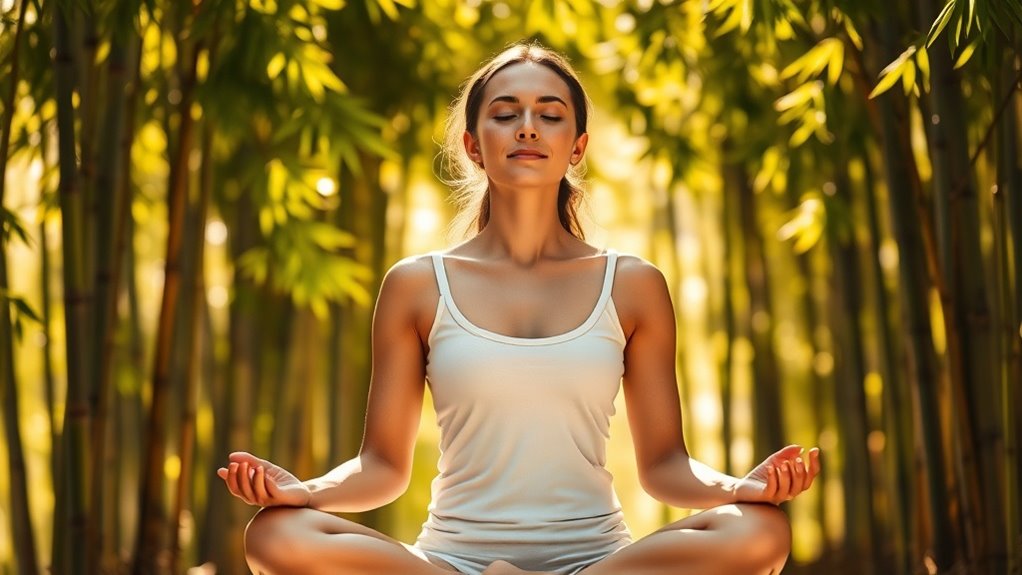
Consistent breath practice offers profound long-term benefits that can considerably enhance your overall well-being. Over time, it increases vagal tone by up to 30%, fostering a deeper sense of relaxation and resilience. Regular exercises help lower cortisol levels by about 23%, supporting sustained stress management. You’ll notice improvements in heart rate variability (HRV), which boosts emotional regulation and cardiovascular health. Daily breathwork can also lead to lasting reductions in blood pressure, sometimes by 5-7 mmHg, especially in hypertensive individuals. Additionally, sustained practice strengthens neuroplasticity, reinforcing neural pathways linked to calmness, focus, and emotional stability. By committing to this routine, you nurture a calmer nervous system and build resilience against daily stressors. As you deepen your practice, you’ll cultivate:
- Enhanced vagal tone
- Better stress management
- Improved heart rate variability
- Lower blood pressure
- Increased neuroplasticity
Future Directions in Breath-Based Energy and Stress Management
Have you ever wondered how technology is shaping the future of breath-based energy and stress management? Advances in breath analysis enable early disease detection and personalized breathing interventions, offering tailored approaches to well-being. Neural feedback systems using EEG and HRV data guide you to optimize your breathing for both mental and physical health, strengthening stress resilience. Innovations like smartphone apps and wearable devices now provide real-time feedback, helping you regulate your nervous system through precise breath control. Future research focuses on developing personalized protocols and breath biomarkers that adapt to your unique physiology, enhancing overall resilience and calm energy. As technology evolves, you’ll have more tools to deepen your practice and respond effortlessly to stress. Here’s a glimpse into this promising future:
| Technology | Application | Benefit |
|---|---|---|
| Breath biomarkers | Personalized health insights | Improved stress management |
| Neural feedback | Real-time neural regulation | Increased resilience |
| Wearable devices | Continuous real-time feedback | Better energy balance |
| Smartphone apps | Guided breath interventions | Accessible, everyday use |
| Adaptive protocols | Customized breathing strategies | Enhanced overall well-being |
Common Questions
Why Is Breath Control so Important?
Breath control is vital because it helps you cultivate mindful awareness, allowing you to stay present and centered. By practicing slow, deep breathing, you can reduce stress, improve emotional regulation, and support your physical health. It also enhances mental clarity and sleep quality, making it easier to handle daily challenges calmly. When you master your breath, you create a foundation for balanced energy and overall well-being.
What System Does Controlled Breathing Activate to Create Calmness?
Controlled breathing activates your vagus nerve, promoting parasympathetic activation and supporting autonomic regulation. This helps counteract the stress response, calming your nervous system. By engaging neural pathways associated with relaxation, your body achieves physiological balance, reducing heart rate and blood pressure. Focusing on your breath creates a mindful pause, allowing you to consciously influence your body’s response and cultivate a calm, centered energy.
Why Is Breathwork so Powerful?
Breathwork’s true strength lies in gently guiding your mindful awareness, opening deep emotional regulation and fostering physical relaxation. It’s a subtle art that shifts your energy balance, reducing stress and sharpening mental clarity. By consciously controlling your breath, you create a calming rhythm that nurtures mental and emotional resilience, making it a powerful tool for transforming chaos into calm, and restoring harmony within your mind and body.
Does Holding Your Breath Reduce Anxiety?
Yes, holding your breath can help reduce anxiety through breath holding techniques that activate your parasympathetic nervous system. By practicing mindful respiration and breath retention benefits, you can slow your stress response and promote calm. Short periods of oxygen deprivation during breath retention help lower stress levels, but always practice gently and within safe limits. These techniques can make a noticeable difference in managing anxiety and cultivating a sense of relaxed energy.
Summary
By embracing breath control, you create a steady foundation for calm energy amid life’s chaos. With each mindful inhale and exhale, you nurture your nervous system and cultivate inner peace. Isn’t it reassuring to know that simple breaths can transform your day? Keep practicing gently, and over time, you’ll notice a more balanced, relaxed you—ready to face whatever comes with calm confidence. Your breath truly is your anchor—trust it to guide you.