
To restore emotional balance without caffeine, focus on establishing consistent sleep routines, getting morning sunlight, and creating a calming environment. Incorporate mindfulness, deep breathing, and natural scents like citrus or eucalyptus to reduce stress. Engage in regular physical activity and choose nutrient-rich foods to support mood stability. Staying well-hydrated and using natural energizers can boost alertness without stimulants. Embracing these holistic strategies can help you achieve lasting emotional resilience—continue to explore how these approaches work.
Key Takeaways
- Maintain consistent sleep schedules and morning sunlight exposure to regulate circadian rhythms and improve mood naturally.
- Practice mindfulness, deep breathing, and aromatherapy with essential oils to reduce stress without stimulants.
- Engage in regular physical activity and natural light to boost endorphins and stabilize emotional energy.
- Consume nutrient-rich foods, stay hydrated, and include probiotics to support brain health and emotional balance.
- Use natural supplements like adaptogens and essential oils to enhance mood and resilience without caffeine reliance.
Prioritize Consistent Sleep Patterns and Quality Rest
Achieving emotional stability without caffeine often starts with prioritizing consistent sleep patterns, as irregular sleep can disrupt your mood and energy levels. When you go to bed and wake up at the same times each day, you help regulate your circadian rhythm, which improves sleep quality. A key factor is creating a sleep environment that’s cool, dark, and quiet, reducing disruptions that can lead to emotional instability. Establishing a relaxing bedtime routine—such as reading or gentle stretching—signals to your body that it’s time to wind down, promoting deeper, more restorative sleep. Avoiding screens and blue light at least an hour before bed prevents melatonin suppression, making it easier to fall asleep and stay asleep. Prioritizing consistent rest helps you minimize sleep debt, stabilizing your mood and emotional resilience. When your sleep quality improves, you’ll find it easier to manage stress naturally, without relying on caffeine.
Incorporate Mindfulness and Stress-Reduction Techniques
Incorporating mindfulness and stress-reduction techniques can markedly enhance your emotional well-being without relying on caffeine. Simple practices like deep breathing and meditation have been proven to lower cortisol levels and boost emotional resilience. By making these techniques a routine, you strengthen your ability to manage stress and maintain a balanced mood.
Practice Deep Breathing
Since stress can considerably impact your emotional well-being, practicing deep breathing techniques offers a simple yet effective way to promote calmness. Deep breathing activates your parasympathetic nervous system, helping to reduce stress hormones like cortisol and foster emotional balance. Engaging in diaphragmatic or paced breathing for just 5-10 minutes can notably lower anxiety and support mood stability. Mindful breathing also increases heart rate variability, enhancing your emotional regulation and resilience. Regular deep breathing exercises serve as a natural tool to manage emotional triggers, decreasing reliance on caffeine for mood boosts. By incorporating these practices into your daily routine, you cultivate relaxation and mental clarity, empowering you to maintain a steadier emotional state even amid stressful moments.
Engage in Mindfulness Meditation
Engaging in mindfulness meditation can be a powerful way to manage stress and restore emotional balance without relying on caffeine. By practicing mindfulness meditation regularly, you can lower cortisol levels by up to 30%, which helps reduce stress-related fatigue and promotes a calmer, more centered state. Techniques like deep breathing and focused attention activate the parasympathetic nervous system, encouraging relaxation and resilience against daily stressors. Additionally, mindfulness increases activity in the prefrontal cortex, enhancing emotional regulation and stability. Just 10 minutes a day can markedly lower anxiety symptoms and improve your mood, supporting sustained emotional balance. Incorporating these stress reduction practices helps you build resilience and regain control over your emotional well-being naturally.
Engage in Regular Physical Movement for Mental Clarity

Regular physical movement, such as brisk walking or stretching, can substantially enhance mental clarity by increasing circulation and delivering more oxygen to your brain. When you move, your body releases endorphins and neurotransmitters like serotonin and dopamine, which are essential for mood improvement and emotional balance. Even short bouts of activity, around 10 minutes, help reduce stress hormones like cortisol, fostering a calmer, more centered emotional state. Consistent exercise also supports better sleep quality, which is crucial for emotional regulation and resilience. Incorporating movement into your daily routine is a natural way to restore emotional balance without caffeine or stimulants.
- Boosts mental clarity through increased oxygen flow
- Elevates mood and emotional stability naturally
- Reduces stress hormones quickly and effectively
- Enhances sleep quality for better emotional health
- Provides an accessible, non-stimulant reset for your day
Utilize Natural Light to Regulate Your Circadian Rhythm
Getting natural light in the morning helps reset your internal clock, boosting alertness and improving sleep quality. Limiting screen time in the evening further supports this process by reducing artificial light exposure that can disrupt your rhythms. By prioritizing daytime sunlight and minimizing evening brightness, you can enhance your emotional stability naturally.
Morning Light Exposure
Since your body’s internal clock relies heavily on natural cues, exposing yourself to morning light is one of the most effective ways to regulate your circadian rhythm. Just 20-30 minutes of morning sunlight can naturally boost cortisol levels, increasing alertness and providing sustainable energy without caffeine. Consistent morning light exposure strengthens your internal clock, improving sleep quality and emotional balance. It also resets your circadian rhythm, making it easier to wake up refreshed. Additionally, natural light promotes serotonin production, which supports emotional stability and reduces symptoms of depression and anxiety. Incorporating this simple habit can profoundly impact your overall well-being.
- Enhances alertness and focus during the day
- Regulates sleep and wake cycles for better rest
- Boosts serotonin for emotional resilience
- Supports natural energy without stimulants
- Promotes mental clarity and mood stability
Limit Evening Screen Time
Reducing your evening screen time is essential for supporting your natural sleep-wake cycle, especially as blue light emitted from devices can considerably disrupt melatonin production. Excessive exposure to screens in the evening suppresses melatonin, delaying sleep onset and impairing sleep quality. Limiting evening screen time allows your body to produce melatonin naturally, helping you fall asleep faster and wake feeling more refreshed. Instead, aim to utilize natural light during the day to reinforce your circadian rhythm and encourage healthier hormone regulation. Dimming lights in the evening and engaging in relaxing activities without screens can further support this process. Incorporating outdoor activities or light therapy lamps during darker hours can also help regulate your circadian rhythm, ultimately promoting restful sleep and emotional balance without reliance on caffeine.
Practice Deep Breathing and Relaxation Exercises
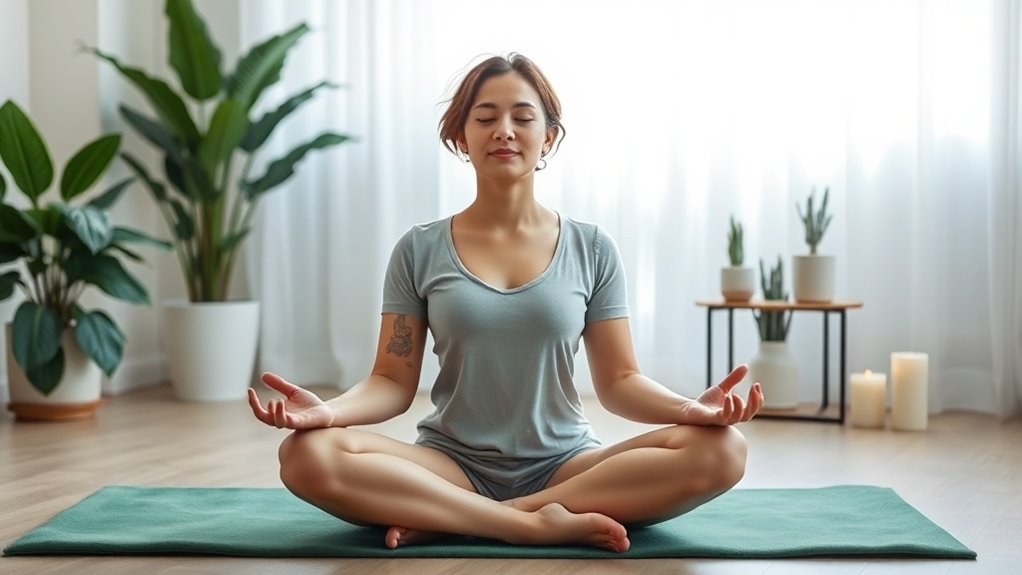
Practicing deep breathing and relaxation exercises can be a powerful way to restore emotional balance without relying on caffeine. These techniques activate the parasympathetic nervous system, promoting relaxation and emotional stability. Slow, intentional breaths help reduce cortisol levels by up to 20%, supporting stress reduction and mood regulation. Regular relaxation exercises can also lower heart rate variability, further decreasing stress and enhancing emotional resilience. Deep breathing improves oxygen flow to the brain, which bolsters cognitive clarity and emotional control during stressful moments. Incorporating mindfulness-based breathing techniques daily can markedly decrease symptoms of anxiety and depression, fostering a more balanced emotional state.
- Enhance your emotional balance with deliberate deep breathing
- Use relaxation exercises to cut cortisol and stress
- Boost oxygen flow for mental clarity and resilience
- Practice mindfulness to improve mood stability
- Reduce anxiety and depression through consistent breathing techniques
Support Mood and Energy With Nutrient-Dense Foods
Fostering emotional stability and maintaining energy levels go beyond relaxation techniques; what you eat plays a significant role in supporting your mood. Consuming nutrient-dense foods like leafy greens, berries, and beans provides essential vitamins, including B vitamins, and minerals such as magnesium, which are vital for mood stability and mental clarity. These foods are rich in antioxidants that combat oxidative stress, promoting overall brain health. Incorporating healthy fats from avocados, nuts, and seeds enhances brain function and helps regulate neurotransmitters responsible for emotional balance. Gut health also influences mood, so including fermented foods like sauerkraut and kimchi supports a healthy microbiome through probiotics. Eating small, balanced meals every three to four hours prevents blood sugar dips that lead to mood swings and fatigue. Prioritizing these nutrient-dense foods helps sustain your emotional resilience naturally, without relying on caffeine.
Maintain Hydration With Water and Herbal Beverages
Since hydration is essential to maintaining both physical and emotional well-being, ensuring you drink enough water throughout the day is crucial. Proper hydration supports mental clarity, stabilizes energy levels, and prevents fatigue caused by mild dehydration. Incorporating herbal beverages like chamomile, peppermint, or ginger tea offers hydration plus calming or invigorating effects without caffeine. Drinking electrolyte-rich options such as coconut water helps sustain cellular hydration and promotes steady energy. Replacing sugary or artificially flavored drinks with water or herbal infusions prevents energy crashes linked to blood sugar fluctuations. Consistent hydration—especially in the morning and before meals—enhances digestion and supports emotional balance.
- Boost hydration support with herbal teas and water
- Maintain electrolyte balance with coconut water
- Avoid sugar spikes by choosing natural drinks
- Prioritize morning hydration for mental clarity
- Stay consistent to sustain energy levels naturally
Use Aromatherapy and Energizing Scents to Boost Alertness
Aromatherapy and energizing scents offer a natural, non-invasive way to boost alertness when you’re feeling sluggish. By inhaling essential oils like peppermint, eucalyptus, or rosemary, you activate your olfactory nerves, triggering neural pathways that enhance alertness and mental clarity. Diffusing these energizing scents in your environment can markedly improve focus and reduce fatigue without the need for caffeine. Citrus oils such as orange or lemon are particularly effective, elevating mood and promoting emotional stability. Applying essential oils topically or adding a few drops to a diffuser provides quick, convenient energy boosts, supporting your natural energy levels throughout the day. This approach leverages the power of aromatherapy to stimulate your nervous system safely and effectively, helping you regain emotional balance and mental sharpness. Using energizing scents not only revitalizes your mind but also fosters a sense of calm and focus, making it a valuable tool for holistic well-being.
Explore Natural Supplements to Enhance Emotional Balance
Natural supplements can be a powerful addition to your routine for enhancing emotional balance, especially when you’re seeking alternatives to stimulants like caffeine. Adaptogenic herbs such as Ashwagandha and Rhodiola help regulate cortisol levels and reduce stress, supporting emotional stability naturally. B vitamins and magnesium are essential for neurotransmitter function, boosting mood and resilience during challenging times. Omega-3 fatty acids, found in fish oil, have been shown to decrease anxiety and depression symptoms, fostering emotional well-being. L-Theanine, present in green tea, promotes relaxation without drowsiness, making it easier to manage emotional stress. Herbal supplements like Holy Basil (Tulsi) and Passionflower offer calming effects that contribute to emotional equilibrium. Incorporating these natural supplements into your routine can help you achieve a balanced mood and improve your overall mental health without relying on caffeine.
- Adaptogenic herbs for stress regulation
- B vitamins and magnesium for neurotransmitter support
- Omega-3s to reduce anxiety and depression
- L-Theanine for relaxation without drowsiness
- Calming herbal supplements like Holy Basil and Passionflower
Common Questions
What Do ADHD People Use Instead of Caffeine?
If you’re looking for natural alternatives to caffeine, consider herbal remedies like ginseng, rhodiola, and ashwagandha, which boost energy without jitters. Incorporate energy-boosting foods and stay well-hydrated, while practicing mindfulness techniques and regular physical activity to improve focus. Prioritize sleep optimization and hydration strategies, as these are essential for maintaining emotional balance and mental clarity in ADHD.
How to Beat the Afternoon Slump Without Caffeine?
Did you know that 80% of people experience an afternoon slump? To beat it naturally, focus on natural energy sources like balanced diet and hydration tips. Incorporate movement breaks and power naps to boost alertness. Practice mindful breathing to reduce stress, and stay hydrated. These strategies support your circadian rhythm and improve focus without caffeine, helping you maintain emotional balance and productivity through the afternoon.
What Is the 2 Hour Coffee Rule?
The 2 hour coffee rule suggests you should wait at least two hours after waking before having your first coffee. This coffee timing helps prevent increasing your caffeine tolerance and supports your natural cortisol peak, boosting mental clarity and energy. During this time, consider beverage alternatives like herbal teas or hydration strategies to manage energy dips. Adopting this morning routine promotes better sleep, reduces dependence, and sustains alertness throughout the day.
Will I Be Happier Without Caffeine?
Yes, you’ll likely be happier without caffeine. Imagine your mood as a calm lake—free from caffeine’s adrenaline ripples, your emotional stability improves. Natural energy sources like sleep, nutrition, and exercise boost mental clarity and hormone regulation, reducing stress. Over time, you’ll notice better sleep and consistent mood, leading to genuine happiness. Many find that removing caffeine cultivates a steadier, more resilient mental state, enhancing overall well-being.
Summary
Just like a well-tuned orchestra, restoring your emotional balance without caffeine requires harmony across many elements—sleep, movement, nutrition, and mindfulness. Imagine your mood as a delicate instrument; with consistent care and natural methods, you’ll find it resonates beautifully, steady and strong. Research shows that holistic approaches can markedly improve energy and emotional well-being. By embracing these habits, you’re not just avoiding caffeine—you’re nurturing a resilient, balanced you, ready to face each day with clarity and calm.