
Engaging regularly with nature through habits like outdoor walks, mindful observation, or gardening helps build inner calm gradually. These practices lower cortisol levels, reduce stress, and promote emotional resilience by activating your parasympathetic nervous system. Over time, routines such as journaling or forest bathing deepen your connection and awareness of natural elements, fostering lasting mental clarity. Keep exploring these habits, and you’ll discover how sustained contact with nature nurtures a resilient, peaceful mind.
Key Takeaways
- Regular outdoor activity reduces cortisol levels, decreasing stress and promoting emotional stability over time.
- Mindful engagement with nature enhances present-moment awareness, fostering relaxation and mental clarity.
- Journaling about natural experiences deepens connection, supporting emotional regulation and resilience.
- Consistent gardening and outdoor routines cultivate purpose, patience, and inner calm.
- Sustained exposure to natural soundscapes and sensory immersion activates relaxation responses, strengthening emotional resilience.
Incorporating Daily Outdoor Walks for Mental Clarity
Incorporating daily outdoor walks into your routine can be a simple yet effective way to boost mental clarity and reduce stress. Spending time outdoors immerses you in nature, which has been shown to lower cortisol levels—a key factor in stress reduction. Just 20 minutes of outdoor walking each day can improve mood and enhance mental focus, supporting better cognitive function. These outdoor walks promote mindfulness, helping you disconnect from mental clutter and fostering emotional resilience over time. Regular exposure to natural environments encourages a sense of calm and stability, which benefits your mental health in the long run. Establishing a consistent daily routine of outdoor activity not only revitalizes your mind but also contributes to sustained improvements in mood, memory, and problem-solving skills. By making outdoor walks a habitual part of your day, you harness the calming power of nature to nurture your mental well-being and achieve greater mental clarity.
Engaging in Mindful Observation of Natural Elements
Engaging in mindful observation of natural elements allows you to anchor your attention in the present moment, which can considerably reduce stress and promote emotional stability. By focusing on natural sights, sounds, and textures, you activate the parasympathetic nervous system, fostering relaxation. This practice supports emotional resilience and cultivates inner peace over time. Scientific research indicates that consistent mindful observation enhances mood, reduces anxiety, and improves cognitive function. To incorporate this into your routine:
Mindful observation of nature reduces stress, enhances mood, and fosters emotional resilience over time.
- Focus intently on natural sights like leaves or water, noticing details without judgment.
- Listen actively to natural sounds, such as birdsong or flowing water, to deepen presence.
- Feel textures like tree bark or grass, grounding yourself physically in the moment.
- Take brief pauses during daily activities to observe natural elements, boosting mental clarity.
This simple yet effective habit nurtures long-term mental and emotional health, helping you build a calm, centered mind.
Cultivating a Gardening Routine to Foster Emotional Well-Being
Establishing a regular gardening routine can markedly enhance your emotional resilience by fostering mindful connections with nature and promoting gentle physical activity. Research shows that even 20 minutes of daily gardening reduces anxiety and boosts mood through increased serotonin production. Over time, this consistent engagement provides a sense of purpose and calm, strengthening your overall emotional well-being.
Nurturing Mindful Connections
Developing a regular gardening routine can serve as a powerful way to nurture emotional well-being by fostering mindfulness and physical activity. Engaging with soil and plants helps deepen your connection with nature, promoting emotional resilience and stress reduction. Consider these benefits:
- Practicing mindfulness during gardening enhances present-moment awareness, supporting mental well-being.
- Regular contact with nature through gardening boosts serotonin, fostering feelings of happiness and emotional stability.
- Spending just 20 minutes daily can lower cortisol, reducing stress and cultivating inner calm.
- Cultivating patience and presence in gardening reinforces emotional resilience and creates a sense of achievement.
This routine nurtures emotional stability over time, providing a therapeutic outlet that enhances your inner calm and overall mental well-being.
Growing Emotional Resilience
Cultivating a regular gardening routine can considerably strengthen your emotional resilience by fostering mindfulness, patience, and a sense of purpose. Engaging with plants and soil boosts emotional regulation and stress reduction, supporting mental toughness and inner calm. Gardening activates the prefrontal cortex, helping you better manage emotions and respond adaptively to challenges. Consistent care for your garden nurtures patience, persistence, and adaptability—key components of emotional resilience. Additionally, the connection with nature fosters a sense of belonging and purpose, reinforcing your overall emotional well-being. Over time, these practices build a resilient mindset, equipping you to face life’s ups and downs with greater calm and stability. Gardening therefore becomes a powerful tool for cultivating lasting inner strength and emotional health.
Practicing Forest Bathing to Deepen Your Connection With Nature
Practicing forest bathing with mindful immersion techniques allows you to fully engage your senses and foster a deeper connection with nature. Scientific evidence suggests that enhancing sensory awareness not only promotes relaxation but also improves mental clarity and emotional resilience. By intentionally focusing on your surroundings, you can cultivate a more profound sense of calm and presence in your daily life.
Mindful Immersion Techniques
Engaging all five senses during forest bathing enhances mindfulness and deepens your connection with nature, making the experience more restorative. Mindful immersion involves deliberate sensory observation, which cultivates present-moment awareness and guards against sensory overload. To deepen this practice:
- Focus on breath awareness, noticing each inhale and exhale to anchor your mind.
- Explore natural textures like bark or leaves, grounding you in the environment.
- Pay attention to sounds such as bird calls or rustling leaves, enhancing sensory engagement.
- Observe visual details, from greenery to sky, fostering a sense of awe and interconnectedness.
Using mindfulness techniques like these helps build emotional resilience and promotes a sustained sense of inner calm, supporting long-term mental clarity through consistent practice.
Enhancing Sensory Awareness
By immersing yourself fully in the natural environment through forest bathing, you can considerably deepen your sensory awareness and strengthen your connection with nature. Engaging your natural senses—sight, sound, touch, smell, and even taste—enhances mindfulness and fosters a profound sense of presence. Scientific evidence indicates that this sensory immersion during forest bathing can reduce cortisol levels by up to 20%, supporting stress reduction and relaxation. Regular practice encourages you to slow down, focus on immediate sensations, and cultivate inner calm over time. Enhancing sensory awareness not only deepens your bond with the environment but also improves mood, immune function, and emotional stability. In this way, mindful engagement with nature becomes a powerful tool for building lasting inner calm.
Using Nature Sounds to Enhance Meditation and Relaxation
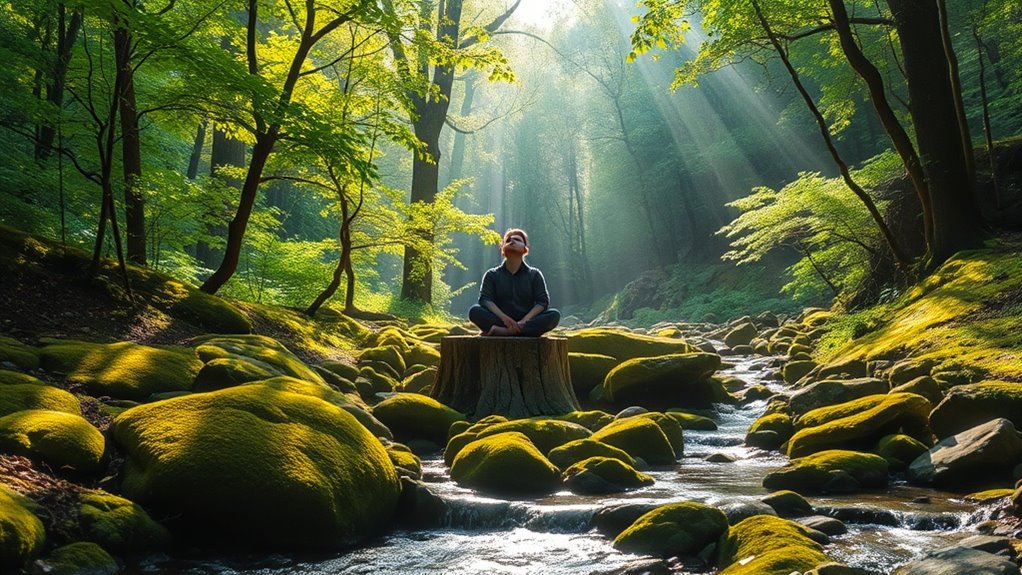
Incorporating nature sounds into meditation and relaxation routines can considerably enhance their effectiveness by leveraging the brain’s natural response to environmental cues. Natural soundscapes—such as flowing water, bird calls, or rustling leaves—can activate the parasympathetic nervous system, promoting relaxation and mental calm. This not only deepens mindfulness but also supports stress reduction and emotional resilience. Consider these benefits:
- They reduce stress hormones like cortisol by up to 20%, fostering a sense of ease.
- Recorded nature sounds improve focus and clarity, making meditation more effective.
- When outdoor access is limited, natural soundscapes offer an accessible tool for ongoing relaxation.
- Regularly engaging with these sounds can cultivate long-term emotional resilience and mental calm. Incorporating natural sounds into your routine taps into our innate connection with the environment, strengthening inner peace over time and enriching your overall well-being.
Creating a Nature Journal to Reflect and Recenter
Creating a nature journal offers a mindful way to deepen your connection with the environment while fostering emotional clarity. By regularly observing and recording your surroundings, you engage in a form of mindfulness that encourages present-moment awareness. Incorporating sensory details—such as sights, sounds, and textures—enhances your observational skills and grounds you in the moment. Reflection on these experiences can promote gratitude, shifting focus from stressors to moments of beauty and calm. Studies show that expressive writing about nature reduces cortisol levels and boosts mental well-being, supporting long-term inner calm. Using your journal to note emotions and thoughts alongside natural observations helps clarify feelings and promotes emotional balance. Over time, this practice cultivates a routine that nurtures mental resilience, reduces stress, and deepens your sense of connection with the natural world, ultimately fostering a sustained sense of inner calm and well-being.
Participating in Outdoor Physical Activities for Stress Reduction
Engaging in outdoor physical activities such as walking, biking, or hiking for at least 20-30 minutes each day can be a highly effective way to reduce stress and enhance overall well-being. These activities combine outdoor movement with nature exposure, amplifying mental health benefits. Consider these points:
- Regular outdoor exercise helps lower cortisol levels, easing stress and promoting relaxation.
- Activities like trail running or kayaking boost physical health while fostering a deeper connection with nature, improving mood.
- Consistent outdoor movement lowers blood pressure and heart rate, supporting cardiovascular wellness and resilience to stress.
- Participating in outdoor sports or group activities not only enhances physical fitness but also strengthens social bonds, contributing to emotional stability.
Building a Consistent Routine of Nature Appreciation and Reflection
Building a consistent routine of nature appreciation and reflection can considerably deepen the mental health benefits you’ve already experienced through outdoor activities. Establishing daily habits, like morning walks or outdoor journaling, reinforces your connection to natural spaces and fosters regular outdoor mindfulness. Consistent practice in these routines promotes stress reduction and enhances emotional resilience over time. Designing a designated outdoor space or setting a specific schedule encourages commitment, making daily nature engagement sustainable and more meaningful. Scientific evidence suggests that spending at least 120 minutes weekly in nature notably improves well-being, and integrating sensory observation during outdoor time amplifies these calming effects. By cultivating this routine, you develop a deeper sense of inner calm that accumulates with ongoing practice, helping you better manage stress and navigate emotional challenges. Ultimately, these nature routines serve as a foundation for building a resilient, balanced mind through sustained reflection and mindful engagement with the natural world.
Common Questions
How Does Nature Make You Calm?
You find calm in nature through forest therapy and outdoor meditation, which activate calming sounds like bird songs and rustling leaves. Green spaces and natural scents reduce stress hormones, while wildlife observation and seasonal changes engage your senses, promoting mindfulness. Engaging in outdoor activities helps restore mental clarity, lowering blood pressure and heart rate. Over time, these experiences recalibrate your stress response, fostering inner calm and resilience amid life’s demands.
What Is the 20 5 3 Rule for Nature?
The 20-5-3 rule encourages you to spend at least 20 minutes in nature, engaging in activities like forest bathing, trail walking, or bird watching to deepen sensory awareness. Within just five minutes, cortisol levels can start to decrease, promoting calm. Consistently practicing outdoor meditation, wildlife observation, or garden therapy three times a week helps build sustainable habits, fostering inner calm and mental resilience over time.
How Does Nature Teach the Lesson of Peaceful Existence?
Imagine observing a forest’s seasonal changes, where flora diversity and animal interactions exemplify ecological balance and adaptability. This teaches you that weather patterns and wildlife behavior follow natural rhythms, fostering patience and resilience. Engaging with natural sounds and witnessing plant growth cultivate mindfulness, helping you accept life’s uncertainties. Over time, these lessons from nature promote a peaceful existence, reminding you to embrace change and find harmony in life’s ebb and flow.
How Does Nature Help Mindfulness?
Nature helps your mindfulness by enhancing ecological awareness through sensory engagement with natural rhythms and green spaces. Outdoor meditation and wilderness therapy foster habitat connection, reducing mental clutter and promoting environmental mindfulness. Spending time outdoors encourages you to disconnect from digital distractions, deepening present-moment awareness. This evidence-based approach supports emotional regulation and stress reduction, allowing you to develop a calm, centered mind over time as you attune to the natural world’s subtle cues.
Summary
Embracing nature-based habits can profoundly boost your inner calm over time. Studies show that just 20 minutes of outdoor activity daily can reduce stress hormones by up to 50%. By integrating simple practices like mindful observation or gardening into your routine, you create a resilient mental space. These evidence-based approaches foster emotional well-being, helping you build a calming connection with nature that supports long-term mental health and resilience.