
When you focus on slow, deep nasal breathing, your body activates its relaxation response, easing tension instantly. This practice lowers stress hormones, reduces your heart rate, and calms your nervous system. Techniques like diaphragmatic or box breathing can help you feel more centered quickly. Consistently practicing mindful breathing boosts your ability to manage stress in real-time. Keep exploring how combining these methods with other relaxation tools can deepen your calmness even further.
Key Takeaways
- Slow, deep nasal breathing activates the parasympathetic nervous system, quickly calming the body’s stress response.
- Mindful breathing decreases heart rate and blood pressure, promoting immediate physical relaxation.
- Controlled breath reduces stress hormones like cortisol and adrenaline, easing mental tension instantly.
- Techniques like box breathing or 4-7-8 help focus the mind and interrupt stress cycles rapidly.
- Regular practice enhances your ability to switch into relaxation mode quickly during stressful moments.
Understanding the Relaxation Response of Breath Control
Understanding how breath control triggers the relaxation response can be a powerful step toward managing stress. When you practice breathing techniques like slow, deep nasal breathing, you activate your parasympathetic nervous system, which signals your body to relax. This activation reduces levels of stress hormones such as cortisol and adrenaline, helping you feel calmer. As you breathe deliberately and mindfully, your heart rate and blood pressure decrease, creating physiological changes that promote a sense of peace. Proper breath control also balances oxygen and carbon dioxide levels in your body, supporting mental clarity and emotional calmness. The more consistently you practice these techniques, the better your body becomes at shifting into relaxation quickly when stress arises. By understanding this connection, you can harness the power of mindful breathing to counteract stress effectively and foster a more relaxed, centered state of mind.
The Science Behind Deep, Slow Breathing and Stress Reduction
Deep, slow breathing works by activating your parasympathetic nervous system, which is responsible for calming your body after stress. When you practice deep breathing, it signals your body to relax, lowering stress hormones like cortisol. This process helps reduce your heart rate and blood pressure, creating a feeling of calm and relaxation. Research shows that controlled breathing increases calming neurotransmitters such as GABA, which help soothe your mind. Neuroimaging studies reveal that mindful breathing decreases activity in the amygdala, the brain’s stress response center, further promoting relaxation. Clinical trials also demonstrate that consistent practice of deep, slow breathing enhances emotional regulation and reduces anxiety levels. By understanding the science behind deep breathing, you can see how this simple yet powerful technique fosters stress reduction and supports your overall well-being. It’s a natural, effective way to ease tension and promote serenity in your daily life.
Key Techniques for Mindful Breathing Practice
Practicing mindful breathing involves using simple, effective techniques that can quickly help you feel more relaxed and centered. Diaphragmatic breathing is a great starting point—place one hand on your chest and the other on your abdomen, focusing on slow, deep breaths through your nose. This encourages your diaphragm to engage fully, calming your nervous system. Another powerful method is box breathing, where you inhale, hold, exhale, and hold again for four counts each. This technique enhances focus and promotes a sense of calm. The 4-7-8 technique, inhaling for 4 seconds, holding for 7, then exhaling for 8 seconds, also promotes relaxation. Incorporating these mindful breathing techniques regularly can markedly reduce stress, lower blood pressure, and boost emotional well-being. With consistent practice, you’ll find it easier to manage tension and stay centered throughout your day.
How to Incorporate Breath Awareness Into Daily Life
Once you’ve learned some mindful breathing techniques, bringing that awareness into your daily routine can make a big difference in managing stress and staying present. You can practice breathing for 5-10 minutes each day, simply focusing on the sensation of your breath without trying to control it or judge it. During routine activities like walking, waiting in line, or commuting, pause briefly to tune into your breath. Use simple techniques, such as counting inhalations and exhalations—like “In 1, Out 2″—to deepen your focus and build consistency. Setting reminders or alarms can prompt you to pause and practice during stressful moments, helping you regain calm. Creating a quiet space at home for longer breath awareness sessions can reinforce your habit. Incorporating these small, mindful pauses into your daily life helps reduce stress and sharpens focus, making it easier to stay centered throughout your day.
Benefits of Mindful Breathing for Physical and Emotional Well-Being
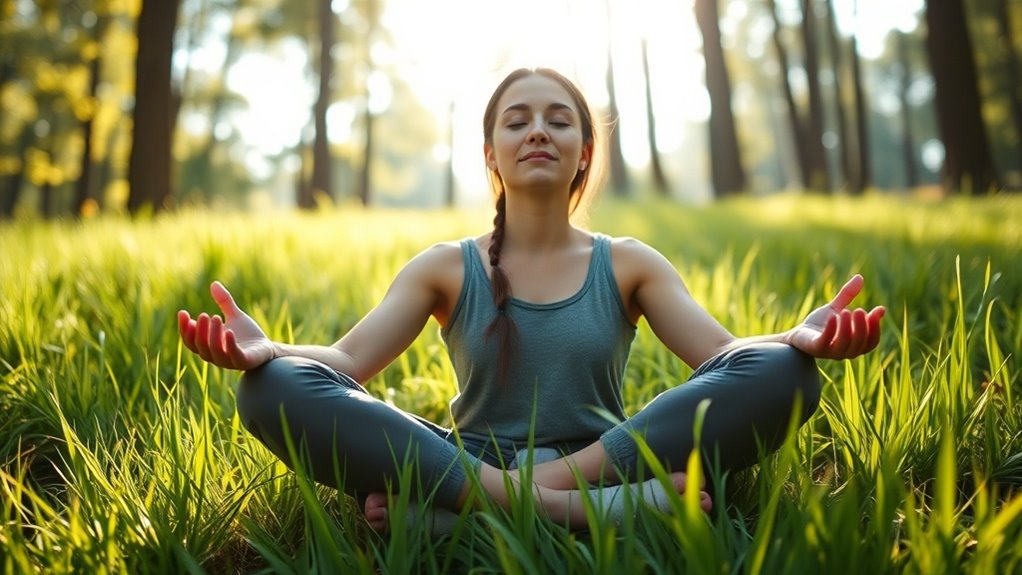
When you engage in mindful breathing, you activate your body’s relaxation response, which can substantially benefit your physical and emotional health. This practice stimulates your parasympathetic nervous system, helping you feel calmer and more centered. Regular mindful breathing can lead to improved heart rate variability and lower blood pressure, supporting overall cardiovascular health. It’s also a powerful tool for stress reduction, as deep, focused breaths can nearly instantly decrease feelings of anxiety and emotional tension. Over time, consistent practice can enhance your emotional stability and boost your mood, making it easier to manage daily challenges. Additionally, incorporating mindful breathing into your routine can improve sleep quality and lessen symptoms of psychological distress. By fostering relaxation, this simple yet effective practice helps you build resilience against stress and emotional upheavals, promoting a healthier, more balanced life.
Tips for Overcoming Common Challenges in Breathing Exercises
When you’re learning to breathe mindfully, distractions can make it hard to stay focused, but gentle redirection helps you stay grounded. If your breathing feels uncomfortable or dizzy, starting slowly and adjusting your technique can make a big difference. Remember, practicing in a calm space and using simple cues can help you overcome common challenges smoothly.
Managing Distractions Effectively
Have you ever found your mind drifting during a breathing exercise, making it hard to stay focused? Distractions are common, but you can manage them effectively. Choose a quiet, comfortable space with minimal noise and interruptions to help maintain focus. When your mind wanders, gently acknowledge the distraction without judgment, then redirect your attention back to your breath. Using guided recordings or apps can support your focus and prevent attention from drifting. Establishing a consistent routine at the same time each day can strengthen your mindfulness and make it easier to stay present. If your concentration wanes during longer sessions, break them into shorter, manageable intervals. By practicing these strategies, you’ll find it easier to stay focused and deepen your mindfulness during each session.
Adjusting Breathing Techniques
Adjusting your breathing techniques can be essential when you encounter common challenges during your practice. If you feel dizzy or lightheaded, slow down your inhalation and exhalation to help relax the body and regain comfort. To overcome difficulty concentrating, start with short sessions of 2-3 minutes and gradually increase the duration as your focus improves. When experiencing chest tightness or feeling stressed, shift from deep breathing to gentle, natural breaths to prevent hyperventilation. If certain techniques trigger discomfort, try alternative methods like guided visualization or progressive muscle relaxation. Regularly practicing with guided recordings can also help you correct improper form and build confidence. Modifying breathing techniques thoughtfully ensures your practice remains calming and safe, supporting your journey to ease tension effectively.
Combining Breathing With Other Relaxation Strategies
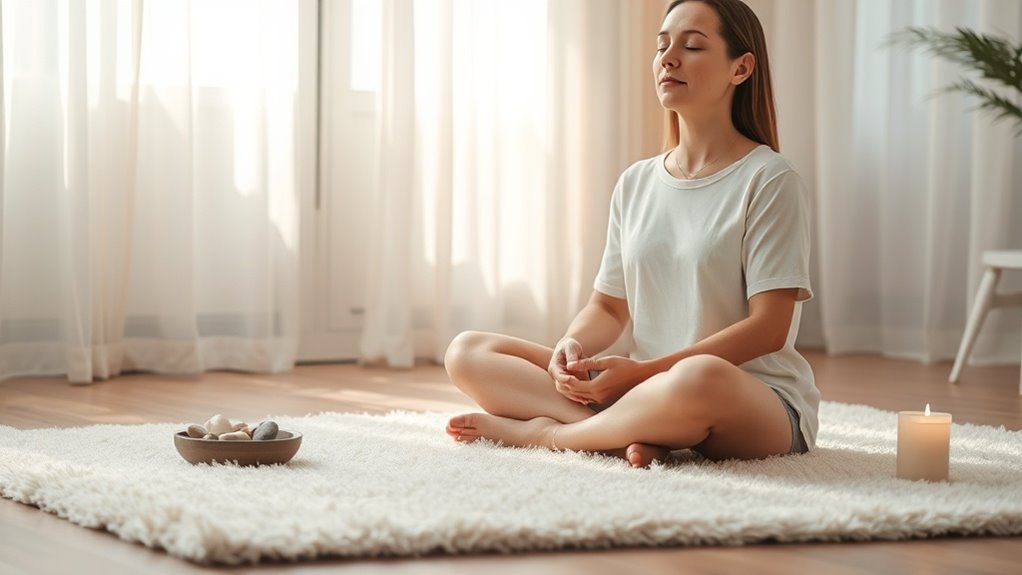
Combining breathing techniques with other relaxation strategies can markedly enhance your overall sense of calm and reduce stress more effectively. For example, pairing mindful breathing with relaxation strategies like guided imagery helps deepen your relaxation. As you breathe steadily, imagine a peaceful scene—this visualization amplifies feelings of calm and builds emotional resilience. Incorporating a body scan while focusing on your breath allows you to release tension throughout your entire body, promoting complete relaxation. When you combine breath awareness with gentle stretching or yoga, you not only ease mental strain but also improve flexibility and physical comfort. These integrated approaches work together to calm your nervous system, making your relaxation more profound. By thoughtfully blending breathing with techniques like guided imagery and body scans, you create a powerful routine that releases tension quickly and supports ongoing stress management.
Resources to Support Your Mindful Breathing Journey
Beginning a mindful breathing practice is much easier when you have the right resources to guide and support you. Luckily, there are many tools available to help you develop a consistent routine for stress reduction. Online guided meditation recordings and courses are excellent for beginners, providing step-by-step instructions to deepen your practice. Books like Dr. Siegel’s *The Mindfulness Solution* offer detailed guidance on incorporating mindful breathing into daily life. Local meditation centers often host classes and workshops focused on breath awareness and mindfulness techniques, offering in-person support. Mobile apps such as Headspace and Calm provide structured breathing exercises, reminders, and tracking features to keep you motivated. Additionally, subscribing to trusted health newsletters, like those from Mayo Clinic, can give you ongoing tips and resources for enhancing your practice. With these tools, your journey toward stress reduction through mindful breathing becomes more accessible and sustainable.
Common Questions
How to Breathe to Release Tension?
To release tension, focus on deep breathing techniques that promote stress relief. Breathe in slowly through your nose for a count of four, allowing your diaphragm to expand, then exhale gently for the same count. This simple relaxation exercise helps activate your body’s relaxation response, reducing stress and calming your mind. Practice this regularly to experience quicker tension relief and enhance your overall sense of calm and well-being.
What Is the 555 Rule Breathing?
Think of the 555 Rule as your breath’s calming symphony. You inhale slowly through your nose for 5 seconds, hold that breath for 5 seconds, then exhale gently for another 5 seconds. Repeat this pattern to activate your relaxation response, helping you achieve stress reduction, mental clarity, and emotional balance. It’s a simple, powerful tool to steady your mind and soothe your nerves whenever tension rises.
Which Pranayama Is Effective in Instantly Calming Down the Mind?
If you want to instantly calm your mind, try Nadi Shodhana or alternate nostril breathing. It promotes chakra balancing and uses nasal inhalation combined with diaphragmatic breathing to soothe your nervous system. This technique helps clear mental clutter quickly, fostering a sense of peace. You’ll notice your stress melt away as your breath becomes more relaxed, grounding you in the present moment with gentle, calming energy.
What Is the 444 Rule for Breathing?
Think of your breath as a gentle tide, ebbing and flowing in perfect rhythm. The 4-4-4 rule for breathing guides you to inhale for 4 seconds, hold for 4, and exhale for 4, creating a calming wave that reduces stress and anchors relaxation. This simple technique is a powerful tool in stress management, meditation practices, and relaxation techniques, helping you find calm amid chaos and restore inner balance.
Summary
By gently embracing mindful breathing, you’re opening a doorway to calmer moments amidst life’s busy tempo. With patience and practice, these simple breaths can softly dissolve tension and bring a soothing sense of balance. Remember, it’s okay if progress feels slow at first—each mindful inhale is a small step toward greater well-being. Trust in your journey, and let your breath be a gentle guide to peace whenever you need it.