
To stay relaxed through intentional stillness, focus on truly being present in the moment rather than just quieting your mind. Find a comfortable, calm space and set aside a specific time each day to practice slow, deep breaths and gentle visualization of peaceful scenes. Accept distractions with kindness and gently return your attention to your breath or sensations. Building this routine gradually allows your nervous system to relax more deeply, and if you keep exploring these practices, you’ll discover even more calming techniques.
Key Takeaways
- Create a calm environment with comfortable seating, minimal distractions, and soothing elements to facilitate focused stillness.
- Practice deep, diaphragmatic breathing techniques like box or 4-7-8 breath to activate relaxation responses.
- Incorporate gentle movement or rhythmic sway during stillness to regulate the nervous system and deepen calm.
- Use visualization of peaceful scenes or sensations to enhance mental clarity and foster tranquility.
- Establish a consistent routine with intentional timing and tracking to build resilience and deepen relaxation habits.
Understanding the Essence of Stillness
Understanding the essence of stillness begins with recognizing that it’s more than just being quiet; it’s about being fully present in the moment. Stillness invites you to intentionally quiet the mind, creating space for clarity and peace. When you pause amidst life’s noise, you allow yourself to connect with a deeper sense of calm and awareness. This practice isn’t passive; it’s a deliberate act of grounding yourself, fostering mental clarity and inner tranquility. Ancient texts, like Psalm 46:10, remind us that stillness opens a pathway to inner peace and divine connection. In today’s busy world, cultivating stillness becomes essential, helping you detach from constant activity and distraction. Mother Teresa emphasized that silence and stillness are crucial for touching the soul and experiencing spiritual connection. Embracing stillness is a gentle, intentional act that nurtures your well-being, allowing you to find serenity amid life’s chaos.
Benefits of Incorporating Stillness Into Daily Life
Incorporating stillness into your daily routine can bring meaningful shifts in your overall well-being. When you embrace moments of stillness, you activate a natural way to reduce stress. This calmness helps lower stress hormones like cortisol, fostering emotional regulation and resilience. Even brief periods of intentional stillness can have powerful effects, such as decreasing blood pressure and easing muscle tension, supporting your physical health. Regular practice creates a foundation for mental clarity, sharpening focus and improving memory over time. Making stillness a daily habit not only enhances your mental state but also promotes physical recovery, helping you feel more balanced and centered throughout your day. Scientific studies show that consistent stillness practices can lead to long-term improvements in mood and overall well-being. By integrating stillness into your daily life, you’re nurturing both your mind and body, cultivating a sense of calm that can carry you through life’s challenges with greater ease.
Creating a Calm Environment for Practice
Creating a calm environment begins with finding a quiet space where you won’t be disturbed, allowing your mind to settle. Minimizing distractions by turning off devices and adjusting lighting helps deepen your sense of tranquility. When your surroundings feel peaceful and intentional, it becomes easier to focus and cultivate relaxation.
Find Quiet Space
Have you ever noticed how a peaceful environment can make it easier to relax and focus? Finding a quiet space is essential for cultivating stillness and deep relaxation. Choose a spot free from clutter and interruptions, whether it’s a cozy corner or a peaceful outdoor setting. Dimming the lights or using soft lighting helps create a soothing atmosphere, inviting calmness. Turn off electronic devices, radios, and televisions to eliminate background noise and minimize distractions. Adding calming elements like plants, candles, or gentle scents such as lavender can enhance your environment further. Guarantee your seating is comfortable—cushions or a supportive chair—so your body can remain still and relaxed. Creating this calm space nurtures your practice and encourages genuine stillness.
Minimize Distractions
Ever wondered how much easier it is to relax when your environment is free of interruptions? Minimizing distractions is key to creating a calm environment for your practice. Choose a quiet, clutter-free space with minimal external noise and visual clutter. Turning off electronic devices like phones and computers helps eliminate interruptions, allowing you to fully focus inward. Soft lighting or natural light can soothe your senses and reduce sensory overload, enhancing your sense of peace. Incorporating calming elements such as gentle music, nature sounds, or essential oils fosters a peaceful atmosphere. Establishing a routine by practicing at the same time each day minimizes unexpected distractions, helping your mind settle more easily. Consistency and a distraction-free space support your journey toward intentional stillness and relaxation.
Simple Breathing Techniques to Cultivate Calm
Would you like to discover simple ways to bring more calm into your day? Deep breaths are a gentle yet powerful tool for calming the nervous system and fostering stillness practices. Techniques like the 4-7-8 method or box breathing help activate your parasympathetic nervous system, encouraging relaxation. When you focus on slow, diaphragmatic breathing, you can reduce stress hormones and lower blood pressure, creating a sense of peace. Paying attention to each breath’s rhythm and count increases mindfulness, helping you stay present and prevent mental distractions. You might also enhance your practice by adding calming scents or gentle background sounds, deepening your sense of calm. Consistently practicing intentional breathing not only cultivates calm but also improves emotional regulation, mental clarity, and overall well-being. These simple techniques can become your go-to for grounding yourself amidst daily chaos, guiding you toward a more peaceful, centered state.
Visualizing Peaceful Places to Enhance Relaxation
By imagining peaceful places like a quiet beach or a gentle forest, you activate your body’s natural relaxation response and ease stress. Recalling calm moments from your own life can strengthen feelings of safety and help you stay centered during challenging times. Guided visualizations that include sensory details can deepen this sense of tranquility and support ongoing emotional well-being.
Imagining Natural Scenery
Visualizing peaceful natural scenery is a simple yet powerful way to deepen your sense of relaxation. When you imagine serene landscapes—like lush forests, tranquil lakes, or majestic mountain views—you activate your parasympathetic nervous system, which encourages calm and rest. Using mental imagery of natural scenery helps reduce stress hormones such as cortisol, fostering a feeling of inner peace. Incorporating sensory details—like the gentle sound of birds or the fresh scent of pine—amplifies these calming effects, making your visualization more vivid and soothing. This practice not only enhances relaxation but also sharpens your focus during meditation or mindfulness exercises. By creating detailed mental images of natural scenery, you give yourself a mental retreat—a peaceful space you can access at any moment to reset and find calm amid daily chaos.
Recalling Calm Moments
Recalling calm moments can be a gentle yet powerful way to deepen your relaxation. When you visualize peaceful places—like a quiet beach or a serene forest—you activate your body’s relaxation response and reduce stress. This practice strengthens neural pathways associated with tranquility, making it easier to access a relaxed state in everyday life. Engaging your imagination with sensory details, such as the sound of gentle waves or warm sunlight, can further enhance relaxation and stabilize calm throughout your day. Regularly practicing this form of visualization not only improves mental clarity but also fosters a sense of safety and comfort. By intentionally recalling these peaceful moments, you reinforce your ability to stay centered, calm, and relaxed anytime you need a mental refuge.
Using Guided Visualizations
Have you ever noticed how imagining a peaceful place can instantly bring a sense of calm? Guided visualizations tap into mental imagery to deepen your relaxation, often involving scenes like a quiet forest, a sunset beach, or a mountain peak. These detailed images activate your parasympathetic nervous system, helping you unwind and reduce stress. By engaging your senses—listening to gentle sounds, sensing scents, feeling textures—you create a vivid, immersive experience that fosters emotional balance and mental clarity. Consistently practicing guided visualizations strengthens neural pathways associated with tranquility and resilience. This simple yet powerful tool enhances your overall well-being, making it easier to stay relaxed during periods of stillness and life’s inevitable challenges.
Incorporating Movement and Stillness Together
Incorporating movement and stillness together creates a harmonious rhythm that deepens relaxation and cultivates awareness. Moving gently—whether through slow walking, stretching, or rhythmic sway—prepares your nervous system for stillness, making it easier to settle into a calm state. Alternating between these states helps regulate your nervous system, reducing stress and sharpening mental clarity. Rhythmic movements like rocking or swaying during stillness sessions can ease shifts, guiding you into a centered, relaxed space. When you combine movement with breathwork, such as synchronized inhaling and exhaling, the calming effects intensify, anchoring you more deeply in the present moment. Incorporating mindful movement into your routine creates a balanced practice that nurtures both physical relaxation and mental tranquility. This gentle dance between action and pause supports your journey toward sustained calm and self-awareness.
Building a Routine for Consistent Stillness Practice
Creating a consistent stillness practice begins with setting a specific time each day that you can commit to, such as first thing in the morning. Establishing this routine helps reinforce the habit and brings a sense of stability to your day. Choose a quiet, comfortable space free from interruptions—whether a cozy corner or a peaceful outdoor spot—to make your practice inviting and effortless. Using a timer, starting with at least 10-15 minutes, gives structure and helps you build momentum. Simple techniques like deep breathing or visualization deepen your experience, making each session more meaningful. Tracking your practice allows you to see your progress, fostering accountability and motivation. Over time, this consistency will cultivate a natural rhythm, making stillness a nourishing part of your daily life. Remember, it’s not about perfection but about honoring your intention to nurture calm and presence through a steady routine.
Using Mindfulness to Deepen Your Stillness
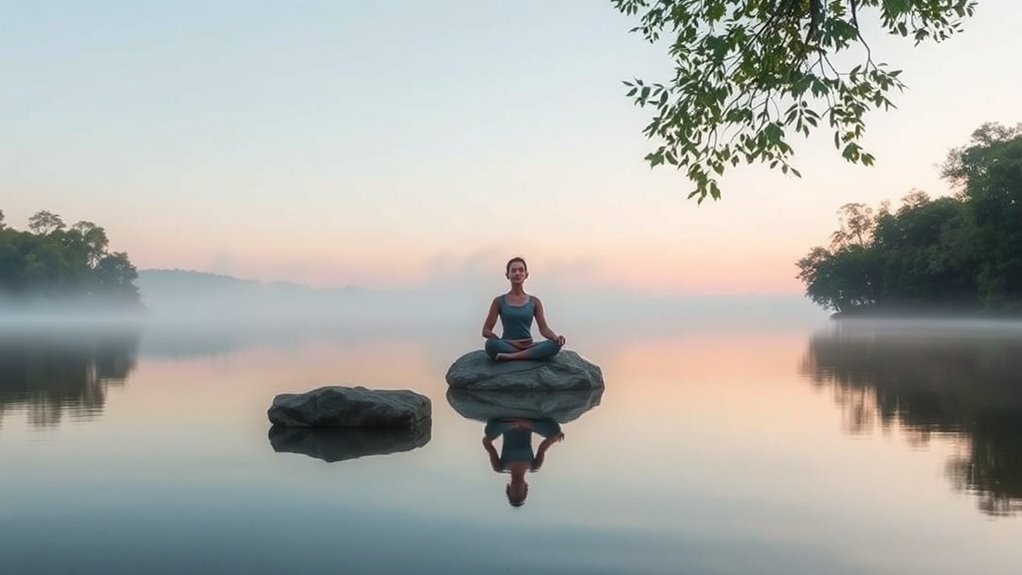
By practicing mindful observation, you learn to gently notice your thoughts without judgment, allowing your mind to settle. Focusing on the present moment helps anchor your awareness, making it easier to remain still and centered. Over time, these simple practices deepen your sense of calm and foster lasting stillness.
Mindful Observation Techniques
When you gently focus your attention on the present moment without judgment, you deepen your sense of stillness and calm. Mindful observation invites you to notice physical sensations, sounds, or visual details in your environment, anchoring your awareness. To enhance this practice, consider these techniques:
- Silently noting sensations or sounds as they arise
- Observing visual details with curiosity and openness
- Using visualization, like imagining a peaceful scene, to strengthen calm
- Refraining from labeling or analyzing, simply observing with compassion
This approach activates neural pathways linked to relaxation, helping your mind settle into stillness. Regular practice reduces mental chatter and cultivates clarity, making it easier to access and maintain a relaxed, peaceful state of presence.
Focused Present Moment
Although it may seem simple, focusing on the present moment through mindfulness can profoundly deepen your sense of stillness. By cultivating present-moment awareness, you allow yourself to fully experience each sensation, thought, and breath without judgment. Techniques like observing your thoughts nonjudgmentally or visualizing peaceful places help anchor your attention, fostering a calmer, more centered state. Practicing mindful breathing—slow, deep breaths—activates your relaxation response, reinforcing your connection to the now. When distractions arise, gently returning your focus to the present sustains your sense of stillness. Over time, this deliberate attention to the present cultivates a profound internal peace, making it easier to stay relaxed and anchored in your natural state of calm.
Overcoming Common Challenges in Staying Still
Dealing with the inevitable distractions and surprises that arise during stillness practice can be challenging, but approaching these moments with patience and flexibility makes all the difference. Environmental stimuli like noise, heat, or visual distractions can tug your attention away, while mental chatter may lead to restlessness. Expecting the unexpected—such as disruptions or chaos—calls for gentle acceptance and adaptability. Remember, self-compassion is key; it’s normal to struggle and feel frustrated. To build resilience, consider strategies like deep breathing, visualizations, or simply acknowledging thoughts without judgment.
You might find it helpful to:
- Recognize and accept environmental stimuli without resistance
- Gently acknowledge mental chatter and return focus
- Practice self-compassion when frustration arises
- Adapt your environment or technique as needed for comfort
With patience and a compassionate approach, you’ll gradually strengthen your ability to stay centered, even amid challenges.
Applying Stillness to Manage Stress and Improve Well-Being
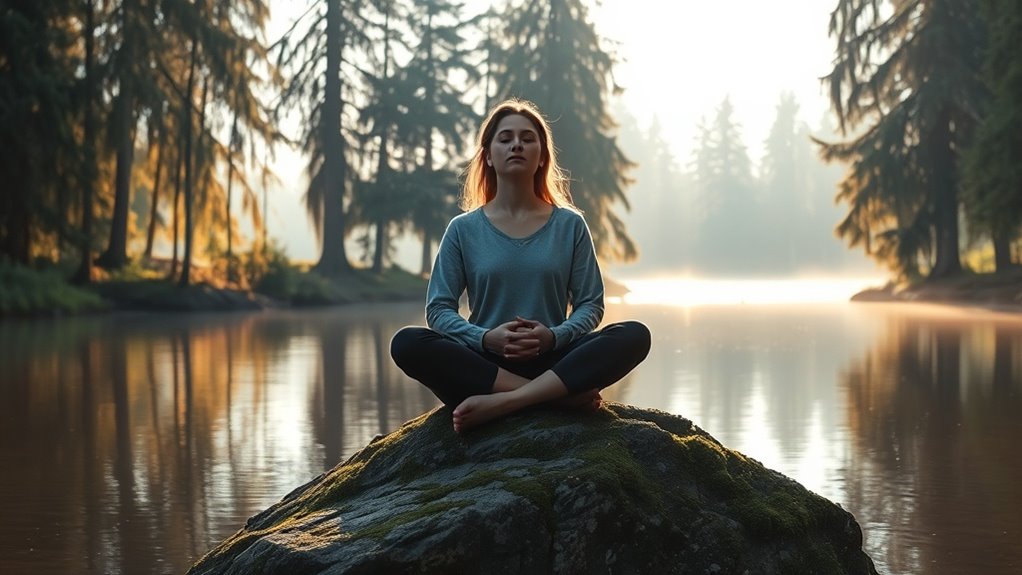
Practicing stillness intentionally can be a gentle yet powerful way to manage stress and enhance your overall well-being. When you pause and embrace moments of stillness, you activate your parasympathetic nervous system, which promotes relaxation and lowers stress hormones like cortisol. Just five minutes of scheduled stillness can lower blood pressure and reduce muscle tension, helping you feel calmer and more centered. Deep breathing exercises during these moments further regulate your heart rate variability, strengthening your emotional resilience and calming your mind. Incorporating mindfulness and visualization into your stillness practice sharpens mental clarity and diminishes anxiety. By creating a routine of intentional stillness, you build a sustainable approach to stress reduction, supporting long-term mental and physical health. Over time, these practices become a natural part of your daily life, fostering a sense of peace and well-being that endures even in challenging moments.
Common Questions
Can Stillness Reduce Anxiety?
Yes, stillness can reduce anxiety. When you practice mindfulness meditation and focus on breath awareness, you activate your parasympathetic nervous system, promoting relaxation and stress reduction. Regularly taking intentional moments of stillness helps calm your mind, break anxious thought patterns, and improve emotional regulation. Even brief periods of quiet reflection can markedly lower cortisol levels, easing anxiety and fostering a sense of calm and well-being.
How Do I Train My Mind to Stay Calm?
To train your mind to stay calm, start with mindful breathing, focusing on your breath to anchor yourself in the present. Incorporate visualization techniques, imagining peaceful scenes or positive affirmations to activate your calming response. Practice body scan meditation regularly to increase awareness of physical tension and promote relaxation. With patience and gentle consistency, these practices help your mind respond calmly, even amidst life’s challenges, cultivating a compassionate, peaceful mindset over time.
How Can I Practice Stillness Daily?
You can practice stillness daily by setting aside a quiet moment each morning, using mindful breathing and meditation techniques. Find a comfortable space, free from distractions, and gently focus on your sensory awareness—like the feel of your breath or the sounds around you. When your mind wanders, kindly bring it back to your breath. Consistent practice helps cultivate calmness and deepens your connection to the present moment.
What Does Sitting in Silence for 10 Minutes Do?
Sitting in silence for 10 minutes allows you to engage in mindfulness meditation, helping you become more aware of your thoughts and feelings. By focusing on your breathing techniques, you can calm your mind and body, promoting emotional regulation. This practice reduces stress, lowers blood pressure, and clears mental clutter, fostering a sense of inner peace and clarity. It’s a gentle way to nurture your well-being daily.
Summary
As you weave stillness into your daily routine, remember that it’s like tending a gentle garden—patience and care nurture peace within. With each mindful breath and quiet moment, you cultivate a sanctuary amid life’s chaos. Embrace the journey with compassion for yourself, knowing that even small acts of calm can bloom into lasting serenity. Trust in your ability to find stillness, and let it be a steady anchor in life’s ever-changing tide.