
To restore calm using breathing and posture alone, focus on deep belly breathing to activate your relaxation response—inhale slowly through your nose, letting your stomach rise, and exhale fully. Maintain an upright, open-chested posture to improve airflow and ease tension. Practice simple techniques like box breathing, visualization, or mindful pauses regularly throughout the day. Refining these habits can help you quickly regain calm amid stress—continue with these steps to unseal even more effective ways.
Key Takeaways
- Practice deep belly breathing to activate the diaphragm and promote full oxygen exchange, calming the nervous system.
- Use four-square breathing to regulate breath, hold, exhale, and pause for sustained calmness.
- Maintain an upright, open-chested posture to support optimal breathing and reduce muscular tension.
- Incorporate visualization and mantra techniques during breathing to deepen relaxation and emotional stability.
- Set regular reminders to check and correct posture and breathe consciously, ensuring ongoing stress relief and calm.
The Power of Deep Belly Breathing for Stress Reduction
Deep belly breathing is a simple yet powerful technique to help you manage stress effectively. When you focus on deep breathing, you activate your diaphragmatic muscles, promoting full oxygen exchange and stimulating your body’s relaxation response. This process encourages stress reduction by calming the nervous system and decreasing cortisol levels. To guarantee you’re breathing correctly, place one hand on your stomach and the other on your chest; your stomach should rise with each inhale, not your chest. Inhale slowly through your nose into your abdomen, allowing it to expand, then exhale gently through your nose, letting the stomach fall. Practicing this for at least five minutes daily can markedly lower anxiety and reduce physical symptoms like rapid heartbeat and shallow breathing. Deep belly breathing enhances overall emotional regulation, helping you feel calmer, more centered, and better equipped to handle daily stressors.
Practicing Four-Square or Box Breathing for Calmness
Practicing four-square or box breathing is a simple yet effective way to cultivate calmness, especially during stressful moments. This technique helps you regulate your breathing, activate the relaxation response, and promote a sense of calm. To get started:
- Inhale slowly through your nose for a count of four, feeling your lungs expand.
- Hold your breath for four counts, maintaining steady, controlled breathing.
- Exhale gently through your mouth for four counts, then pause with lungs empty for four counts before repeating the cycle.
Consistently practicing this pattern for just five minutes can considerably reduce stress and foster emotional regulation. Over time, this breathing method can enhance your ability to stay calm and clear-minded, even amidst chaos. With regular use, you’ll notice improved relaxation and a stronger sense of mental clarity, helping you better navigate anxious moments.
Enhancing Relaxation With Visualization and Mantra Techniques
Have you ever noticed how focusing your mind can instantly promote relaxation? Visualization and mantra techniques are powerful tools to deepen this effect. By imagining a peaceful scene during slow breaths, you activate your parasympathetic nervous system, promoting calm. Repeating simple phrases like “I breathe in calm” or “Stress leaves with each exhale” grounds your mind, reducing distracting thoughts. Combining visualization with mantra breathing creates a potent relaxation response in just minutes.
| Visualization | Mantra |
|---|---|
| Picture a tranquil beach or forest | Repeat supportive phrases aloud or silently |
| Imagine inhaling calm and exhaling tension | Use affirmations to reinforce relaxation |
| Focus on sensory details for immersion | Anchor your mind with consistent phrases |
| Visualize stress leaving your body | Enhance emotional regulation and reduce anxiety |
Use these techniques to foster mental clarity and emotional stability, helping you restore calm quickly and effectively.
Improving Posture to Support Better Breathing and Ease Tension
Since your posture directly affects your breathing, making simple adjustments can considerably reduce tension and improve airflow. When you keep your spine straight and shoulders relaxed, your diaphragm can move freely, enhancing lung capacity and breathing efficiency. Proper alignment also opens your chest, reducing muscle tension in your neck and shoulders that may restrict airflow. To optimize your posture for better breathing and relaxation:
Good posture enhances breathing, reduces tension, and promotes relaxation through open, aligned positioning.
- Maintain an upright, open-chested position to support deep belly breathing.
- Loosen tight clothing and adjust your ergonomic setup to avoid constriction.
- Practice postural awareness daily to prevent habitual slouching, which can cause shallow breathing and muscle tension.
These small changes foster better oxygen exchange, reduce feelings of breathlessness, and promote overall relaxation. Improving posture isn’t just about appearance—it’s a essential step in easing tension and supporting calm, mindful breathing.
Morning Breathing Routines to Start the Day Calm and Focused
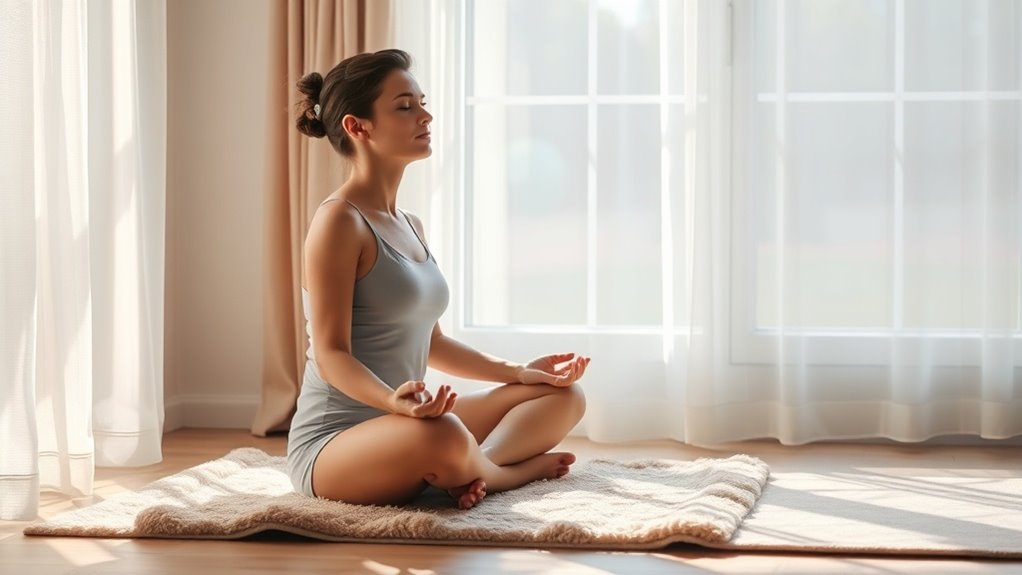
Starting your day with intentional breathing can set a calm and focused tone, helping you ease muscle stiffness and clear your airways. Gentle deep breathing during your morning routines, such as inhaling and exhaling slowly while rolling up from a forward bend, enhances both physical relaxation and mental clarity. Incorporating brief breath holds increases oxygen flow, supporting a centered mindset as you prepare for the day. Controlled, rhythmic breathing helps regulate cortisol levels, reducing stress from the moment you wake. Standing upright and consciously focusing on diaphragmatic breaths primes your nervous system for calmness and alertness. Consistent practice of these morning routines can improve your posture and respiratory efficiency over time, making stress relief an integral part of your daily start. With intentional breathing each morning, you create a peaceful foundation that influences your entire day, promoting resilience and mental clarity from the outset.
Combining Breath and Posture for Immediate Stress Relief
When stress strikes, combining mindful breath with proper posture can provide quick relief by activating your body’s relaxation response. Standing or sitting with a straight spine and relaxed shoulders encourages diaphragmatic breathing, which enhances lung capacity and promotes calm. To optimize stress relief through posture and breath, consider these steps:
Align your posture with mindful breathing to activate instant stress relief and promote calm.
- Maintain an open chest and relaxed facial muscles to reduce tension.
- Gently pull shoulder blades back to support steady, calming breaths.
- Focus on slow, deep inhalations and exhalations to stimulate the parasympathetic nervous system.
This integrated approach not only alleviates immediate stress but also lowers cortisol levels and sharpens mental clarity within minutes. By consciously aligning your posture with your breath, you activate your body’s natural relaxation mechanisms, making it a powerful tool for instant stress relief whenever needed.
Simple Steps to Fix Shallow Breathing Patterns
If you notice yourself taking shallow, rapid breaths, it’s a sign your body may be missing out on essential oxygen and increasing your anxiety. To correct this, start practicing deep breathing by consciously slowing your inhale and exhale. Focus on diaphragmatic breathing, where your belly rises more than your chest, signaling effective oxygen intake. Place one hand on your chest and the other on your abdomen to ensure your belly expands during each breath. Practice this gentle, steady breathing for at least five minutes daily. Avoid forcing your breath; instead, aim for relaxed, smooth inhalations and exhalations. This helps retrain your body to adopt a deeper, more efficient breathing pattern, promoting relaxation and reducing stress. Over time, consistent practice will make diaphragmatic breathing your default, helping you feel calmer and more centered even in stressful moments.
Tips for Incorporating Breath and Posture Practices Into Daily Life
Incorporating mindful breathing and good posture into your daily routine can considerably reduce tension and promote calm. Using reminders on your phone or in mirrors helps you stay aware and make quick adjustments throughout the day. Consistent practice transforms these habits into natural, calming responses during stressful moments.
Integrate Routine Mindful Breathing
Starting your day with a simple, intentional breathing practice can set a calm tone that carries through the hours. Incorporate mindful breathing into your routine by dedicating five minutes each morning for deep belly breaths, promoting focus and relaxation. To reinforce this habit:
- Set reminders or alarms to prompt mindful breathing and posture checks during stressful moments.
- Practice standing or sitting with an upright yet relaxed spine, consciously slowing your breath to foster a sense of control.
- Combine posture adjustments, like relaxing shoulders and aligning your head, with your breathing exercises to maximize stress reduction and ease tension.
Use Posture Reminders Regularly
Building on mindful breathing, setting up regular posture reminders helps maintain the calm you’re cultivating. Use your phone or computer to set hourly alerts that prompt you to check and correct your posture. Visual cues like sticky notes or desk stickers with breathing prompts encourage ongoing mindfulness. Incorporate short, guided breaks every 30 minutes to pause, straighten your spine, and practice deep belly breathing. Attach posture reminder apps that nudge you during stressful moments to realign and breathe deeply. Keep your workspace organized for ergonomic support, making it easier to sustain proper posture and focus on your breath. Regular posture reminders reinforce stress reduction, helping you stay centered and calm throughout your day.
| Reminders Type | Frequency | Focus Area |
|---|---|---|
| Phone alerts | Hourly | Posture correction |
| Sticky notes | Continuous | Breathing prompts |
| App notifications | During stress | Alignment and breath |
| Visual cues | Daily | Awareness and calm |
Common Questions
What Is the 5 4 3 2 1 Calming Method?
The 5-4-3-2-1 calming method is a mindfulness technique that grounds you through sensory awareness. You identify five things you see, four you touch, three you hear, two you smell, and one you taste. This practice helps shift your focus away from stress, promotes muscle relaxation, and calms your mind quickly. Regularly using this method enhances your ability to manage anxiety, fostering a sense of calm anytime you need it.
What Is the 444 Rule for Breathing?
The 4-4-4 rule for breathing is your new best friend in chaos. It’s a simple breathing exercise that guides you to inhale through your nose for four seconds, hold that breath for four seconds, then exhale slowly for four seconds. This relaxation technique is a powerful stress reduction tool, helping calm your nerves and clear your mind. Practice it regularly, and you’ll find yourself more centered amid life’s stormy moments.
How to Reset Your Nervous System With Breathing?
To reset your nervous system, focus on mindful awareness of your breath and body relaxation techniques. Practice slow, diaphragmatic breathing at about 5-6 breaths per minute, using stress management strategies like box or 4-7-8 breathing. Combine this with mindful posture to enhance vagal tone, which helps balance your nervous system. Just a few minutes daily can reduce cortisol, lower heart rate, and restore calm efficiently and effectively.
What Is the 4 2 8 2 Method?
The 4-2-8-2 method is a mindful breathing technique that helps activate your relaxation response. You inhale for 4 seconds, hold for 2, exhale slowly for 8, then hold empty lungs for 2 seconds. Pairing this with proper posture alignment enhances stress reduction techniques by slowing your heart rate and calming your nervous system. Regular practice can lower anxiety and blood pressure, promoting overall calmness and well-being.
Summary
By mastering your breath and aligning your posture, you can calm your mind, ease your body, and restore your inner peace. With each mindful inhale, each intentional posture, you take control of stress, regain focus, and find balance. It’s simple, it’s powerful, and it’s always within your reach. Embrace these techniques daily, and watch how your calm transforms your life—one breath, one posture, one moment at a time.