
When you need to reset your focus, start by taking slow, deep breaths, paying close attention to each inhale and exhale. Lengthen your exhale to activate the calming nervous system, which helps clear mental clutter. Focused sighs or short, deliberate breaths can quickly lower stress and sharpen your awareness. Incorporating mindful breathing into your daily routine helps build lasting calm and clarity. Keep exploring for more gentle techniques you can easily use anytime, anywhere.
Key Takeaways
- Use slow, deep breaths, especially lengthening the exhale, to activate relaxation and clear mental clutter.
- Practice conscious sighs or short breaths to quickly reduce stress and regain focus during high-pressure moments.
- Incorporate mindful breathing pauses during daily activities to anchor attention and reduce distractions.
- Focus awareness on the breath to shift attention to the present, calming overthinking and mental wandering.
- Establish a regular breathing practice to support long-term emotional balance, mental clarity, and sustained focus.
The Power of Breath in Regaining Focus
Have you ever noticed how taking a deep breath can instantly help clear your mind? That’s the power of breath awareness at work. When you focus on your breath, you activate your parasympathetic nervous system, which helps reduce stress and promote calmness. Lengthening your exhale slows your heart rate, fostering mental clarity and a sense of tranquility. Short sighs can also be surprisingly effective—they reset your nervous system quickly and sharpen your focus. By intentionally paying attention to your breath, you detach from distractions and anchor yourself in the present moment. This focused attention not only calms your mind but also boosts cognitive function, making it easier to concentrate. Incorporating simple breathing practices into your routine creates a foundation for better mental clarity and sustained attention, helping you regain focus whenever you need it most.
Understanding the Connection Between Breath and Mindfulness
Your breath serves as a crucial link between your body and mind, shaping your emotional and mental state. By becoming aware of your breathing, you can shift your focus to the present moment and reduce overthinking. Lengthening your exhale helps calm your mind and promotes a sense of relaxation.
Breath as Mind-Body Link
Ever wondered how your breath can influence your state of mind? The breath is a powerful mind-body link, shaping your emotional and physical well-being. When you bring awareness to your breathing, you shift focus from overthinking to the present-moment. Slow, deliberate breath activates the parasympathetic nervous system, encouraging relaxation and reducing stress. This connection means that simply adjusting how you breathe can calm your mind and steady your emotions. Techniques like diaphragmatic breathing or lengthening your exhale harness this mind-body link, helping you reset focus effortlessly. By paying attention to your breath, you create a bridge between body and mind, fostering clarity, emotional regulation, and a sense of calm that supports overall well-being.
Conscious Breathing Enhances Focus
Conscious breathing can substantially enhance your focus by connecting you to the present moment. When you intentionally slow down and focus on your breath, you activate your parasympathetic nervous system, promoting relaxation and reducing stress. This process helps quiet racing thoughts, making it easier to concentrate and deepen your mindfulness. By increasing awareness of each inhale and exhale, you strengthen neural pathways linked to attention and self-control. Regular practice not only sharpens your mental clarity but also improves emotional regulation.
- Engage in slow, deliberate breaths to boost relaxation
- Use awareness to anchor your mind in the present
- Notice how focus becomes clearer with each mindful inhale and exhale
- Feel your parasympathetic nervous system calming your thoughts
- Strengthen neural pathways for better attention and self-control
Exhale Lengthening Calms Mind
Lengthening your exhale can deepen the calming effects of mindful breathing, helping to quiet a restless mind. When you focus on exhale lengthening during breathing exercises, you activate your parasympathetic nervous system, which promotes relaxation and reduces stress. A longer exhale slows your heart rate, making it easier to calm an overactive mind, especially in stressful moments. Research shows that extending the exhalation improves emotional regulation and mental clarity. By intentionally focusing on a deliberate, elongated exhale, you can reset your nervous system and foster a sense of calm. Incorporating this simple technique into your mindfulness practice helps cultivate relaxation and mental balance, making it a powerful tool to calm your mind and elevate your overall sense of well-being.
Techniques to Lengthen and Calm the Exhale
To effectively calm your mind and body, focus on techniques that extend your exhalations. Lengthening your exhale can activate the parasympathetic nervous system, promoting deep relaxation and stress reduction. When you intentionally slow and deepen your exhale, you help calm the nervous system and slow your heart rate within minutes. Incorporating these breathing exercises into your routine enhances focus and awareness, making it easier to reset mental clarity and regulate emotions.
Try these simple techniques:
- Breathe in for a count of four, then exhale for eight or more.
- Use a gentle, mindful sigh to deepen your exhale.
- Practice slow, controlled breathing during stressful moments.
- Focus on making each exhale longer and smoother.
- Combine lengthened exhalations with gentle awareness of your body.
The Benefits of Conscious Sighs for Stress Relief
When you intentionally take a deep, double inhale followed by a slow, extended exhale, you activate your body’s natural relaxation response. Conscious sighs are simple yet powerful breathing exercises that stimulate your parasympathetic nervous system, fostering stress relief. Just 2-3 sighs can markedly lower cortisol levels and ease feelings of tension. Incorporating these sighs into your routine helps release built-up stress in your chest and shoulders, alleviating physical discomfort. Regular practice enhances mental clarity and emotional resilience, making it easier to handle high-pressure situations. These relaxation techniques are accessible anytime, anywhere, and promote mindfulness by anchoring your awareness in your breath. Using conscious sighs as part of your stress management toolkit supports a calmer state of mind, improves mood, and reduces anxiety. It’s a gentle, effective way to reset your focus and cultivate a sense of calm amidst daily challenges.
Practical Steps to Incorporate Breath Awareness Into Daily Life
Incorporating breath awareness into your daily routine can be simple and deeply beneficial. By dedicating a few minutes each day, you can cultivate mindfulness and improve focus through deep breathing. Use your exhale as a cue to lengthen your breath, which helps slow your heart rate and promotes calmness during stressful moments. Incorporate deliberate sighs or double inhales followed by extended exhalations to quickly reset your nervous system when overwhelmed. To make this part of your routine, try these practical steps:
- Pause briefly during daily tasks to take conscious, slow breaths
- Use breath-counting or guided meditation apps to establish consistency
- Incorporate mindful breathing during breaks or transitions
- Practice deep breathing exercises during moments of stress or before important tasks
- Carry awareness of your breath into everyday activities for ongoing focus and stress reduction
These small adjustments can profoundly enhance your focus and overall well-being.
Using Guided Breathing Exercises to Reset Your Mind
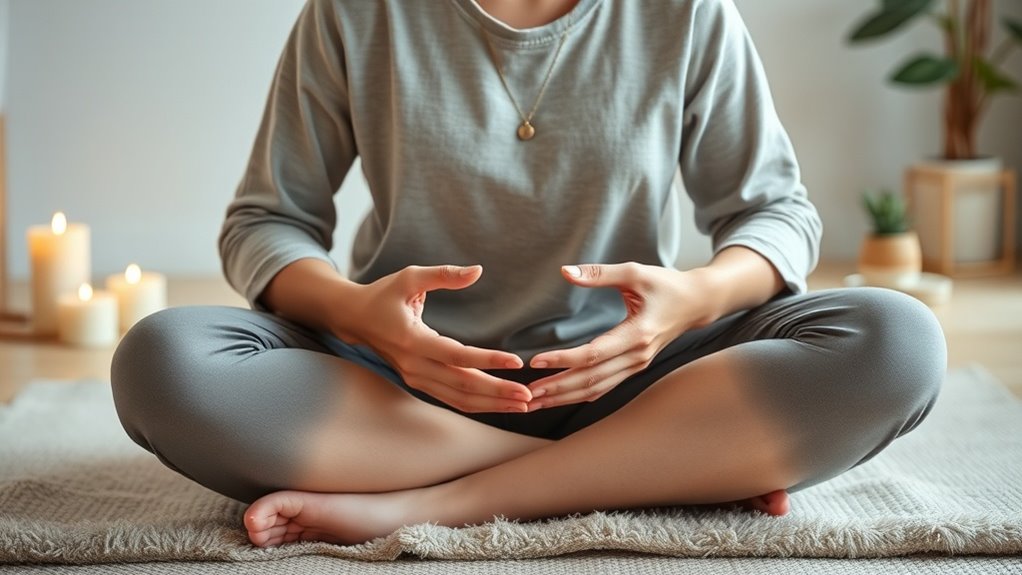
Guided breathing exercises offer a simple yet powerful way to reset your mind during stressful moments. By following verbal cues and structured prompts, you can focus your attention on your breath, cultivating mindfulness and promoting relaxation. These exercises often involve deep inhalations, prolonged exhalations, and specific patterns like sighs or counting breaths, which activate the body’s relaxation response. Regular practice helps reduce stress hormones and enhances emotional regulation, making it easier to regain mental clarity. Many guided sessions incorporate calming sounds or visualizations, deepening your focus and strengthening the reset effect. Using apps or recordings, you can easily access these routines anytime you need a quick mental refresh. Guided breathing not only calms your nervous system but also sharpens your ability to respond calmly to challenges, fostering a sense of control and balance amid chaos.
Cultivating a Calm State With Short, Focused Breaths
To cultivate a calm state quickly, focus on taking short, deliberate breaths. Focused breaths activate your parasympathetic nervous system, helping you relax and regain mental clarity. These quick, controlled inhalations and exhalations interrupt racing thoughts and reduce feelings of stress or anxiety. Practicing brief breathing exercises of just 10-15 seconds can reset your focus during high-pressure moments. This rhythm of short breaths encourages a calm state, even amid chaos, and strengthens emotional resilience over time. Incorporate these techniques into your routine to experience both immediate relief and long-term mental steadiness.
Consider these tips:
- Use quick, focused breaths to signal calmness
- Inhale deeply through your nose, then exhale slowly
- Practice in quiet or noisy environments
- Keep your attention on the sensation of your breath
- Repeat during moments of overwhelm for instant clarity
How Breath Techniques Support Emotional and Mental Clarity
Using specific breath techniques can help sharpen your mental clarity and keep you focused. When you lengthen your exhale, it calms your emotional responses and creates a sense of balance. By consciously practicing mindful breathing, you can clear mental clutter and foster a calm, alert mind.
Enhances Mental Clarity and Focus
Breath techniques can substantially enhance your mental clarity and focus by calming the mind and reducing stress. When you practice deep breathing, you activate your parasympathetic nervous system, promoting relaxation and mental sharpness. Lengthening your exhale slows your heart rate, helping to clear mental fog and sharpen your focus. By focusing your awareness on each breath, you anchor your mind in the present moment, minimizing distractions. Simple techniques like short sighs or extended exhalations can quickly reset your mental energy, keeping you calm and alert. Regular practice of breath awareness not only boosts cognitive function but also supports emotional regulation, making it easier to maintain clarity and focus throughout your day.
- Activates the parasympathetic nervous system for calm
- Slows the heart rate to clear mental fog
- Anchors awareness in the present
- Uses exhale lengthening to boost focus
- Supports cognitive and emotional balance
Calms Emotional Responses
When you practice deep breathing, you not only sharpen your mental focus but also create a calming effect on your emotional responses. By engaging in mindful breathing, you activate your parasympathetic nervous system, which helps lower emotional reactivity and promotes relaxation. Lengthening your exhalation, such as through deliberate sighs, can substantially reduce cortisol levels, aiding in stress management and preventing emotional overwhelm. Consistent breath techniques improve emotional regulation by increasing awareness of your physiological responses during stressful moments. Scientific studies show that mindful breathing decreases activity in brain regions linked to emotional distress, fostering mental clarity. With regular practice, deep breathing becomes a powerful tool to soothe intense feelings, helping you stay centered and resilient in challenging situations.
Building a Consistent Practice for Lasting Focus and Calm
Establishing a consistent practice is key to cultivating lasting focus and calm, and it starts with committing to a routine that feels manageable. When you make time for daily breath awareness or meditation, you reinforce the habit of mindfulness, helping your focus become more stable over time. Begin with short sessions, like 5-10 minutes, and slowly extend them as your capacity grows. Use reminders or alarms to keep your practice on schedule, turning it into a non-negotiable part of your day. Tracking your progress with a journal or app can boost motivation and reveal how your focus and calmness improve. To deepen your habit, try incorporating mindful breathing during everyday moments, such as commuting or breaks. Consistency is your best tool for long-term calm, and with patience, your focus will strengthen naturally.
- Set daily reminders for your practice
- Start small and build gradually
- Use a journal or app to monitor progress
- Incorporate mindful breathing into daily routines
- Stay compassionate with your journey
Common Questions
How to Reset Your Nervous System With Breathing?
To reset your nervous system with breathing, try mindful breathing by taking slow, deep breaths, focusing on your inhale and exhale. Lengthen your exhale to promote relaxation and reduce stress. This simple relaxation technique enhances emotional regulation, sharpens mental clarity, and provides physiological benefits like lowering cortisol. Regular practice supports stress reduction, helping you regain calmness and balance in moments of overwhelm.
What Is the 4 7 8 Rule for Breathing?
The 4-7-8 rule for breathing is a mindful breathing technique where you inhale through your nose for 4 seconds, hold your breath for 7 seconds, and exhale slowly through your mouth for 8 seconds. This relaxation technique helps reduce stress, improve sleep, and enhance emotional regulation. Regular practice can boost mental clarity and serve as a calming tool during stressful moments, guiding you toward greater relaxation and emotional balance.
What Is the 4 2 8 2 Method?
You might think relaxation techniques are complicated, but the 4-2-8-2 method is simple and effective. Just breathe in for 4 seconds, hold for 2, exhale slowly for 8, then pause for 2. It’s a mindful meditation that helps reduce stress, boost mental clarity, and restore emotional balance. Practice this regularly to improve your concentration skills and stay calm during high-pressure moments, fostering a sense of calm and focus.
Does Breathwork Improve Focus?
Yes, breathwork definitely improves your focus. By practicing mindful breathing and meditation techniques, you can enhance concentration exercises and achieve greater mental clarity. It helps reduce stress, which often clouds your thinking, and promotes energy renewal. Regularly engaging in breathing exercises calms your mind, allowing you to reset and maintain better attention during tasks. With consistent practice, you’ll notice improved focus and a calmer, sharper mindset throughout your day.
Summary
By embracing simple breath and awareness techniques, you can truly reset your focus and find moments of calm amid chaos. Many believe that our breath holds the key to opening clarity and emotional resilience—it’s a theory rooted in ancient wisdom and modern science alike. Trust in this gentle power, and with patience, you’ll discover a more centered, peaceful mind. Remember, every mindful breath is a step toward lasting calm and clarity.