
To let your mind reset through gentle movement, try slowing down your body with simple, intentional actions like seated stretches, gentle twists, or mindful walking. Focus on your breath and sensory awareness as you move, which calms your nervous system and reduces stress hormones. Incorporating these practices regularly can boost mental clarity, emotional resilience, and overall calm. Keep exploring these calming techniques to discover more ways to support your well-being throughout busy days.
Key Takeaways
- Engage in slow, intentional movements like Yin Yoga or seated stretches to calm the nervous system and promote mental clarity.
- Combine gentle movement with focused breathing to activate relaxation responses and reduce stress hormones.
- Incorporate brief, mindful walks or body scans to reset mental states and foster emotional calmness.
- Establish regular routines of gentle activity to build resilience and support long-term emotional well-being.
- Use sensory awareness during gentle movements to deepen relaxation and create a safe space for mental reset.
Embracing the Power of Gentle Movement for Mental Clarity
When life feels overwhelming or your mind is clouded, turning to gentle movement can be a simple yet powerful way to regain clarity. Gentle movement, like slow yoga or mindful walking, activates your parasympathetic nervous system, helping you relax and clear mental fog. Practices such as Yin Yoga, which involve holding passive poses for minutes, access deeper connective tissues and calm your mind. These slow, intentional movements encourage awareness of bodily sensations, reducing emotional rigidity and mental clutter. Incorporating mindful movement into your daily routine can improve focus, lower stress, and foster a sense of inner calm. Even brief, consistent gentle movements have been shown to reset mental states and boost emotional well-being. By embracing these practices, you create a supportive space for mental clarity and emotional resilience, making it easier to navigate daily challenges with calm and centeredness.
Simple Actions to Calm Your Mind During Busy Days
Even on your busiest days, taking small moments for gentle actions can make a significant difference in calming your mind. Simple movements like shoulder rolls, neck stretches, or seated yoga can release physical tension and promote mental relaxation. These gentle movements serve as quick mental resets, helping you regain focus and clarity amidst chaos. If you have a few minutes, step outside for a mindful walk; engaging with natural surroundings and practicing deep breathing can provide effective stress relief. Incorporating short breathing exercises—such as deep inhales and slow exhales—activates your nervous system’s relaxation response, calming your mind quickly. Additionally, brief practices like a two-minute body scan or a gratitude pause can reinforce calmness throughout your hectic day. These easy, intentional actions remind you to prioritize your well-being and harness the power of gentle movement for ongoing mental clarity and stress relief.
Mindful Walking and Breathing Techniques to Reset Your Focus
By paying close attention to your steps and breath during a walk, you can quiet your mind and reduce stress. Simple breath awareness exercises, like syncing your inhale and exhale with your steps, deepen your focus and promote relaxation. Practicing outdoors in nature enhances these benefits, helping you feel more centered and refreshed.
Mindful Walking Practices
Engaging in mindful walking can be a simple yet powerful way to reset your mental focus, especially when you pay close attention to each step, sensation, and breath. As you walk, focus on breath awareness—inhale deeply through your nose, exhale slowly through your mouth—which promotes relaxation and clarity. Synchronizing your breath with your steps, like inhaling for four steps and exhaling for four, creates a calming rhythm that anchors you in the present moment. During your walk, notice sounds, textures, and smells, deepening your sensory awareness. This practice not only reduces stress but also enhances mental clarity, making it easier to let go of worries. Mindful walking becomes a gentle movement that restores your emotional balance and cultivates a peaceful mind.
Breath Awareness Exercises
Incorporating breath awareness exercises into your gentle movement routines can substantially enhance your ability to reset focus and promote relaxation. By mindful movement combined with focused breathing, you can lower cortisol levels, reduce stress, and boost mental clarity. Practicing deep diaphragmatic breathing during walking slows your heart rate and activates your relaxation response. As you walk, focus on your breath rhythm, anchoring attention to physical sensations, which deepens mindfulness.
| Breath Awareness Technique | Benefits |
|---|---|
| Mindful Walking | Enhances focus, reduces anxiety |
| Deep Diaphragmatic Breathing | Promotes calm, relaxation |
| Short Breathing Breaks | Eases mental fatigue |
| Breath Rhythm Focus | Improves emotional regulation |
| Gentle Movement & Breath | Cultivates serenity |
Seated Stretches and Chair Yoga for Instant Relaxation
Seated stretches and chair yoga are simple, effective ways to relax quickly, even in a small space. By incorporating gentle movements like twists, shoulder rolls, and forward folds, you can release tension and boost circulation without any special equipment. Just a few minutes of these easy exercises can help you feel more centered and refreshed throughout your day.
Easy Chair Movements
When you need a quick mental reset, simple chair movements can be incredibly effective. Gentle movements like seated twists, forward folds, and side stretches activate muscles and improve circulation without leaving your seat. These mindful actions help reduce stress and stiffness caused by prolonged sitting, making them ideal during work or rest breaks. Practicing these easy chair exercises can quickly clear your mind and promote relaxation. To deepen their impact, focus on:
- Connecting breath with movement to foster mindfulness
- Paying attention to bodily sensations for better awareness
- Releasing tension intentionally through gentle stretches
Breathing and Stretching
Adding breath awareness to your stretches can make a noticeable difference in how relaxed and centered you feel. When you combine breathing with seated stretches, like shoulder rolls or gentle twists, you slow your heart rate and calm your nervous system. This simple practice enhances relaxation and relieves tension quickly. To make it easier, here’s a helpful guide:
| Stretch Type | Breath Pattern | Benefits |
|---|---|---|
| Forward Folds | Inhale to lengthen, exhale to fold | Improves flexibility and calming effect |
| Side Stretches | Deep inhale, gentle exhale | Boosts circulation, eases stiffness |
| Shoulder Rolls | Inhale as you lift, exhale as you roll | Relieves shoulder tension and stress |
Incorporate these routines regularly to support your well-being and mental clarity.
Incorporating Movement Into Your Daily Routine for Long-Term Benefits
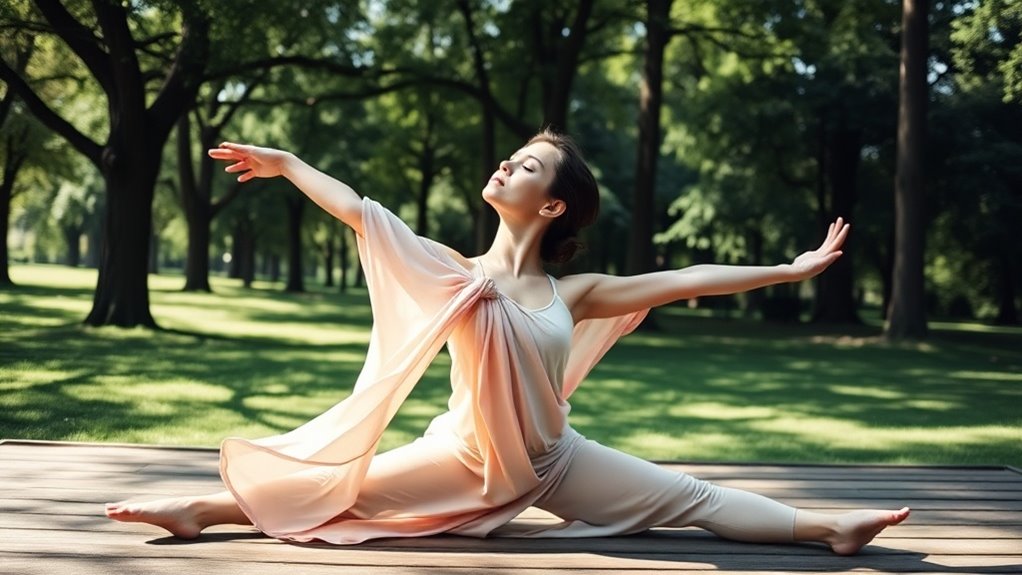
Incorporating gentle movement into your daily routine doesn’t require hours at the gym; even small, consistent actions can make a big difference over time. By adding brief walks or simple stretches throughout your day, you support your mental health and strengthen your habit of movement. These regular breaks activate circulation, reduce stress, and improve mental clarity, helping you stay focused and calm. Establishing routines like morning stretches or evening yoga can reinforce habits that boost long-term mental resilience. Remember, consistency matters more than intensity when it comes to sustaining these benefits.
Consider these points to deepen your understanding:
- Small, frequent movements build a sustainable habit that promotes mental health.
- Routine movement triggers long-term resilience and emotional regulation.
- Mindful, gentle movements can create a calming anchor amid busy days.
Creating a Peaceful Movement Practice to Support Emotional Well-Being
Creating a peaceful movement practice can be a gentle yet powerful way to support your emotional well-being. By incorporating mindfulness into your routine, you allow yourself to connect deeply with your body and feelings. Gentle stretches or slow poses held for several minutes can facilitate emotional release, helping you access and process underlying emotions. Focusing on breath awareness during movement enhances mindfulness, creating a calm space for emotional clarity. This practice encourages patience and acceptance, fostering a non-judgmental attitude toward your emotional states. As you connect physical sensations with emotional awareness, you develop a safe environment for inner healing. Regularly engaging in slow, deliberate movements promotes relaxation of the nervous system, reducing stress hormones. Over time, this mindful approach helps you reset your mind, cultivate resilience, and nurture emotional balance, making gentle movement an essential tool for emotional well-being.
Common Questions
What Is the 5 4 3 2 1 Calming Method?
The 5-4-3-2-1 calming method is a mindfulness practice that uses sensory grounding to help you stay present and reduce anxiety. You identify five things you see, four you touch, three you hear, two you smell, and one you taste. Combining this with breath awareness techniques, it shifts focus away from racing thoughts, promoting calmness and clarity. Regular practice can improve emotional regulation and help you manage stressful moments effectively.
What Is the Best Exercise to Clear Your Mind?
The best exercise to clear your mind is a combination of mindful stretching, deep breathing, and gentle yoga. You focus on slow, deliberate movements, breathe deeply to calm your nervous system, and stretch mindfully to release tension. This practice helps you stay present, reduces mental clutter, and restores clarity. It’s practical, accessible, and perfect for moments when you need a quick mental reset and feel overwhelmed.
What Are the 4 R’s of Meditation?
The 4 R’s of meditation are Recognize, Release, Reconnect, and Reframe. You start by recognizing your thoughts, emotions, and sensations without judgment, then release mental clutter and tension. Next, reconnect through mindful breathing and body awareness to regain mental clarity. Finally, reframe challenging thoughts into positive or neutral perspectives. These mindful practices help you reset your mind, fostering calm and clarity in a practical, compassionate way.
What Is the Fastest Way to Reset Your Nervous System?
The fastest way to reset your nervous system is by combining mindfulness breathing with gentle stretching or a quick nature walk. Just 1-2 minutes of deep, calming breaths can activate your parasympathetic nervous system, while gentle stretches or a brief stroll in nature reduce cortisol and stress hormones. This simple, practical approach instantly signals safety, helping you regain clarity and calmness quickly when stress feels overwhelming.
Summary
Remember, just 10 minutes of gentle movement can boost your mood and reduce stress. Studies show that regular mindful movement can decrease anxiety by up to 40%. So, don’t worry if you’re busy—small, simple actions like walking or stretching can make a big difference. Be kind to yourself and create space to reset your mind daily. These gentle practices can truly support your emotional well-being, helping you feel more centered and calm throughout your busy days.