
When stress spikes unexpectedly, notice if you’re feeling overwhelmed or disconnecting from your feelings. Take a deep breath: inhale through your nose for four seconds, hold briefly, then exhale slowly. Ground yourself by feeling your feet on the floor and relaxing your shoulders. Shift your focus to physical sensations or visualize a calming scene. Developing simple routines can help you access your calm quickly when needed—continue exploring how to anchor yourself whenever stress arises.
Key Takeaways
- Recognize early signs of stress like tension, anxiety, or mental fog to respond promptly.
- Practice deep, slow breathing—inhale for four seconds, hold, then exhale fully to activate relaxation.
- Ground yourself by focusing on physical sensations, such as feet on the floor or breathing in the belly.
- Use quick visualization techniques, like imagining roots grounding you or calming scenes, to redirect focus.
- Establish a daily routine of grounding and breathing exercises to strengthen your ability to stay centered during stress.
Recognize the Signs of Being Out of Center

Recognizing when you’re out of your center can be challenging, especially when stress hits suddenly. During stressful situations, it’s essential to recognize the signs early so you can stay calm and regain control. You might notice feelings of overwhelm, anxiety, or disconnection from your goals and feelings. Mental fog or difficulty concentrating often signals you’re no longer centered, making it hard to think clearly. Emotional imbalance, such as irritability or unexplained sadness, is another key indicator. Physical sensations like tension, shallow breathing, or feeling ungrounded also serve as clues that your natural calm has shifted. These signs aren’t just fleeting moments—they reflect a deeper need to realign. When you learn to identify these signals, you empower yourself to pause and take steps toward restoring your balance. Staying aware of these signs helps you respond effectively, rather than reacting impulsively to stressful situations.
Take Immediate Breathing and Posture Actions
When stress suddenly spikes, your immediate response can make a significant difference in regaining your calm. Start by engaging in simple breathing exercises: inhale slowly through your nose for four seconds, hold for two, then exhale through your mouth for six seconds. This pattern activates your relaxation response, helping to reduce anxiety. Simultaneously, focus on your posture—sit or stand tall with shoulders relaxed and chest open. Maintaining an upright, balanced posture signals to your nervous system that you’re in control, lowering stress levels. Ground yourself by placing your feet flat on the floor, feeling the connection to the ground, which provides stability and reassurance. Use a quick body scan to identify tension in your neck, shoulders, or jaw, then consciously relax those areas. These immediate breathing and posture actions create a foundation of calm, helping you regain composure and feel more centered during sudden stress.
Shift Your Focus to Your Body and Feelings
After taking those immediate breathing and posture steps, shifting your attention inward can deepen your sense of calm. By focusing on your body awareness, you create a space for emotional regulation and anchoring in the present moment. Notice physical sensations like your feet pressing into the ground or your chest rising and falling with each breath. Tune into your emotional state by observing feelings in your chest or stomach without judgment, allowing yourself full acknowledgment. Use gentle attention on your belly, about two finger widths below the navel, to help ground you and soothe your nervous system. Recognize physical cues of stress—such as tight shoulders or rapid heartbeat—and consciously soften or breathe into those areas. This practice helps redirect your focus away from anxious thoughts, fostering a sense of stability and calm as you reconnect with your body and feelings.
Use Quick Visualization or Grounding Techniques
If stress suddenly spikes, quick visualization and grounding techniques can be powerful tools to help you regain calm and focus. Using grounding techniques involves imagining your feet firmly connected to the earth, providing a sense of stability and support that anchors you in the present moment. Visualization can also be effective—picture a peaceful scene like a beach or forest, or imagine a calming light flowing through your body, cleansing away anxiety. Taking a few deep, slow breaths while visualizing inhaling positive energy and exhaling tension can quickly reset your mood. To anchor yourself further, mentally engage your five senses by recalling specific sights, sounds, textures, scents, and tastes associated with calmness. These simple, rapid techniques reduce stress by redirecting your attention inward, helping you feel more centered and in control amid chaos. They’re quick, reassuring tools to help you find your inner balance instantly.
Develop a Routine to Reclaim Your Inner Calm
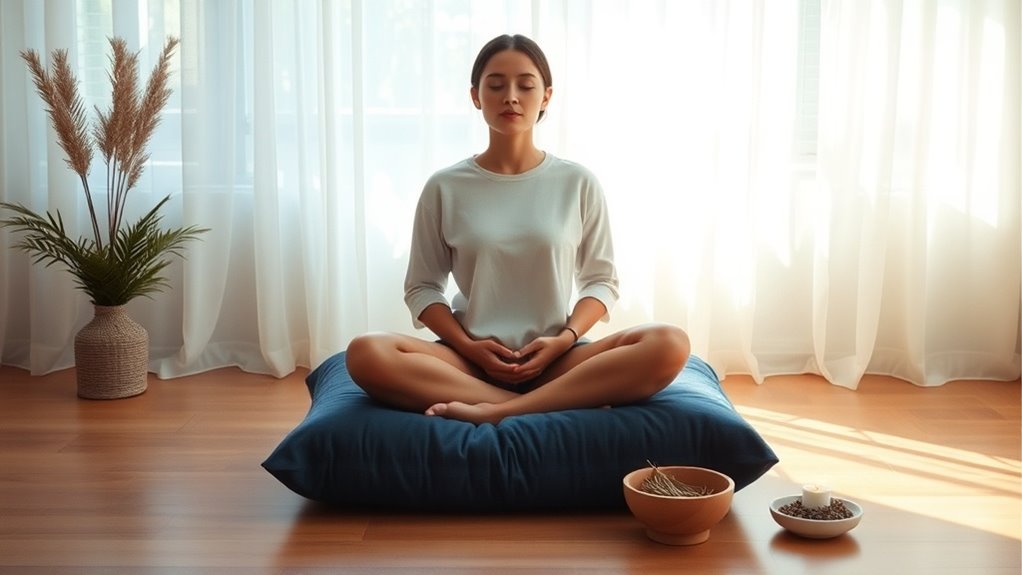
Establishing a consistent routine can be a vital anchor when stress threatens to overwhelm you. When you make space for intentional practices, you create a reliable way to reconnect with your inner calm.
Creating a steady routine helps you reconnect with calm amid stress.
- Practice deep breathing exercises for 5-10 minutes daily, focusing on slow, diaphragmatic breaths to activate your physical and emotional center.
- Incorporate grounding techniques, like pressing your feet into the ground or stretching, to quickly restore balance during sudden stress.
- Use mindfulness or visualization routines, such as imagining a peaceful place, to strengthen your ability to access your inner calm when it counts.
Common Questions
Why Can’t I Handle Stress Anymore?
You might feel like you can’t handle stress anymore because prolonged overwhelm, burnout, or poor self-care strategies have weakened your emotional regulation. Using mindfulness techniques can help you stay present and reduce anxiety. Incorporating self-care strategies like sleep, exercise, and relaxation can rebuild resilience. Remember, it’s normal to struggle, but with patience and consistent practice, you can regain your ability to manage stress more effectively and feel more centered during tough moments.
How to Center Yourself When Overwhelmed?
When overwhelmed, think of yourself as a tree rooted in calm. Use mindfulness techniques like grounding methods—press your feet into the ground—and breathing exercises, inhaling slowly through your nose and exhaling through your mouth. Internally smile or focus on gratitude. These simple steps help reconnect you to your center, easing anxiety and restoring balance. Remember, it’s okay to pause and nurture your inner stability amidst chaos.
What Is the 3 3 3 Rule for Stress?
The 3-3-3 rule for stress is a simple grounding strategy within mindfulness techniques. You focus on three things you see, three sounds you hear, and three physical sensations, helping you stay present. This method incorporates grounding strategies and breathing exercises, promoting calmness during sudden stress. It’s quick, effective, and accessible anywhere, activating relaxation and reducing anxiety in moments of overwhelm.
What Is the 555 Rule for Anxiety?
The 555 Rule for anxiety is a simple, powerful breathing technique that can instantly calm your mind. You breathe in deeply for five seconds, hold that breath, then exhale slowly for five seconds, repeating this five times. This mindfulness exercise acts as a grounding method, resetting your nervous system. It’s like hitting pause, helping you regain control and feel more centered when stress hits hard.
Summary
When stress hits like a storm, remember you’re the calm within the chaos, a lighthouse guiding your ship through turbulent waters. By recognizing your signals, taking a deep breath, and grounding yourself, you can anchor your mind and find your center again. It’s okay to pause and reset—each small step rebuilds your inner peace, turning turbulence into a gentle tide. Trust your resilience; your calm is always just a breath away, waiting to be rediscovered.