
To calm your mind with visualization, start by creating a quiet, comfortable space where you can focus without distraction. Close your eyes and imagine a peaceful scene, engaging all five senses to make it vivid—think bright colors, gentle sounds, and pleasant smells. Use slow, deep breaths to support relaxation and incorporate positive feelings or affirmations. Practicing regularly can strengthen this calming habit, helping you feel more centered and resilient. Keep exploring to discover more ways to nurture your calm.
Key Takeaways
- Choose a quiet, comfortable environment and focus on deep, slow breathing to prepare your mind for visualization.
- Create vivid mental images of peaceful scenes, engaging all five senses for deeper relaxation.
- Incorporate positive affirmations or emotions to strengthen calming associations during visualization.
- Practice regularly, dedicating at least five minutes daily to build mental calmness and emotional resilience.
- Use guided imagery or themed visualizations, such as a safe place or nature scenes, to enhance relaxation effects.
Understanding the Power of Visualization for Mental Calm
Understanding the power of visualization can be a game-changer for calming your mind, especially during stressful moments. When you use mental imagery, you’re activating neural networks in your brain that respond as if you’re experiencing real scenes, which promotes relaxation. Visualization techniques help you calm your mind by shifting focus away from worry and mental chatter, allowing you to engage with vivid, multisensory images. Scientific studies show that imagining peaceful scenes can boost calming neurotransmitters like dopamine and endorphins, aiding in stress reduction. Engaging in detailed mental imagery can also lower physiological stress responses, such as heart rate and cortisol levels. This process not only fosters relaxation but also enhances mindfulness, giving you a tool to manage anxiety more effectively. By understanding how visualization influences your brain and body, you can harness this simple yet powerful technique to find greater calm and emotional balance in your daily life.
Setting Up Your Space and Mind for Effective Visualization
Creating a peaceful space helps your mind settle easily into visualization, so choose a quiet spot free from distractions. Sit or lie down comfortably, supporting your body to stay relaxed throughout your session. By minimizing noise and clutter, you set the stage for a focused and calming experience.
Find Quiet Environment
Finding a quiet, distraction-free space is essential for effective visualization, as it helps your mind focus fully on calming images and thoughts. A serene setting facilitates relaxation and mental clarity, making it easier to connect with your inner calm. To create this environment:
| Aspect | Tips | Benefits |
|---|---|---|
| Lighting | Dim or soft lamps for a tranquil atmosphere | Enhances relaxation and focus |
| Noise Control | Minimize external sounds or turn off electronics | Reduces distractions, fosters calm |
| Comfort | Sit or lie in a comfortable position with good posture | Supports sustained concentration |
| Routine | Practice in the same space regularly | Builds association with mindfulness |
A quiet environment nurtures your mental clarity and comfort, essential for effective visualization.
Use Comfortable Posture
When setting up for visualization, choosing a comfortable posture is key to helping your mind and body relax fully. A comfortable posture, whether sitting or lying down, supports physical ease and minimizes physical tension. Aim for a relaxed position with good body alignment, ensuring your back is supported and shoulders are relaxed. This relaxed position allows you to stay alert without strain, making it easier to focus on your visualization. Incorporate a relaxation technique like deep, slow breathing to further settle your mind and body. Using calming cues such as soft lighting or a cozy environment enhances this sense of safety. Prioritizing physical ease creates a solid foundation, so your mind can relax and fully engage with the visualization process.
Minimize Distractions
To make your visualization practice as effective as possible, it’s important to minimize distractions both in your environment and in your mind. Creating a calm, quiet space helps reduce external distractions, so choose a spot with minimal noise and turn off electronic devices or silence notifications to keep your focus undisturbed. Using dim or natural lighting can foster a peaceful atmosphere that supports concentration. Establishing a routine and dedicated time each day trains your mind to associate that moment with calm and mindfulness, making it easier to enter a focused state. Before you begin, take a few deep breaths to clear unrelated thoughts, helping you shift into a mindful, distraction-free environment. This preparation enhances your ability to relax and fully engage in visualization.
Exploring Different Types of Visualization Exercises
There are several visualization exercises you can try, each offering unique ways to find calm and focus. Techniques like imagining a safe place, practicing color breathing, and guided imagery can help you relax and manage stress more effectively. Exploring these options lets you discover what works best for you on your journey to inner peace.
Safe Place Visualization
Imagine a place where you feel completely safe and at ease, a personal sanctuary you can visit anytime your mind needs a break. Safe place visualization uses mental imagery to create this comforting retreat, helping you achieve relaxation and mindfulness. By engaging all five senses—seeing, hearing, touching, smelling, and tasting—you make the visualization more vivid and effective. This mental imagery can profoundly reduce stress, providing a calming space during anxious moments. Customizing your safe space to fit your preferences makes it easier to access and meaningful to you. Remember, if your mind wanders, gently bring your focus back to the details of your safe environment. Regular practice can deepen relaxation and support your overall mental well-being.
Color Breathing Techniques
Color breathing techniques combine the calming power of breath with the vivid imagery of colors to help you manage emotions and reduce stress. By practicing color visualization during breathing techniques, you can consciously direct your emotional regulation and enhance relaxation. Typically, you inhale calming colors like white or blue, which promote peace, and exhale tension as darker shades like black or gray, releasing stress. Assigning different colors to feelings helps you connect with your emotional state and shift it more effectively. Studies show that this approach can boost stress management and promote a sense of calm more than breathing alone. Using calming colors in your visualization creates a soothing mental environment, making it easier to find serenity and balance in challenging moments.
Guided Imagery Practice
Building on the calming effects of color breathing, guided imagery exercises offer a powerful way to deepen your relaxation. Guided imagery uses structured scripts or prompts to help you create vivid mental images, engaging your senses to foster relaxation and stress reduction. Different types of visualization exercises—like safe place visualization, loving-kindness meditation, or body scan meditations—serve unique calming purposes. As you focus on these mental images, you activate your senses—sight, sound, touch, smell, and taste—to craft immersive environments that soothe your mind. Regular practice can lower cortisol levels, reduce anxiety, and improve sleep. Guided imagery is flexible, allowing you to tailor visualizations to your preferences and needs, making it a compassionate tool to nurture emotional well-being.
Step-by-Step Guide to Practicing Visualization Meditation
Practicing visualization meditation can be a calming and restorative experience if you approach it with patience and gentle focus. Begin by finding a quiet, comfortable space where you won’t be disturbed. Take a few deep breaths, inhaling slowly to invite relaxation and exhaling to release tension. Close your eyes and picture a peaceful scene, like a serene beach or tranquil forest. Engage all your senses—imagine the colors, textures, sounds, and smells—to deepen your mental imagery. As you focus on this scene, pay attention to your breathing, inhaling calmness and exhaling stress. If your mind drifts, gently bring your awareness back to the visualization and your breath. Practice this regularly, gradually strengthening your ability to remain present and centered. This simple yet powerful method can help you cultivate calm and clarity through visualization, meditation, and relaxation.
Benefits of Incorporating Visualization Into Your Routine
Incorporating visualization into your daily routine can bring meaningful benefits to your mental and emotional well-being. When you practice visualization, you’re activating the relaxation response, which helps reduce stress and lowers cortisol levels, making you feel calmer and more centered. This technique also enhances emotional regulation, allowing you to better manage feelings of anxiety and mood swings. As you regularly engage in visualization, you’ll notice improvements in your mental health, creating a more resilient and positive outlook. Additionally, visualization encourages mindfulness by helping you focus on positive outcomes and present-moment awareness, which decreases mental clutter. Many people find that these practices improve sleep quality by calming the mind before bedtime. Overall, integrating visualization into your routine can promote a sense of peace, boost confidence, and support your emotional stability—making it a valuable tool for nurturing your mental health and well-being.
Tips for Enhancing Your Visualization Experience
To make your visualization sessions more effective, it’s helpful to engage all five senses by vividly imagining sights, sounds, smells, textures, and tastes related to your scene. This approach, known as visualization tips, deepens your sense of immersion and relaxation. Focus on creating vivid images—bright colors, clear shapes—that evoke strong mental pictures, which can amplify emotional and physiological responses. Remember to maintain steady, relaxed breathing to enhance focus and prevent your mind from wandering. Incorporating positive affirmations or emotions into your visualization can strengthen mental associations, making the experience more impactful. Find a quiet, comfortable environment for your practice, and gradually increase the duration as your ability to create detailed mental pictures improves. By paying attention to your senses and fostering relaxation, you’ll enhance your overall visualization experience, leading to greater calmness and mental clarity.
Integrating Visualization Techniques Into Daily Life
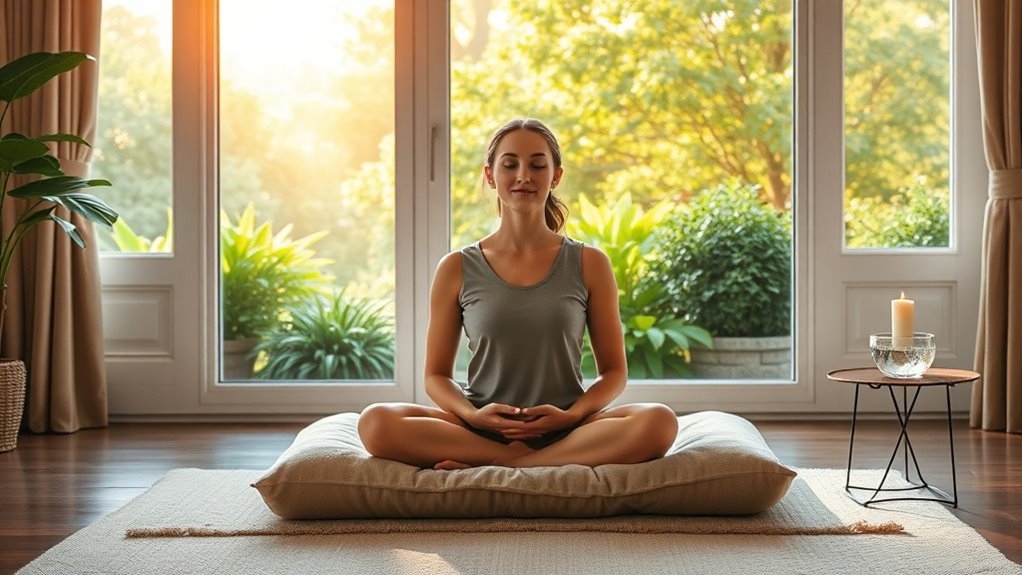
Adding simple visualization techniques into your daily routine can substantially enhance your sense of calm and mental clarity. You might start by imagining a peaceful scene, like a quiet forest or calming blue light, during your morning or evening. These mental imagery exercises can be easily integrated into routine activities, such as commuting or taking breaks, to promote relaxation habits and reduce stress. Set aside just five minutes each day to practice visualization, making it a consistent part of your day. Combining visualization with deep breathing exercises can amplify their effects, helping you achieve greater emotional regulation and mental clarity throughout the day. Personalize your visualization themes—think of favorite nature scenes or your goals—to make your practice more engaging and emotionally meaningful. Over time, these small, intentional moments will become powerful tools for stress reduction and maintaining a calm, centered mind amidst daily challenges.
Common Questions
How to Use Visualization for Anxiety?
To use visualization for anxiety, start with breathing exercises to calm your mind. Then, practice guided imagery by imagining a safe, peaceful place, adding positive affirmations. Incorporate muscle relaxation and grounding techniques to anchor you in the present. Mindfulness meditation helps you stay aware of your thoughts without judgment. With regular practice, these techniques can help rewire your brain, fostering a sense of security and calm when anxiety strikes.
What Visuals Calm Anxiety?
They say a picture is worth a thousand words, and calming visuals can truly soothe your mind. Imagine serene landscapes, gentle movements, and peaceful images surrounded by calming colors. Nature scenes, soothing sounds, and tranquil natural settings help calm anxiety by anchoring your thoughts. Focus on these visuals to create a safe space within, allowing you to feel more relaxed and centered amid life’s chaos.
Can I Train My Brain to Visualize?
Yes, you can train your brain to visualize more vividly. Thanks to brain plasticity, your neural pathways can strengthen through mental rehearsal and focus exercises. By practicing sensory imagery and emotional regulation, you’ll notice clearer mental images over time. Consistent effort helps develop your visualization skills, even if it feels challenging at first. With patience and repetition, you’ll find it easier to create detailed images that bring calm and focus.
Is Visualization a CBT Technique?
Yes, visualization is a CBT technique. It involves mental rehearsal, helping you practice problem solving and emotional regulation. Through cognitive restructuring and thought replacement, you can reframe negative patterns and build self-awareness. Visualization supports emotional regulation and enhances your ability to manage anxiety or fears. By creating vivid mental images, you develop healthier perspectives, making it easier to face challenges with confidence and compassion.
Summary
As you continue to practice visualization, remember it’s like tending a gentle garden within your mind. With patience and care, your thoughts can bloom into peace and clarity, transforming chaos into calm. Each session is a seed of serenity, growing stronger with your consistent nurturing. Trust in this process—your inner sanctuary is always there, waiting to be uncovered. Embrace the journey, and let your mind’s garden flourish into a haven of peace and resilience.