
To breathe with intention and find natural calm, focus on consciously observing your breath—inhale slowly for about 5.5 seconds, then exhale just as deliberately. Use breath awareness as a mental anchor to stay present, activating your relaxation response and reducing stress hormones like cortisol. Practicing daily helps deepen this calm, strengthens your emotional resilience, and supports overall health. As you continue, you’ll discover practical techniques to integrate this powerful practice into your life for lasting well-being.
Key Takeaways
- Practice slow, deliberate breathing (~5.5 seconds per inhale and exhale) to activate the relaxation response.
- Focus on observing your breath without judgment to enhance mindfulness and present-moment awareness.
- Use breath counting or soothing words to deepen concentration and promote a calm mental state.
- Maintain consistency with daily mindful breathing sessions to build emotional stability and mental clarity.
- Incorporate nasal breathing to filter air and support respiratory health, fostering overall calmness.
What Is Deliberate Breathing and Why It Matters
Deliberate breathing is a conscious practice that involves paying close attention to the sensations and rhythm of your breath. By practicing mindfulness and awareness of the breath, you create space for the relaxation response to activate, calming your body and mind. When you breathe with intention, you engage in deep breathing that enhances focus, reduces stress, and promotes clarity. This simple yet powerful technique helps you tune into the natural flow of the breath, strengthening the connection between your body and mind. No special skills or beliefs are required—deliberate breathing is accessible to everyone. It encourages you to observe inhalation and exhalation without judgment, fostering a sense of presence. Over time, this intentional practice can improve lung capacity, which is linked to overall health and longevity. By integrating deliberate breathing into your routine, you harness a tool that cultivates calm, resilience, and greater awareness of the present moment.
The Science Behind the Breath and Its Impact on Health
Understanding the science behind your breath reveals how intentional breathing can substantially impact your health. When you breathe slowly and deliberately, about 5.5 seconds per inhale and exhale, you improve your breathing efficiency and oxygen exchange. Nasal breathing plays a pivotal role by filtering and conditioning air, supporting respiratory health, and reducing the risks associated with mouth breathing. Deep breaths activate the parasympathetic nervous system, which promotes relaxation and helps lower blood pressure. By slowing down your breathing, you stimulate this calming response, reducing stress and anxiety. Additionally, ideal breathing length enhances essential capacity, the maximum air expelled after full inhalation, which is linked to cardiovascular health and longevity. Mastering intentional breathing not only fosters relaxation but also improves overall health by supporting better oxygen delivery, stabilizing blood pressure, and strengthening your respiratory system. Recognizing these scientific principles empowers you to harness your breath for lasting well-being.
Practicing Intentional Breathing for Stress Relief
Practicing intentional breathing starts with cultivating mindful awareness of your breath, allowing you to recognize when stress arises. By consciously slowing your inhalations and lengthening your exhalations, you activate your body’s relaxation response. Using simple techniques like diaphragmatic breathing can deepen calmness and support emotional regulation effectively.
Cultivating Mindful Awareness
By cultivating mindful awareness of your breath, you can anchor yourself firmly in the present moment and create a foundation for stress relief. Paying attention to your physical sensations—such as the rise and fall of your belly—enhances your ability to stay focused and present. Intentional breathing slows your respiration rate, deepening relaxation and fostering a sense of calm. As you observe each inhale and exhale without judgment, you shift from automatic to deliberate breathing, which supports emotional regulation and mental clarity. Using simple cues like “in” and “out” keeps your focus centered on the body and breath, reinforcing mindfulness. This practice cultivates a gentle awareness that nurtures relaxation and helps you access a more calm, balanced state amid daily stressors.
Techniques for Calmness
When you intentionally focus on your breath, you can activate your body’s relaxation response and reduce stress effectively. Breathing techniques like slow, deep inhalations lasting about 5.5 seconds stimulate the parasympathetic nervous system, promoting calmness. Incorporating breathing exercises such as diaphragmatic (belly) breathing enhances oxygen exchange and deep relaxation. Consider these techniques:
- Practice box breathing—inhale, hold, exhale, and hold for equal counts—to regulate your nervous system.
- Cultivate mindfulness by observing breath sensations without judgment, fostering mental clarity.
- Engage in consistent breathing exercises to lower blood pressure and establish a natural sense of calm.
Mastering these techniques can transform your stress response, making calmness a habitual state through intentional breathing.
Simple Techniques to Cultivate Mindful Breathing
To cultivate mindful breathing effectively, start with simple, focused techniques that anchor your attention to each breath. Engage in breath awareness by observing your inhale and exhale without judgment. Techniques like diaphragmatic breathing encourage slow, deep breaths—around 5.5 seconds per cycle—to promote relaxation and reduce stress. Use calming techniques such as silently counting breaths or repeating a soothing word to maintain focus. Incorporate natural settings or gentle sounds to deepen your mindfulness practice and reinforce present-moment awareness. Just five to ten minutes daily of intentional breathing can markedly enhance relaxation and mental clarity. These simple practices help you shift from automatic, shallow breathing to a more intentional, calming rhythm. Consistent use of these techniques cultivates a sense of calm, improves your overall stress relief, and fosters a greater connection to the present moment. Mastering these foundational methods sets the stage for deeper breathwork and emotional balance.
How Breathwork Supports Emotional and Physical Well-Being
Breathwork plays a vital role in supporting both emotional and physical well-being by activating the body’s relaxation response. When you practice intentional deep breathing, you stimulate the parasympathetic nervous system, which reduces stress hormones like cortisol and fosters relaxation. This process enhances emotional regulation by increasing mindfulness and awareness of physical sensations, helping you respond thoughtfully rather than react impulsively. Additionally, slow, deep breaths improve heart rate variability, a key indicator of resilience and mental health. Regular breathwork can lead to measurable improvements such as:
Breathwork activates the relaxation response, reducing stress and improving emotional and physical well-being.
- Lower blood pressure and better cardiovascular health
- Reduced stress and heightened emotional stability
- Increased mental clarity through a calmer nervous system
Daily Rituals From Wisdom Traditions to Enhance Calm
Incorporating daily rituals rooted in wisdom traditions can considerably enhance your sense of calm and presence. These rituals, inspired by philosophies like Stoicism and Eastern practices, deepen your connection to breath, fostering mindfulness and relaxation. Morning reflections on gratitude—focusing on your breath, thoughts, and love—set a mindful tone for the day, cultivating inner calm. Regularly practicing intentional breathing during these rituals not only promotes stress relief but also strengthens emotional resilience. Establishing consistent routines aligned with ancient philosophies encourages a holistic integration of mind, body, and spirit. By dedicating a few moments each day to these mindful rituals, you create a foundation for ongoing relaxation and mental clarity. Over time, this daily practice enhances your overall well-being, helping you maintain calm amidst life’s challenges and fostering a sustained sense of purpose and connection.
Embodying Presence Through Conscious Breathing
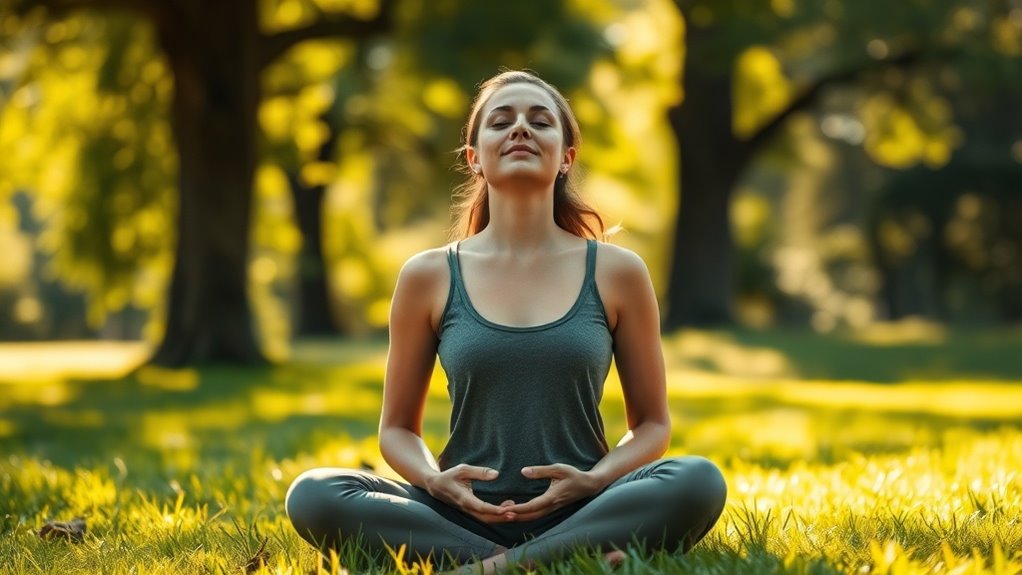
Since your presence is rooted in awareness, consciously directing your attention to your breath can serve as a powerful anchor in the present moment. By intentionally focusing on your breath, you cultivate mindfulness that deepens your awareness of the body and promotes calm. Slow, deliberate inhales and exhales not only encourage relaxation but also reinforce your sense of presence, grounding you fully in the now. To embody this presence through conscious breathing, consider these steps:
Consciously focusing on your breath deepens awareness, promotes calm, and grounds you fully in the present moment.
- Focus on the sensations in your body as you breathe, noticing the rise and fall of your chest or abdomen.
- Breathe with intention, making each inhalation and exhalation deliberate to foster a sense of calm.
- Maintain awareness of your breath, letting it serve as a steady anchor amid mental distractions.
This practice strengthens your ability to breathe with purpose, unblock greater relaxation and a profound sense of being fully present.
Common Questions
How to Breathe With Intention?
To breathe with intention, focus on mindful breathing and diaphragmatic control, placing your hands on your belly to observe movement. Use calming strategies like slow, deliberate inhalations and exhalations, and employ breath awareness to stay present. These relaxation techniques help with stress reduction and energy regulation. Incorporate breathing exercises into your routine, anchoring each cycle with mental cues like “in” and “out” to enhance your calming strategies and achieve natural calm.
What Is the 444 Rule for Breathing?
The 4-4-4 rule for breathing is a mindful breathing technique that involves inhaling for four seconds, holding your breath for four seconds, and exhaling for four seconds. This pattern enhances oxygen intake, promotes relaxation, and aids emotional regulation. By integrating this into meditation practices or relaxation techniques, you’ll experience reduced stress, improved mental clarity, and better overall calmness, making it a simple yet powerful tool for stress reduction and diaphragmatic breathing.
What Is the 555 Rule Breathing?
You might think structured breathing is complex, but the 555 Rule simplifies mindful breathing for effective relaxation. In this technique, you inhale for five seconds, hold for five, and exhale for five, promoting stress relief, better oxygen intake, and mental clarity. Regular practice enhances emotional balance, supports meditation routines, and can improve sleep. This straightforward method is a powerful relaxation technique for cultivating calm amid daily stressors.
What Is the 4 7 8 Rule for Breathing?
The 4-7-8 rule for breathing uses mindful awareness and diaphragmatic technique to promote stress reduction and trigger the relaxation response. You inhale for 4 seconds, hold for 7, then exhale slowly for 8, using rhythmic pacing and breath counting. This practice enhances mental clarity and emotional balance by calming the nervous system, making it an effective tool for managing anxiety and fostering relaxation during challenging moments.
Summary
By mastering intentional breathing, you’re planting seeds of calm in the fertile ground of your mind. With each mindful inhale, imagine drawing in a gentle wave of tranquility; with each exhale, releasing the storm within. This practice is your anchor amid chaos, a lighthouse guiding you back to centeredness. Embrace your breath as a steady current, transforming fleeting moments of stress into a steady stream of peace and clarity.