
Learning to breathe correctly activates your parasympathetic nervous system, promoting calm and reducing stress hormones like cortisol. Slow, diaphragmatic breathing enhances vagus nerve activity, fostering relaxation and mental clarity. Proper technique balances your autonomic responses, helping you focus better and stay centered. By mastering these methods, you’ll support emotional stability and resilience. Keep exploring how precise breathing techniques can transform your calmness and focus, revealing greater well-being.
Key Takeaways
- Proper breathing activates the parasympathetic nervous system, promoting relaxation and reducing stress-induced mental fog.
- Diaphragmatic breathing improves heart rate variability, enhancing focus and emotional stability.
- Slow, controlled breaths regulate cortisol levels, decreasing anxiety and increasing mental clarity.
- Engaging the vagus nerve through correct technique fosters calmness and enhances concentration.
- Consistent practice of proper breathing techniques trains the nervous system to respond calmly during stressful situations.
The Connection Between Breath and Stress Management
Breathing is a essential involuntary function controlled by the autonomic nervous system, which plays a key role in managing your body’s stress response. By practicing specific breathing techniques, you can influence this system to promote calmness. Slow, diaphragmatic breathing activates the parasympathetic nervous system, helping you relax and recover from stress. Conversely, rapid or shallow breathing can trigger the sympathetic nervous system, increasing anxiety and tension. Conscious breathing allows you to modulate heart rate variability, a critical marker of your body’s resilience to stress. When you focus on controlled, deliberate breaths, you engage the vagus nerve, enhancing feelings of calm and counteracting the fight-or-flight response. This connection underscores how intentional breath management can serve as a powerful tool in stress management, enabling you to regulate emotional responses and maintain composure even during challenging situations.
How Relaxation Response Calms the Nervous System
When you activate the relaxation response through controlled breathing, your heart rate slows, signaling the nervous system to shift into a calmer state. This process also helps rebalance hormones like cortisol, reducing stress and restoring equilibrium. Over time, consistent practice enhances mental clarity by supporting a more resilient and focused nervous system.
Slows Heart Rate
Activating the relaxation response through slow, deliberate breathing stimulates the parasympathetic nervous system, which in turn slows your heart rate and promotes a state of calm. By reducing your breathing rate to around 5-6 breaths per minute, you effectively decrease heart rate variability associated with stress. This slow breathing triggers relaxation, lowering the production of stress hormones like adrenaline and cortisol. Engaging in diaphragmatic breathing during periods of tension can cause immediate reductions in blood pressure and heart rate. Regular practice enhances vagus nerve activity, further amplifying the calming effect on your nervous system. As your heart rate slows, you experience increased relaxation, improved focus, and a resilient response to stress, supporting overall cardiovascular and mental well-being.
Balances Hormones
By engaging in slow, diaphragmatic breathing to activate the relaxation response, you can directly influence the balance of hormones involved in stress and mood regulation. This form of diaphragmatic breathing stimulates the parasympathetic nervous system, reducing stress hormones like cortisol and adrenaline, which helps calm the nervous system. Controlled breathing acts as a key relaxation technique, promoting hormone balance and decreasing sympathetic activity, consequently alleviating anxiety and mood disturbances. Consistent practice can normalize hormonal fluctuations caused by chronic stress, leading to improved emotional stability and mental focus.
| Effect on Nervous System | Hormonal Impact |
|---|---|
| Activates parasympathetic | Lowers stress hormones (cortisol, adrenaline) |
| Reduces sympathetic activity | Promotes hormone balance |
| Enhances relaxation techniques | Stabilizes mood and anxiety |
| Supports overall emotional stability | Normalizes hormonal fluctuations |
Promotes Mental Clarity
The relaxation response elicited through proper breathing techniques directly calms the nervous system by decreasing activity in the sympathetic branch. Engaging in slow, deep breathing, particularly diaphragmatic breathing, enhances parasympathetic nervous system activity, which fosters relaxation and mental clarity. This controlled breathing reduces cortisol levels, alleviating stress and mental fog, thereby sharpening focus. Activation of the vagus nerve through diaphragmatic breathing not only promotes relaxation but also improves cognitive function and mood regulation. Regular practice strengthens this response, leading to long-term benefits such as sustained mental clarity and reduced anxiety. By consciously employing deep breathing techniques, you support your nervous system’s ability to *shift* into a state of calm, enabling clearer thinking and emotional stability.
Practical Techniques for Effective Breathing
Practicing effective breathing techniques involves simple yet deliberate methods that can substantially enhance your relaxation and focus. Diaphragmatic breathing, for example, requires you to place one hand on your chest and the other on your abdomen, focusing on expanding your belly with each inhale. This encourages controlled breathing, optimizing oxygen intake and promoting relaxation. Using a steady rhythm, such as inhaling slowly for four seconds and exhaling for six seconds, helps deepen your breath and maintain focus. Techniques like box breathing, where you breathe in, hold, exhale, and hold again for equal counts, further reinforce calmness and stress management. Keep your mouth closed and breathe gently through your nose to maximize oxygen absorption and reduce stress responses. Dedicating 10 to 20 minutes daily to these practices can improve breathing efficiency, leading to greater calmness, sharper concentration, and better overall mental resilience.
The Role of Diaphragmatic Breathing in Enhancing Calm
Although often overlooked, diaphragmatic breathing plays a essential role in fostering a sense of calm by actively engaging the body’s relaxation response. This technique stimulates the parasympathetic nervous system, which is responsible for rest and recovery. When you breathe deeply into your diaphragm, you promote stress reduction and enhance relaxation, helping to stabilize your emotional state.
Diaphragmatic breathing activates the relaxation response, reducing stress and promoting emotional stability.
Consider these key effects:
- It regulates heart rate variability, increasing emotional stability.
- It boosts oxygen flow to the brain, improving focus and mental clarity.
- It lowers cortisol levels, reducing stress and anxiety that hinder concentration.
Recognizing and Overcoming Challenges in Breathing Practices
Recognizing and overcoming challenges in breathing practices is essential for ensuring they are safe and effective for everyone. Personal reactions to breathing techniques vary—what promotes relaxation for one may induce stress or discomfort in another. For example, some individuals experience panic attacks or hyperventilation when focusing intensely on breath, increasing anxiety rather than alleviating it. Incorrect techniques, like shallow or forced breathing, can undermine stress management efforts and cause dizziness or discomfort. Those with respiratory conditions such as COPD or asthma should consult healthcare providers before engaging in new practices to avoid exacerbating symptoms. Environmental factors, like noise or distractions, can also hinder concentration and reduce benefits.
| Challenge | Impact | Solution |
|---|---|---|
| Panic attacks or hyperventilation | Heightened anxiety, discomfort | Start gradually, focus on gentle breaths |
| Incorrect technique | Dizziness, reduced effectiveness | Seek guidance, practice slowly |
| Environmental distractions | Impaired focus, reduced relaxation | Practice in quiet, comfortable space |
When and Where to Seek Guidance for Breathwork
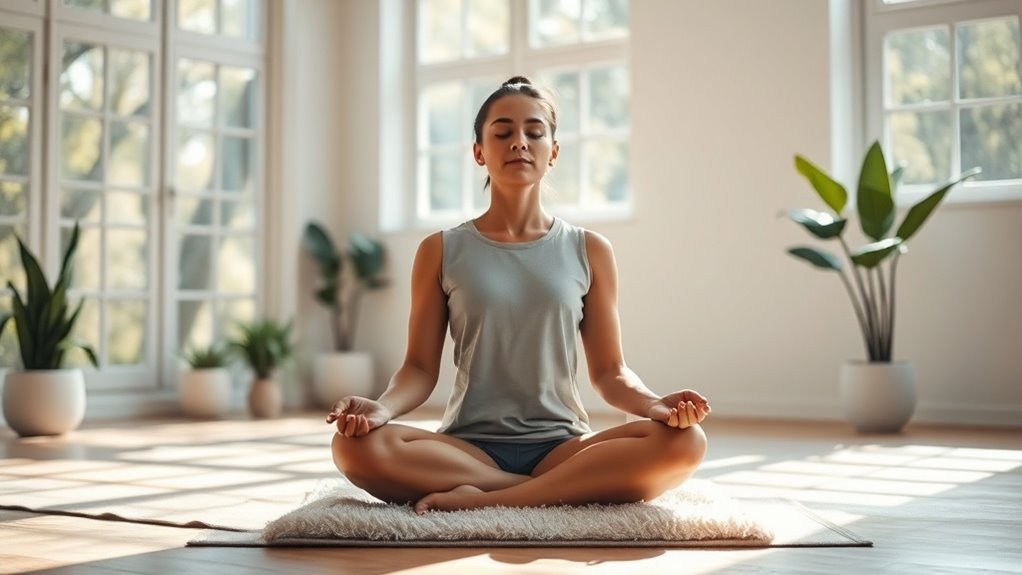
Seeking guidance from qualified professionals, such as respiratory therapists or certified yoga instructors, guarantees safe and effective breathwork, especially if you have health concerns. It’s important to recognize personal triggers and discontinue exercises if discomfort or adverse symptoms occur, consulting a healthcare provider as necessary. Utilizing reputable resources and attending supervised sessions can further support proper technique and prevent risks.
Professional Instruction Benefits
Getting professional guidance for your breathwork practice guarantees you perform techniques safely and effectively. With expert instruction, you can learn correct breathing techniques that prevent hyperventilation or dizziness, ensuring your practice remains safe and beneficial. During guided sessions, professionals offer personalized feedback to help adapt breathing patterns to your unique health conditions or stress levels. They can introduce advanced breathing methods gradually, increasing intensity as you progress. Additionally, expert oversight helps identify and modify breathing patterns that may trigger anxiety or discomfort, fostering long-term improvements.
Here’s what professional instruction offers:
- Precise technique correction and safety assurance
- Tailored feedback for personal needs
- Safe progression into advanced methods
Recognizing Personal Triggers
If you notice that focusing on your breath triggers panic attacks or hyperventilation, it’s essential to stop the exercise immediately and consult a healthcare professional. Recognizing personal triggers is critical for safe stress management and maintaining mental well-being. Be attentive to signs such as increased tension, agitation, or dizziness during breathing exercises. If these symptoms occur, seek guidance from a qualified stress management specialist or respiratory therapist. Use the following table to identify common triggers and appropriate responses:
| Trigger | Response | Professional Guidance |
|---|---|---|
| Hyperventilation | Cease exercises, breathe calmly | Consult healthcare provider |
| Increased anxiety | Adjust technique, seek support | Discuss with mental health professional |
| Dizziness or discomfort | Pause practice, reassess | Seek immediate medical advice |
| Elevated tension or agitation | Switch methods, monitor response | Follow personalized recommendations |
When to Seek Help
Knowing when to seek professional guidance during breathwork guarantees your practice remains safe and effective. If you experience dizziness, shortness of breath, or increased anxiety, it’s vital to stop immediately and consult a healthcare professional, especially if you have an underlying health condition. Proper technique is necessary to avoid hyperventilation and other adverse effects. Seek guidance from a certified yoga instructor or respiratory therapist to ensure you’re practicing correctly. Consider professional help if your stress or anxiety persists despite breathwork.
- You notice persistent symptoms like dizziness or shortness of breath during exercises.
- You have a pre-existing health condition affecting breathing or cardiovascular health.
- You feel overwhelmed or anxious beyond typical practice responses.
Incorporating Breathing Exercises Into Daily Life
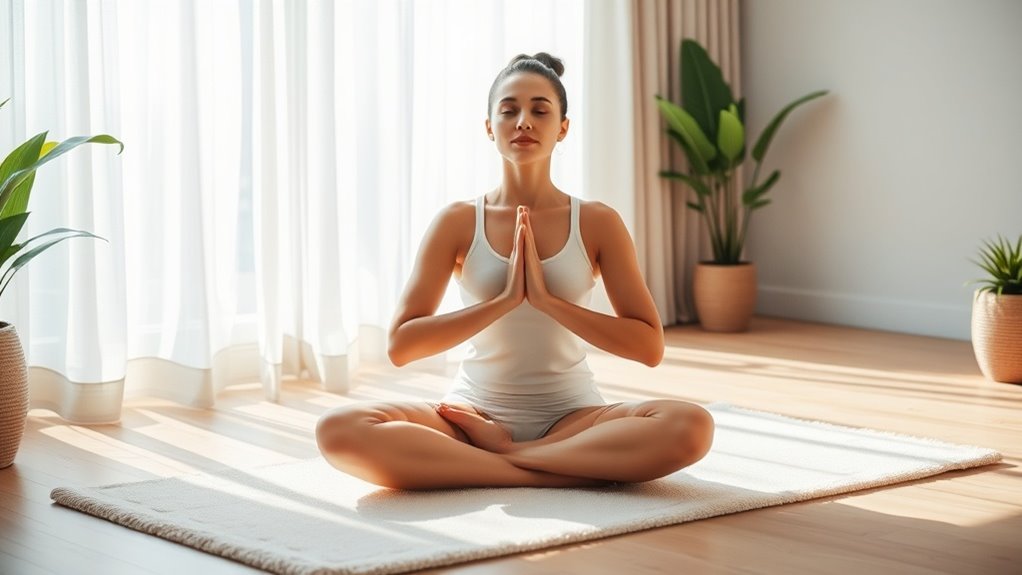
Integrating breathing exercises into your daily routine can considerably enhance your capacity for calmness and focus, provided they are practiced consistently and intentionally. Regularly engaging in diaphragmatic breathing for 5-10 minutes helps regulate blood pressure and heart rate, promoting overall cardiovascular health. Techniques like box breathing, with equal counts for inhale, hold, exhale, and hold, foster sustained stress reduction and mental clarity. During stressful moments or before important tasks, mindful breathing—simply observing your breath without trying to alter it—can quickly restore focus. Setting reminders throughout the day encourages brief pauses for breathing exercises such as alternate nostril breathing or humming bee breath, maintaining mental sharpness. Building these habits gradually increases their effectiveness, allowing calmness and concentration to become natural parts of your routine.
| Practice Technique | Duration/Frequency | Benefits |
|---|---|---|
| Diaphragmatic breathing | 5-10 minutes daily | Stress reduction, heart health |
| Box breathing | During breaks, 3-5 minutes | Mental clarity, calmness |
| Mindful breathing | As needed, especially during stress | Focus, emotional regulation |
Common Questions
How Does Breathing Help With Focus?
Breathing helps with focus by enhancing mindful awareness, which sharpens your attention. It reduces stress hormones, aiding emotional regulation and stress reduction, so your mind stays clear. Proper breathing also boosts energy levels and improves sleep quality, both essential for sustained concentration. By practicing controlled, rhythmic breaths, you activate your parasympathetic nervous system, fostering mental clarity, emotional stability, and resilience, all of which directly support improved focus and cognitive performance.
What Is the 4 7 8 Rule for Breathing?
The 4-7-8 rule is a breathing pattern where you inhale through your nose for 4 seconds, hold your breath for 7 seconds, then exhale slowly through your mouth for 8 seconds. This technique promotes diaphragmatic relaxation, aiding stress reduction and anxiety management. Regular practice can also improve sleep quality by calming your nervous system. It’s a simple, precise tool to foster emotional balance and physical calmness in demanding moments.
What Breathing Techniques Are Good for ADHD?
For ADHD, you should try mindful pauses combined with diaphragmatic breathing to enhance breath awareness. Techniques like rhythmic inhaling and exhaling, guided exercises such as box breathing or 4-7-8, help regulate your nervous system. Consistent practice fosters calmness, improves focus, and reduces impulsivity. Incorporate these methods into your routine to achieve better emotional regulation, cognitive clarity, and sustained attention through controlled, intentional breathing.
How to Learn Concentration Breathing?
To learn concentration breathing, think of it as tuning a radio for clarity. Focus on mindful inhalation, slowly breathing through your nose for a count of 4, and exhale evenly. This breathing pattern enhances respiratory awareness, reduces stress, and improves oxygen intake. Keep your attention on the sensation of breath entering and leaving, cultivating calm and focus. Practice daily for 5-10 minutes to strengthen your concentration and achieve a steady, centered mind.
Summary
By mastering proper breathing techniques, you can markedly reduce stress and enhance focus. Studies show that mindful breathing lowers cortisol levels by up to 30%, fostering greater calm in your daily life. Incorporating these practices may seem simple, but their impact is profound. Remember, consistent effort and proper guidance can make all the difference. Embrace this skill to support your mental clarity and emotional resilience, transforming your response to life’s challenges with precision and compassion.