
Your breath is a natural tool for calming stress, as controlled breathing activates your relaxation response and reduces anxiety. Focus on slow, diaphragmatic breaths, especially with longer exhalations like in 4-7-8 or box breathing, to signal safety to your nervous system. Recognize your reactions to avoid hyperventilation, and incorporate these techniques into daily routines for ongoing stress regulation. Exploring different methods and seeking guidance can deepen your mastery—discover how to harness your breath fully.
Key Takeaways
- Activate the parasympathetic nervous system by slowing your breath, especially through prolonged exhalations like in 4-7-8 breathing.
- Practice diaphragmatic (belly) breathing to enhance relaxation and signal safety to your brain.
- Incorporate mindful breathing techniques, such as box breathing or alternate nostril, into daily routines for stress regulation.
- Recognize personal reactions to breathing exercises and adjust techniques to avoid hyperventilation or discomfort.
- Consistently reinforce breathing practices through reminders, gradual practice, and professional guidance for long-term stress resilience.
Understanding the Connection Between Breathing and Stress
Understanding the connection between breathing and stress reveals how our physiological responses influence emotional well-being. When you’re stressed, your breathing often becomes shallow and rapid, primarily from your upper chest. This disrupts gas exchange and sustains feelings of anxiety, prolonging the stress response. Conversely, controlled breathing, especially diaphragmatic breathing, activates the parasympathetic nervous system—the body’s relaxation mechanism. By consciously slowing your breath, you stimulate this system, which counters the fight-or-flight response triggered by stress. This process not only promotes relaxation but also helps mitigate hormonal changes like increased cortisol levels. Restoring balanced oxygen and carbon dioxide levels through mindful breathing techniques can considerably reduce physical and emotional symptoms of stress. Understanding this dynamic highlights how simple, deliberate breathing exercises serve as powerful tools for anxiety relief and stress reduction, empowering you to influence your emotional state through physiological regulation.
How Controlled Breathing Activates Your Relaxation Response
Controlled breathing activates your parasympathetic nervous system, which is responsible for calming your body and counteracting stress. This activation triggers the relaxation response, helping you manage emotional regulation and reduce cortisol levels. When you practice breathing techniques, such as slow breaths or extended exhalations, your heart rate variability increases, indicating a more resilient nervous system. Lengthening the exhale, like in 4-7-8 breathing, signals safety to your brain, further decreasing stress hormones. Conscious regulation of your breath influences involuntary functions like blood pressure and muscle tension, fostering calmness. Regular practice enhances your ability to quickly shift from stress activation to relaxation, supporting overall stress regulation. Incorporating controlled breathing into your routine can strengthen emotional resilience and improve your body’s natural response to stress.
- Activates the parasympathetic nervous system
- Promotes cortisol reduction through slow, deliberate breaths
- Enhances heart rate variability and emotional regulation
- Signals safety, fostering relaxation and stress relief
Recognizing Personal Reactions to Breathing Exercises
Pay attention to how your body responds during breathing exercises, as signs like dizziness or chest tightness may indicate hyperventilation or discomfort. Recognizing these cues allows you to adjust your technique or pause when needed, ensuring the practice remains safe and effective. Since reactions vary, understanding your personal triggers helps you tailor your approach for better stress regulation.
Signs of Hyperventilation
Have you ever noticed sensations like dizziness, tingling, or a feeling of lightheadedness during breathing exercises? These can be signs of hyperventilation, which occurs when rapid, shallow breath reduces carbon dioxide levels in your blood. Recognizing your reactions is essential to prevent escalating anxiety or panic. Symptoms to watch for include feeling short of breath despite breathing rapidly, numbness or cold sensations in extremities, chest tightness, or feeling faint. These signs may trigger a panic attack, especially if you focus excessively on your breath. To avoid discomfort, pause or adjust your breathing if you notice these symptoms. Being aware of hyperventilation helps you respond calmly, maintaining control and preventing further stress or panic.
Personal Triggers Awareness
Being attentive to your personal reactions during breathing exercises is essential for maintaining a safe and effective practice. Recognizing personal triggers—such as specific emotional responses or physical sensations—helps you identify when techniques may need modification. For instance, feelings of dizziness, panic, or discomfort signal adverse reactions that require adjusting your approach. Noticing tension or agitation suggests that alternative relaxation methods might be more suitable. Developing self-awareness enables you to track these responses and prevent escalation into anxiety. If unsure about your reactions, seeking professional guidance ensures safe and personalized strategies. By understanding and respecting your unique triggers, you can adapt your breathing practice, fostering greater comfort and long-term benefits without risking discomfort or adverse effects.
Techniques for Effective Diaphragmatic Breathing
Maintaining proper posture is essential to guarantee your diaphragm moves freely and effectively during breathing. Focus on keeping your spine aligned and shoulders relaxed to support deep abdominal expansion. By consciously directing your breath toward your abdomen, you’ll enhance relaxation and improve your stress regulation over time.
Proper Posture Alignment
To enhance diaphragmatic breathing, it’s essential to adopt proper posture alignment, which guarantees your lungs can expand fully and your breath remains controlled. Maintaining correct posture ensures effective diaphragmatic movement and supports spinal alignment, reducing tension that can hinder breath flow. A relaxed posture with shoulders back and chest open allows your diaphragm to function ideally. Proper positioning, such as keeping your head aligned over your spine and chin slightly tucked, prevents neck strain. Additionally, body positioning—like placing feet flat and supporting your back—enhances breathing efficiency.
- Keep shoulders relaxed and back
- Maintain neutral head and neck alignment
- Support your back to promote spinal alignment
- Focus on proper body positioning for ideal lung expansion
Focused Abdominal Expansion
Focused abdominal expansion is a fundamental technique for effective diaphragmatic breathing, as it encourages full lung capacity and ideal oxygen intake. By placing one hand on your chest and the other on your abdomen, you guarantee proper abdominal expansion during inhalation. When you take slow, nasal breaths, the diaphragm contracts and moves downward, causing your belly to rise while your chest remains still. This diaphragmatic contraction promotes deeper, more efficient breaths, activating the parasympathetic nervous system and supporting stress reduction. Consistent practice of this technique for 10-20 minutes daily enhances diaphragm strength and reinforces relaxation techniques. Conscious abdominal expansion reduces shallow chest breathing, making it a crucial component of effective diaphragmatic breathing and a powerful tool for managing stress naturally.
Exploring Different Breathing Exercises to Calm the Mind
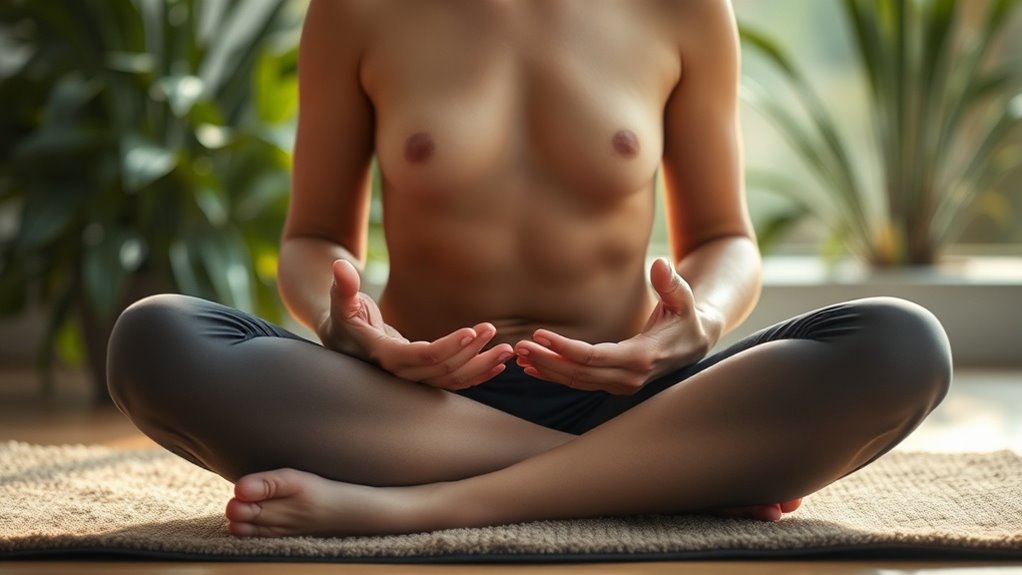
Different breathing exercises offer practical ways to calm the mind and regulate the nervous system, each with unique techniques that target relaxation. Deep breathing exercises, like box breathing, involve inhaling, holding, exhaling, and holding again for equal four-count intervals, helping regulate your nervous system and promote relaxation. The 4-7-8 technique, with a 4-second inhale, 7-second hold, and 8-second exhale, uses specific breathing patterns to bring about stress relief and reduce anxiety. Alternate nostril breathing, or Anulom Vilom, alternates airflow between nostrils to balance emotions and improve lung function, supporting stress management. Bumblebee breath, or Bhramari Pranayama, involves humming during exhalation, creating vibrations that calm the mind. Incorporating habit stacking of deep breaths during daily routines reinforces stress management habits, demonstrating how breathing helps foster resilience through consistent practice. These techniques are essential tools for promoting relaxation and managing stress effectively.
Incorporating Breathwork Into Daily Stress Management
Integrating breathwork into your daily routine can considerably enhance your ability to manage stress consistently. By embedding simple relaxation techniques like mindful breaths, deep breathing, or box breathing into everyday activities, you reinforce breathe control and foster stress reduction. For example, take three mindful breaths during your morning coffee or before meetings. Use reminders on your phone or sticky notes to prompt regular breathwork sessions, strengthening habit formation. Pairing deep breathing with routine tasks—such as brushing your teeth or commuting—makes stress relief seamless. During natural pauses, like waiting in line, practice elongated exhalations to deepen relaxation. Establish a daily schedule—spending five minutes in the morning or evening—dedicated to focused breathing exercises that build resilience over time.
| Activity | Technique | Timing |
|---|---|---|
| Morning routine | Deep diaphragmatic breaths | Upon waking |
| Midday stress trigger | Box breathing or mindful breaths | Before meetings or breaks |
| Evening wind-down | Relaxation techniques like elongated exhalation | Before bed |
When and How to Use Specific Breathing Techniques
Knowing when and how to employ specific breathing techniques can considerably enhance their effectiveness in managing stress. Timing is vital; use the deep breathing technique like box breathing during moments of heightened stress to quickly activate your relaxation response and reduce stress hormones. Practice the 4-7-8 technique before sleep to promote relaxation and better sleep quality. During waiting periods or routine activities, elongated exhalations help manage stress by stimulating breathe control and calming the nervous system. When emotions run high, incorporate alternate nostril breathing to balance your nervous system and reduce anxiety. Additionally, the 3 mindful breaths method, taken during daily routines, reinforces ongoing stress regulation.
- Use box breathing during stress peaks for immediate calming
- Practice 4-7-8 breathing before sleep for relaxation
- Employ slow exhale during routine activities to activate relaxation response
- Incorporate alternate nostril breathing during emotional intensity
Tips for Maintaining Consistency and Gaining Maximum Benefits
Establishing a consistent breathing practice is essential for reaping its long-term stress-reduction benefits. To build a sustainable habit, integrate specific exercises like 4-7-8 or box breathing into your daily routine at set times. Reminders on your phone or sticky notes can reinforce regular practice, making it easier to stay on track. Start with just a few focused minutes each day, gradually increasing duration as the practice becomes routine. Pairing breathing exercises with existing habits, such as brushing your teeth or waiting for your coffee, helps embed the practice seamlessly into your day. Tracking your progress through a journal or app allows you to observe improvements in stress levels, boosting motivation and reinforcing consistency. Remember, the key to gaining maximum benefits lies in maintaining discipline and patience, ensuring your routine becomes an integral part of your lifestyle and supports long-term stress regulation.
Seeking Professional Support for Personalized Breathing Strategies
While developing a consistent breathing practice can greatly reduce stress over time, some individuals may find that personalized guidance enhances their progress and safety. Seeking professional support ensures you receive expert advice tailored to your unique stress triggers and health conditions. A healthcare professional can assess your specific needs and help you develop personalized breathing strategies that optimize your stress management efforts.
Personalized guidance enhances breathing practice safety and effectiveness for stress management.
- Targeted guidance to prevent hyperventilation or panic during exercises
- Access to advanced breathing techniques for chronic anxiety or health issues
- Adaptation of strategies as your stress levels or health conditions evolve
- Incorporation of evidence-based approaches like cognitive-behavioral therapy for long-term resilience
With professional support, you’ll gain confidence in applying breathing techniques correctly, improving your stress resilience and overall well-being. Personalized strategies ensure safe, effective practice, empowering you to harness your breath as a powerful stress regulator.
Common Questions
Does Holding Your Breath Reduce Anxiety?
Holding your breath can momentarily reduce anxiety by enhancing mindfulness and activating relaxation techniques like diaphragmatic breathing. Controlled breath control and paced respiration promote physiological effects that support emotional regulation during meditation practices. However, prolonged breath-holding may cause discomfort or panic, so it is crucial to approach it gently. Combining breath-holding with steady, mindful breathing can optimize relaxation, but listen to your body to avoid overstimulation.
How to Use Breathing to Reduce Stress?
To reduce stress, practice mindful breathing with diaphragmatic control, focusing on rhythmic inhalation and exhalation techniques. Enhance breath awareness by paying attention to your breath, which triggers the relaxation response. Incorporate calming exercises like 4-7-8 breathing to manage stress effectively. These methods activate your body’s natural stress management system, fostering emotional resilience, physical relaxation, and mental clarity during challenging moments.
How to Use a Breathing Restrictor?
Begin by balancing breath control—gently adjusting your breathing restrictor to regulate inhalation and exhalation. Focus on diaphragmatic breathing, practicing slow inhale techniques and controlled exhale exercises to enhance breathing patterns. Cultivate breath awareness, ensuring comfort without hyperventilation, as you engage in respiratory training for stress relief. This mindful modulation deepens your connection to breath, fostering relaxation and resilience through precise, compassionate practice.
Does Breathing Through a Straw Help Anxiety?
Breathing through a straw can help reduce anxiety by promoting controlled exhalation and slow respiration, which activates relaxation responses. Incorporate pursed lips and diaphragmatic breathing during mindful inhalation and exhalation techniques to enhance breath awareness. This method encourages relaxation breathing, using controlled exhalation to calm the nervous system. However, practice cautiously to avoid discomfort or excessive carbon dioxide buildup, ensuring your breathing remains comfortable and effective.
Summary
Your breath is a quiet anchor amidst life’s chaos, a steady rhythm guiding you back to calm. By understanding and harnessing this natural tool, you can transform stress into clarity, chaos into calm. Like a gentle tide, consistent practice deepens your connection to this inner reservoir of peace. Embrace your breath as both a refuge and a guide, nurturing resilience with every mindful inhale and exhale — a symbol of your ongoing journey to balance.