
To calm your body’s stress response naturally, focus on engaging in gentle physical activities like stretching or yoga, which boost mood and reduce tension. Practice mindfulness and slow breathing to activate relaxation responses. Prioritize restful sleep and nourish yourself with balanced foods rich in magnesium, B vitamins, and omega-3s. Setting boundaries and seeking support when needed also help manage stress. Continuing can reveal more holistic ways to nurture your resilience and emotional well-being.
Key Takeaways
- Practice mindfulness and deep breathing exercises to activate the relaxation response and lower cortisol levels.
- Engage in regular physical activities like yoga, stretching, or outdoor walks to release tension and boost mood.
- Prioritize quality sleep with consistent routines and a calming environment to support stress regulation.
- Maintain a balanced diet rich in magnesium, B vitamins, and omega-3s to enhance the body’s resilience to stress.
- Foster social connections and seek emotional support to reduce feelings of overwhelm and promote mental calmness.
Engage in Physical Activity to Release Tension
Engaging in physical activity is a powerful way to release tension and support your body’s natural stress response. When you move—whether it’s walking, jogging, cycling, or even gardening—you stimulate your production of endorphins, your body’s natural mood boosters. These chemicals help reduce feelings of stress and elevate your sense of well-being. Regular physical activity also lowers cortisol, the primary stress hormone, calming your body’s stress response over time. Even moderate activities like household chores or gentle stretching can distract your mind and ease tension. Building endurance through consistent exercise not only enhances your physical resilience but also improves mental toughness in stressful moments. Plus, engaging in movement regularly helps improve sleep quality, which is essential for managing stress effectively. By making physical activity a part of your routine, you’re nurturing both your body and mind in a compassionate, evidence-based way, fostering lasting stress relief.
Practice Mindfulness and Deep Breathing Exercises
Practicing mindfulness and deep breathing exercises can be powerful tools to calm your nervous system and reduce stress. Techniques like paying gentle attention to the present moment or engaging in diaphragmatic breathing activate your body’s relaxation response. Just a few minutes each day can enhance emotional balance and resilience, supporting your overall well-being.
Techniques for Mindfulness
Since taking a moment to focus on your breath can considerably reduce stress, incorporating mindfulness and deep breathing exercises into your daily routine is a simple yet powerful way to nurture your well-being. Mindfulness involves paying full attention to the present moment, often through breath awareness, fostering relaxation and mental clarity. Deep breathing, like diaphragmatic breathing, slows your heart rate and activates your body’s relaxation response, lowering stress hormones. Regular practice enhances emotional regulation and reduces anxiety. To deepen your understanding, consider this table:
| Mindfulness | Deep Breathing | Stress Reduction |
|---|---|---|
| Focused awareness | Slow, deliberate breaths | Promotes relaxation |
| Present moment | Activates calming response | Lowers cortisol levels |
| Emotional balance | Enhances mental clarity | Builds resilience against stress |
Incorporate these techniques daily for lasting calm and well-being.
Deep Breathing Methods
Deep breathing methods are a simple yet powerful way to activate your body’s relaxation response and reduce stress. By practicing deep breathing, like diaphragmatic breathing, you can slow your heart rate and lower blood pressure, fostering a sense of calm. Using slow, deliberate breaths—inhale for 4 seconds, hold, then exhale for 6 seconds—enhances your stress management and promotes mental clarity. When combined with mindfulness, deep breathing helps disengage your mind from distracting thoughts, anchoring you in the present moment. This practice stimulates the vagus nerve, calming your nervous system and decreasing cortisol levels. With consistent effort, deep breathing exercises can strengthen emotional regulation and diminish anxiety, supporting your journey toward holistic well-being and inner peace.
Incorporate Yoga and Gentle Stretching Routines
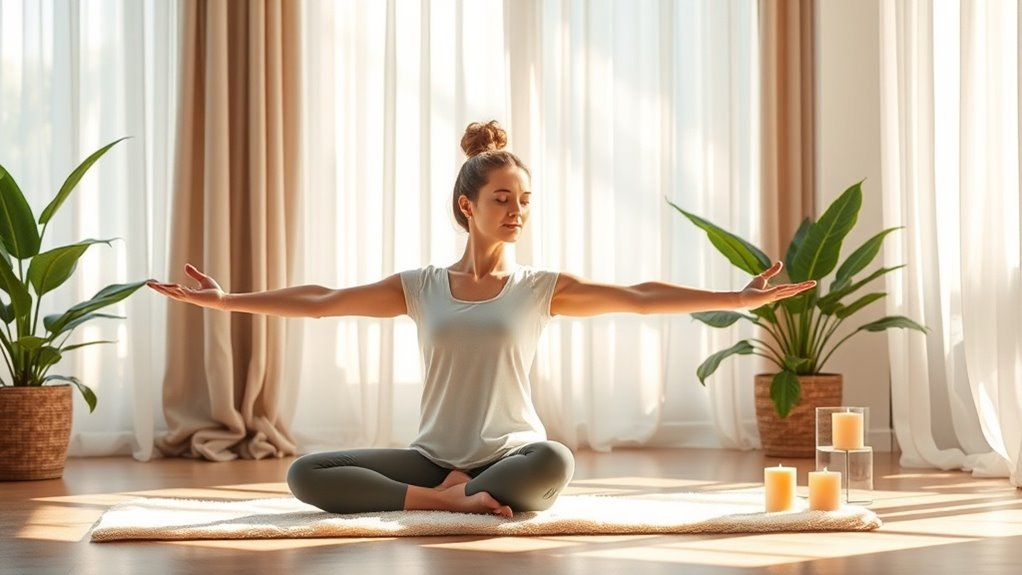
Incorporating yoga and gentle stretching routines into your daily life can be a powerful way to activate your body’s relaxation response and reduce stress. Yoga practices like Hatha and Vinyasa combine mindful breathing with gentle postures, helping to lower stress hormones and calm your nervous system. Stretching routines improve flexibility and release physical tension, which often stores stress in muscles. When you focus on slow, intentional movements, you enhance relaxation and foster a sense of mental calm. The diaphragmatic breathing practiced in yoga increases GABA levels, supporting mood stabilization and anxiety reduction. Mindful stretching encourages present-moment awareness, further lowering cortisol levels. Over time, consistent gentle stretching not only relaxes your body but also improves sleep quality and emotional resilience. By making yoga and stretching a regular part of your routine, you nurture both your physical and mental well-being, creating a natural refuge from daily stress.
Prioritize Quality Sleep and Restful Nighttime Habits
Prioritizing quality sleep is vital for calming your body’s stress response and supporting overall well-being. When you establish a consistent, relaxing bedtime routine, you signal to your body that it’s time to unwind, making it easier to drift into restful sleep. Aim for 7 to 9 hours of sleep each night, as adequate rest helps regulate the stress response and boosts emotional resilience. Creating a sleep-friendly environment can make a big difference—think cool, dark, and quiet surroundings that foster deep, restorative sleep. Limiting screen time at least an hour before bed is essential, since blue light suppresses melatonin, making it harder to fall asleep. Incorporate relaxation techniques like deep breathing or progressive muscle relaxation into your routine to ease tension. Visualize yourself:
- Reading a calming book in soft lamplight
- Taking a warm bath to soothe your muscles
- Setting a cool, dark room for peaceful sleep
Maintain a Balanced and Nutritious Diet
Maintaining a balanced and nutritious diet is essential for calming your body’s stress response and supporting overall mental well-being. When you focus on nutritious foods like fruits, vegetables, and whole grains, you provide your body with crucial nutrients such as magnesium and B vitamins that aid in stress regulation. Limiting ultra-processed foods and added sugars can help reduce perceived stress and lift your mood. Including adequate protein from lean sources helps stabilize blood sugar levels, preventing mood swings linked to stress. Foods rich in omega-3 fatty acids, like fatty fish, can reduce inflammation and bolster your mental resilience. Additionally, consulting a healthcare professional about supplements like magnesium may offer further support when integrated into a balanced diet. By nourishing your body with wholesome foods, you strengthen your ability to manage stress naturally and cultivate a resilient mind and body.
Connect With Supportive Friends and Family
Connecting with supportive friends and family creates a safe space where you can share your feelings openly, reducing feelings of isolation and anxiety. These relationships help lower cortisol levels and strengthen your resilience to stress. By nurturing your social network, you foster a sense of belonging that naturally calms the body’s stress response.
Building Strong Support Networks
Spending time with loved ones can considerably reduce your perceived stress levels by offering emotional support and a sense of security. Building strong support networks is essential for effective stress management and boosting your mental resilience. When you connect with friends and family, your oxytocin levels increase, helping to lower cortisol, the stress hormone. Engaging in family activities or joining support groups can deepen your relationships, providing a reliable source of comfort during tough times. Visualize yourself sharing a heartfelt conversation over dinner, participating in group walks, or supporting a loved one’s goal. These moments foster emotional support, strengthen bonds, and create a safety net that nurtures your well-being and resilience.
- Sharing laughter and memories around a cozy table
- Supporting each other through challenges
- Celebrating successes together
Sharing Feelings Freely
Sharing your feelings openly with supportive friends and family can considerably ease emotional tension and lower your stress levels. When you share feelings, you release emotional buildup that might otherwise cause physical symptoms like headaches or high blood pressure. This process provides crucial emotional support, which boosts your mental health and resilience. Studies show that social support during tough times decreases cortisol, the stress hormone, fostering a sense of safety and connection. Talking honestly about worries helps clarify your thoughts, making challenges seem more manageable. Regularly connecting with loved ones creates a sense of belonging, essential for stress relief and overall well-being. Embracing this open sharing promotes a holistic, compassionate approach to calming your body’s stress response naturally.
Use Relaxation Techniques Like Guided Imagery and Body Scan
When you incorporate relaxation techniques like guided imagery and body scans into your routine, you create a powerful way to calm your body’s stress response naturally. These methods activate your relaxation response and promote stress reduction, helping you regain emotional balance. Guided imagery involves visualizing calming scenes—such as a peaceful forest or gentle ocean waves—that soothe your mind. Using recordings or apps with soothing sounds can enhance this experience. The body scan technique combines focused breathing with progressive muscle relaxation, releasing physical tension in each muscle group. Practicing these techniques regularly can lower cortisol levels and improve mental clarity. Imagine yourself:
- Sitting comfortably, picturing a tranquil lake, feeling the serenity wash over you.
- Focusing on each part of your body, releasing tension with every breath.
- Using calming sounds or gentle visuals to deepen your relaxation.
Incorporating guided imagery and body scan into your routine nurtures your mental and physical well-being, fostering resilience against stress.
Manage Stressors by Setting Boundaries and Taking Control
Taking control of your stress begins with setting clear boundaries and establishing routines that support your well-being. By defining limits—like reducing work hours or declining unnecessary commitments—you create space to manage your energy and prevent overwhelm. Communicating your needs and limits openly helps others understand your boundaries, reducing the stress from unmet expectations. Prioritizing tasks and focusing on one thing at a time empowers you to manage your workload effectively, decreasing frustration and anxiety. When you address problems directly and seek practical solutions, your sense of control grows, easing feelings of helplessness. Establishing consistent routines brings predictability to your daily life, which can profoundly lower stress levels. Remember, managing stress isn’t about perfection but about creating a supportive environment where you feel capable and in control of your responses. Small, intentional steps toward setting boundaries and taking control can markedly impact your overall sense of calm and resilience.
Foster Creativity and Enjoy Leisure Activities

Engaging in creative and leisure activities can be a powerful way to calm your body’s stress response and nurture your emotional well-being. When you immerse yourself in creative activities like painting, writing, or playing music, you lower cortisol levels and reduce stress. Leisure activities such as gardening, dancing, or crafting stimulate endorphin release, boosting your mood and promoting relaxation. These hobbies also serve as mental distractions, strengthening your emotional resilience over time. Additionally, outdoor leisure pursuits like hiking or birdwatching combine the calming effects of nature with creative expression, enhancing stress reduction. Visualize yourself:
- Holding a paintbrush, colors flowing onto the canvas, calming your mind
- Dancing freely in your living room, releasing tension through movement
- Walking among trees, listening to birdsong, soaking in nature’s tranquility
Seek Professional Support When Needed
After exploring creative and leisure activities to soothe your stress, reaching out for professional support can further enhance your well-being. Seeking help from mental health professionals offers tailored strategies to manage chronic stress effectively. They can identify underlying issues contributing to your stress and recommend appropriate treatments, such as therapy or counseling. Evidence shows approaches like Cognitive Behavioral Therapy (CBT) can markedly reduce stress and improve your coping skills. Consulting healthcare providers ensures any physical symptoms related to stress are properly evaluated and addressed, preventing escalation. Early intervention with professional support can protect your mental and physical health, helping you regain balance when stress feels overwhelming.
| When to Seek Help | Why It Matters |
|---|---|
| Persistent stress | Address root causes early |
| Physical symptoms | Prevent health complications |
| Emotional overwhelm | Improve mental resilience |
| Lack of progress | Find effective support |
Common Questions
How to Reduce Stress Naturally?
To reduce stress naturally, start with mindful breathing practices like diaphragmatic breathing to calm your nervous system. Incorporate herbal remedies such as chamomile or lavender, and use aromatherapy techniques to promote relaxation. Engage in stress reduction exercises like gentle yoga or progressive muscle relaxation. These holistic approaches are backed by evidence and foster a compassionate, nurturing environment that helps your body relax and respond more calmly to daily stressors.
How to Get Stress Out of Your Body?
Imagine your stress melting away like waves softly retreating from the shore. To get stress out of your body, practice mindful breathing to center yourself, paired with gentle stretching to release tension. Incorporate herbal relaxation teas and soothing music to deepen the calm. These holistic, evidence-based practices nurture your mind and body, helping you gently let go of stress and restore inner harmony with compassion.
How to Reset Your Body From Chronic Stress?
To reset your body from chronic stress, embrace mindfulness meditation and deep breath exercises daily, fostering calm and awareness. Incorporate aromatherapy techniques like lavender or chamomile to soothe your nervous system. Herbal supplements such as magnesium or adaptogens can support recovery, while consistent practice of these holistic methods nurtures resilience. Be compassionate with yourself, and prioritize these calming routines to help restore balance and promote overall well-being naturally.
What Are the 5 R’s of Stress Management?
The 5 R’s of stress management are Recognize, Reduce, Relax, Reframe, and Reach Out. You can apply mindful breathing, progressive relaxation, and guided imagery during Relax to soothe your body. Body awareness helps you Recognize stress early, while reframing negative thoughts fosters resilience. Reaching out for social support adds emotional strength, creating a holistic, compassionate approach that supports your body’s natural ability to calm itself and restore balance.
Summary
Think of your stress response as a garden that can flourish or wither. By tending to it with mindful practices—like watering with deep breaths and pruning with healthy habits—you nurture resilience. Remember, you’re the gardener of your well-being; patience and compassion cultivate calm. With consistent care, your body’s natural balance blossoms, transforming tension into tranquility. Embrace this gentle journey, knowing each mindful choice helps your inner landscape thrive.