
Calmness plays a vital role in enhancing your physical strength by regulating stress hormones like cortisol, which can hinder recovery and muscle growth when elevated. When you’re calm, your focus sharpens, and your body activates the parasympathetic nervous system, aiding quicker recovery and reducing inflammation. Developing inner calm through mindfulness, breathwork, or gentle movement can improve resilience, mental clarity, and physical power. If you explore further, you’ll uncover practical ways to harness calmness for maximum strength.
Key Takeaways
- Calmness reduces cortisol levels, decreasing muscle breakdown and promoting faster recovery and growth.
- Mindfulness and relaxation activate the parasympathetic nervous system, enhancing physical resilience and strength.
- Stress management through calm techniques improves sleep quality, vital for muscle repair and strength development.
- Inner calm helps sharpen focus and technique execution, leading to improved physical performance.
- Consistent relaxation practices foster emotional stability, supporting sustained physical strength and injury prevention.
Understanding the Mind-Body Connection
Understanding the mind-body connection is essential because your mental and physical states continuously influence each other in a complex, bidirectional way. When you experience emotional events, your body reacts through chemical responses like adrenaline, affecting sensations such as increased heart rate and muscle tension. Physical activity plays a vital role in this relationship by releasing endorphins and regulating neurotransmitters like serotonin and dopamine, which support mental health and emotional regulation. Engaging in mindfulness and breathwork can enhance awareness of these connections, helping you manage stress more effectively. As your physical state shifts between tension and relaxation, so does your mental clarity and emotional stability. Recognizing this interplay allows you to adopt practices that strengthen both aspects, ultimately improving physical strength and overall well-being. By understanding how your mind and body influence each other, you can develop targeted strategies for maintaining balance and resilience.
The Benefits of Calmness on Physical Strength
When you stay calm during physical activity, your stress levels decrease, which can lead to faster muscle recovery and better performance. This mental state also sharpens your focus and control, helping you execute techniques more effectively and build strength. Additionally, calmness supports improved recovery, endurance, and injury prevention by promoting better body awareness and physiological balance.
Reduced Stress Levels
Have you ever noticed how calming down before a workout can actually boost your strength? This is because stress reduction lowers cortisol levels, which helps prevent muscle breakdown and supports quicker muscle recovery. When you’re calm, your parasympathetic nervous system activates, promoting relaxation and reducing mental fatigue, so you can focus better during training. Chronic stress triggers inflammation, hindering muscle repair and growth—calmness, on the other hand, diminishes this effect. Additionally, a relaxed state improves sleep quality, essential for recovery and sustained strength. By managing stress, you create an ideal environment for your body to repair, grow, and perform at its best. Reduced stress levels aren’t just about mental well-being—they’re a critical factor in building physical strength.
Enhanced Focus and Control
| Skill | Benefit |
|---|---|
| Focus | Calmness sharpens your focus, enabling better attention to detail during exercises. |
| Mental Clarity | It enhances mental clarity, helping you execute precise movements consistently. |
| Control | Calm states improve neuromuscular control, optimizing technique and reducing injury risk. |
| Concentration | Sustained calm boosts concentration, maintaining effort over longer sessions. |
| Performance | Overall, mindfulness and control lead to improved efficiency and stronger results. |
Calmness substantially enhances your focus and control during physical activities, directly impacting your strength development. When your mind is clear, your concentration improves, making technique more precise. This heightened control increases efficiency and reduces injury risk, allowing you to sustain effort and perform better. Maintaining a composed mindset helps regulate adrenaline, ensuring consistent strength output. By cultivating calm, you develop mental clarity that enables you to execute movements with precision, ultimately boosting your overall physical performance.
Improved Recovery and Growth
Calmness plays a essential role in optimizing your recovery and supporting muscle growth by regulating key physiological processes. When you’re calm, stress reduction lowers cortisol levels, which can impair muscle repair and hinder growth. A relaxed state enhances nervous system function, leading to better muscle coordination and strength development. Mindful breathing and meditation decrease inflammation caused by stress, facilitating more effective muscle repair. Additionally, calm mental states improve sleep quality, critical for recovery and muscle growth. When you’re at ease during training, you’re less likely to overtrain or sustain injuries, ensuring sustainable strength gains. Overall, cultivating calm not only accelerates recovery but also creates an ideal environment for ongoing muscle development and resilience.
Techniques to Cultivate Inner Calm for Better Performance
Developing inner calm is essential for optimizing performance, especially under pressure, and can be achieved through targeted techniques that activate the body’s relaxation responses. Mindfulness meditation for just 10 minutes daily can markedly reduce cortisol levels, fostering a sense of inner calm and stress reduction. Deep breath control through diaphragmatic breathing activates the parasympathetic nervous system, enhancing relaxation and mental clarity. Visualization exercises focusing on peaceful scenes increase alpha brain wave activity, promoting calmness and sharper focus. Practices like yoga or tai chi combine movement, breath control, and mindfulness, cultivating sustained inner tranquility. Additionally, progressive muscle relaxation helps release physical tension, supporting emotional stability and mental composure. By systematically integrating these techniques into your routine, you’ll create a foundation of inner calm that not only reduces stress but also enhances your physical strength and mental performance. This methodical approach ensures a balanced, resilient state conducive to peak performance.
The Role of Mindfulness and Relaxation in Building Resilience
Building resilience goes beyond simply managing stress in the moment; it involves cultivating ongoing mental and physiological strength through mindful practices. Mindfulness techniques like deep breathing and body scans activate the parasympathetic nervous system, fostering relaxation and enhancing resilience. Regular relaxation exercises, such as progressive muscle relaxation and guided imagery, help reduce cortisol levels and improve emotional regulation, leading to a steadier response to stress. Mindfulness meditation strengthens neural connectivity in regions responsible for emotional control, enabling you to maintain calmness under pressure. Incorporating brief periods of mindful awareness during physical activities like yoga or tai chi enhances body awareness and mental clarity. These practices support stress reduction and promote a resilient physiological response by lowering heart rate variability and blood pressure. Consistent mindfulness and relaxation serve as foundational tools, reinforcing your capacity to adapt and recover when faced with life’s challenges, ultimately linking calm with physical and emotional strength.
Integrating Relaxation Practices Into Your Fitness Routine
Incorporating relaxation practices into your fitness routine can considerably enhance both your physical performance and mental well-being. By integrating mindfulness meditation, deep breathing exercises, yoga, or tai chi, you activate the parasympathetic nervous system, fostering relaxation and recovery. These practices support physical strength while cultivating mental calm through breath control and focused movement. Regular routines like stretching or progressive muscle relaxation lower cortisol levels, building stress resilience. Visualization techniques during workouts can also sharpen focus and promote inner peace, complementing your physical efforts.
| Relaxation Practice | Benefits for Your Fitness Routine |
|---|---|
| Yoga & Tai Chi | Enhance physical strength and mental calm through combined movement and breath control |
| Mindfulness & Breath Control | Improve stress resilience and mental clarity, aiding recovery and focus |
| Stretching & Relaxation | Reduce cortisol levels, support emotional balance |
| Short Mindfulness Breaks | Boost mental calm during workouts, sharpening focus |
Enhancing Mental and Physical Power Through Balance
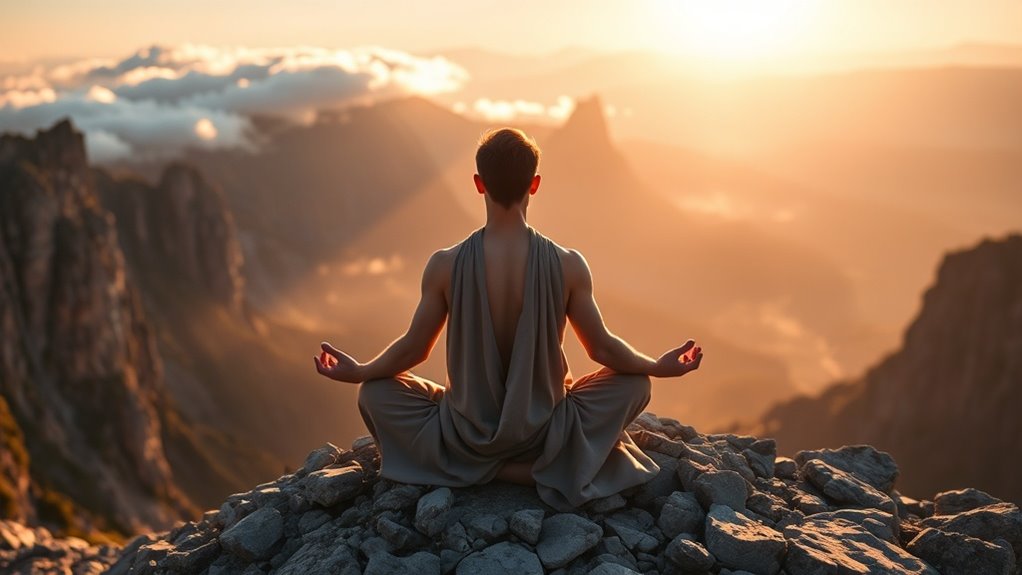
By integrating relaxation techniques with physical training, you can cultivate inner calm while building resilient strength. This balance helps you maintain focus, reduce stress, and improve performance under pressure. When you harmonize mind and body, you develop sustainable power that enhances overall well-being.
Cultivating Inner Calm
Achieving inner calm is essential for enhancing both mental clarity and physical resilience, and it can be cultivated through deliberate practices like mindfulness and meditation. These relaxation techniques lower cortisol levels by up to 30%, boosting mental resilience and physical strength. Deep breathing exercises activate the parasympathetic nervous system, reducing heart rate and blood pressure, which improves emotional regulation and stress reduction. Activities such as yoga and tai chi blend slow movements with breath control, fostering physical balance and mental stability. To visualize this connection:
| Practice | Benefits |
|---|---|
| Mindfulness & Meditation | Inner calm, stress reduction |
| Breathing exercises | Emotional regulation, resilience |
| Yoga & Tai Chi | Physical strength, mental clarity |
| Relaxation techniques | Enhanced endurance, recovery |
Consistent cultivation of inner calm strengthens the link between mental stability and physical vitality.
Building Resilient Strength
Building resilient strength requires more than just physical effort; it demands a mindful approach that harmonizes mental calm with physical exertion. By integrating mindfulness into strength training—such as controlled breathing and meditation—you enhance resilience, fostering emotional stability and stress tolerance. Balancing effort and relaxation optimizes nervous system regulation, enabling you to sustain physical power while maintaining mental calm. Achieving flow states during mindful movement deepens this connection, reinforcing mental toughness. This consistency and discipline cultivate resilience, empowering you to handle high-pressure situations with clarity and focus. Ultimately, developing resilience through mindful strength training creates a foundation where mental calm and physical power reinforce each other, leading to a more balanced, enduring form of strength.
Balancing Mind and Body
When you focus on balancing your mind and body through practices like yoga and tai chi, you create a synergy that enhances both mental clarity and physical strength. Balance exercises integrate movement, breath, and mindfulness, fostering a holistic well-being that supports stress management. As you strengthen neural pathways associated with focus and calmness, you improve emotional regulation and resilience. This mental awareness, combined with physical control, promotes relaxation and prevents burnout. Achieving physical balance through stability exercises not only builds strength but also sharpens your mental state. By cultivating this harmony, you develop a resilient core that sustains your overall health, empowering you to navigate daily challenges with calm confidence and enhanced energy.
Common Questions
Can Mental Strength Influence Physical Strength?
Yes, mental strength can influence your physical strength. Through meditative breathing and resilience training, you develop emotional resilience, improving focus and clarity during workouts. Visualization techniques boost confidence building and patience development, helping you push through fatigue. Effective stress management reduces cortisol levels, supporting muscle recovery. This calm mindset enhances your ability to maintain consistent effort, ultimately leading to greater physical strength gains.
What Is Calm Strength?
Calm strength is your inner peace and emotional resilience, cultivated through mindfulness practices and relaxation techniques. It’s about managing stress effectively, building confidence, and enhancing focus, allowing you to stay composed under pressure. By practicing self-control and relaxation, you develop a steady presence that supports physical stability and mental clarity. This thoughtful balance helps you recover quickly from setbacks, making your overall performance more consistent and resilient.
What Are the 3 C’s of Mental Toughness?
The 3 C’s of mental toughness are Control, Commitment, and Challenge. You build Control through stress management, emotional regulation, and breathing techniques, enhancing focus. Commitment involves resilience training and goal setting, keeping you dedicated despite setbacks. Challenge encourages visualization strategies and confidence building, viewing obstacles as growth opportunities. Together, these elements foster a calm, strong mindset by systematically strengthening your mental resilience and emotional stability.
What Is the Link Between Physical Activity and Mental Health?
Physical activity directly impacts your mental health by boosting emotional resilience and self-confidence. Incorporating mindfulness exercises, meditation practices, and stress reduction techniques enhances mental clarity and relaxation strategies. Regular movement helps regulate neurotransmitters and cortisol levels, supporting mood stabilization. Using positive affirmations during activity can further improve emotional well-being. These combined approaches strengthen your mental resilience, making it easier to manage stress and maintain a balanced, healthier mindset.
Summary
By embracing moments of calm, you gently nurture your inner strength, allowing resilience and essential energy to flourish quietly within. When you weave relaxation into your routine, you create a harmonious balance that enhances both mind and body. This subtle shift can transform your performance, making challenges feel more manageable. Ultimately, cultivating serenity isn’t just about quieting the mind—it’s about opening a deeper, more resilient version of yourself, ready to face life’s ebb and flow with grace.