
Turning off notifications at night can substantially improve your sleep quality by reducing interruptions, blue light exposure, and subconscious arousal. This practice lowers stress hormones like cortisol, promoting relaxation and calmer moods. It also helps you establish healthier boundaries with technology, leading to more restorative sleep and better mental clarity. Over time, this habit supports overall well-being by decreasing anxiety and fostering emotional regulation—continue exploring to discover practical strategies for implementing these benefits effectively.
Key Takeaways
- Turning off notifications reduces sleep disruptions caused by alerts and blue light, leading to more restful and restorative sleep.
- It decreases stress hormones like cortisol, promoting a calmer mind and better emotional regulation.
- Disabling notifications minimizes nighttime awakenings, helping maintain continuous sleep cycles for improved overall health.
- Creating a notification-free environment supports healthier boundaries with technology and reduces digital dependency.
- Improved sleep quality from turning off notifications enhances daytime energy, mood, and cognitive clarity.
How Nighttime Notifications Disrupt Sleep
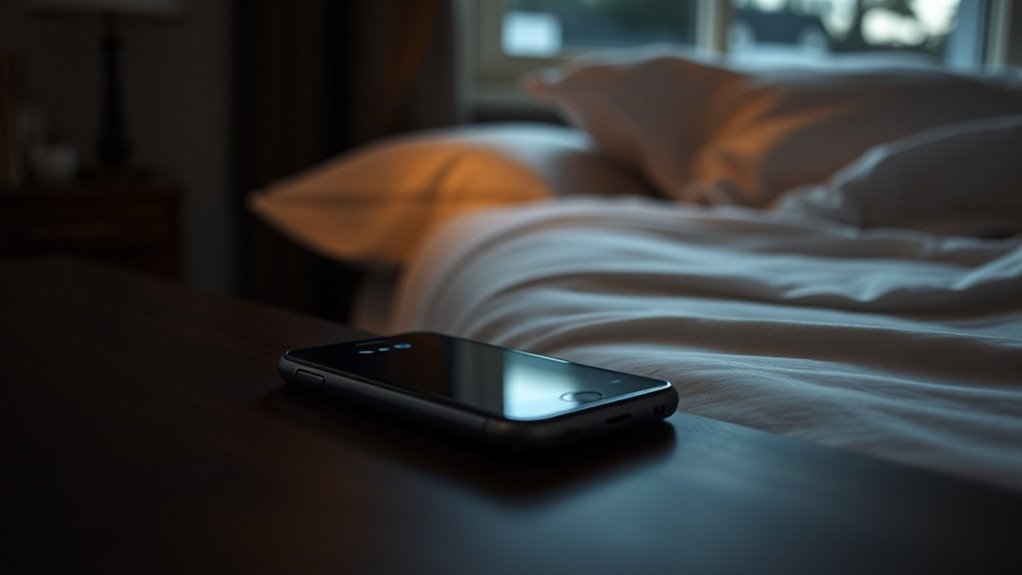
Nighttime notifications can considerably disrupt your sleep by triggering alerts that fragment the sleep cycle. These interruptions lead to less restorative rest by causing brief awakenings that prevent progression into deep sleep stages. The blue light emitted from screens during notifications suppresses melatonin production, delaying sleep onset and affecting circadian rhythms. Even silent or unread notifications can induce subconscious arousal, as the brain remains alert to potential alerts, hindering the progression into continuous sleep. This heightened arousal increases the likelihood of waking multiple times throughout the night, reducing overall sleep quality. The cumulative effect is a fragmented sleep pattern, which impairs cognitive function, mood, and physical health. Turning off notifications at night minimizes these disruptions, allowing your body to maintain natural circadian rhythms and achieve longer, uninterrupted sleep periods. Managing notifications is an evidence-based strategy to improve sleep continuity and overall sleep health.
The Link Between Notifications and Stress
Frequent notifications activate the body’s stress response by increasing cortisol levels, which heightens feelings of anxiety. This constant distraction maintains a state of heightened arousal, making relaxation difficult. Turning off notifications can reduce mental stimulation, helping to lower stress and promote better overall well-being.
Notifications Fuel Anxiety
When your devices continuously send alerts, they activate your brain’s stress response, leading to increased cortisol levels and heightened anxiety. Frequent notifications act as internal stimuli that sustain a state of hyperarousal, disrupting your ability to relax. This persistent alertness fosters feelings of urgency and FOMO, intensifying anxiety about missing critical information. Studies indicate that overexposure to digital alerts during nighttime elevates stress levels and impairs sleep quality, creating a cycle of heightened alertness. The constant activation of your stress pathways not only worsens anxiety but also hampers mental well-being. Reducing notification exposure has been shown to lower cortisol levels, decrease anxiety, and promote a calmer, more restful state. Turning off notifications at night can effectively mitigate these adverse effects and support your mental health.
Distraction Elevates Stress
Notifications act as constant digital distractions that activate your brain’s alert system, leading to increased cortisol levels and heightened stress. This persistent distraction triggers a stress response, making it difficult to relax or unwind, especially at night. The unpredictability of notifications fosters anxiety, as you may fear missing important messages or updates. Frequent phone buzzes and pings disrupt sleep, causing fragmented rest and amplifying stress the following day. This cycle of distraction and heightened stress impairs overall mental calmness. Turning off notifications reduces these digital distractions, helping lower stress levels. By minimizing disruptions, you promote a more relaxed state, improve sleep quality, and support healthier stress management. Eliminating unnecessary alerts is a simple yet effective step toward reducing stress linked to digital distraction.
Enhancing Rest Through Digital Silence

Turning off notifications at night can considerably enhance sleep quality by reducing the brain’s high-alert state caused by alerts. When notifications are silenced, subconscious interruptions decrease, allowing your body to fully relax and recover overnight. This reduction in alertness prevents frequent awakenings caused by alerts, supporting more continuous sleep cycles. Additionally, disabling notifications minimizes exposure to blue light emitted by devices, which can inhibit melatonin production and impair sleep onset and maintenance. Consistent digital silence before bed reduces the likelihood of waking to check your phone, promoting deeper, more restorative sleep. Improved sleep duration results from minimized disruptions, contributing to increased daytime energy and cognitive function. Empirical evidence indicates that reducing notifications at night fosters a more conducive environment for restorative sleep, emphasizing the importance of digital silence in sleep hygiene practices. Ultimately, turning off notifications is a key strategy for enhancing sleep quality through decreased neural stimulation and environmental interference.
Creating Better Bedtime Boundaries
Implementing a digital curfew by setting a specific time to disable notifications helps establish clear boundaries between work and rest. Utilizing Bedtime Focus Mode further minimizes disruptions and signals to your brain that it’s time to relax. These strategies collectively promote better sleep by reducing cognitive stimulation and environmental interference.
Establish a Digital Curfew
Establishing a digital curfew by turning off notifications at least 30 minutes before bedtime is an effective strategy to enhance sleep quality. This practice promotes a digital detox, reducing blue light exposure that can dysregulate melatonin production and delay sleep onset. Creating a device-free period signals to your brain that it’s time to wind down, encouraging relaxation and helping to establish healthier sleep routines. By disabling notifications during these hours, you minimize the risk of nighttime awakenings and distractions, leading to more restorative sleep. Implementing this boundary supports overall mental health by decreasing digital interruptions at night. A consistent digital curfew fosters better sleep hygiene and underscores the importance of establishing clear bedtime boundaries for improved rest and well-being.
Use Bedtime Focus Mode
Using Bedtime Focus Mode is an effective way to create clear digital boundaries before sleep. This feature silences all non-essential notifications, reducing potential disturbances and blue light exposure that can impair sleep quality. By activating Bedtime Focus, you guarantee only urgent alerts, such as emergency calls, come through, minimizing unnecessary interruptions. Consistent use of Bedtime Focus helps break the habit of checking notifications during the night, promoting longer, more restful sleep. Scheduling Bedtime Focus to align with your sleep routine establishes a predictable boundary, supporting mental health and overall well-being. Incorporating Bedtime Focus into your nightly routine can improve sleep hygiene by limiting nighttime digital interactions and fostering a healthier relationship with your devices.
The Impact on Mental Clarity and Mood

Turning off notifications at night can considerably enhance mental clarity and stabilize mood by reducing cognitive overload and stress. Constant alerts create mental clutter, making it harder to unwind and increasing reactive thinking. Eliminating these disruptions allows your mind to relax, promoting mindfulness and facilitating a smoother *changeover* into restful sleep. Disruptive alerts can cause micro-awakenings, fragmenting sleep cycles and impairing restorative quality. Without nighttime digital interruptions, stress hormones like cortisol decrease, supporting mood stability. This reduction in stress contributes to a calmer, more balanced emotional state. *Furthermore*, quieter nights help foster mental clarity by decreasing the tendency for reactive thought patterns, enabling a more reflective and focused mindset. Regularly disabling notifications at night not only improves sleep quality but also enhances overall mental well-being. By minimizing external stimuli during rest periods, you create an environment conducive to mental restoration, mood regulation, and long-term cognitive resilience.
Practical Steps to Disable Night Alerts
To effectively disable night alerts, start by accessing your device’s settings and maneuvering to the notifications or sound section, where you can turn off or modify alert preferences for individual apps. This process allows you to control which notifications disturb your sleep. You can also utilize your device’s built-in “Do Not Disturb” mode, scheduling it to activate automatically from sunset to sunrise or specific hours, ensuring minimal disruption during the night. Enabling “Focus” or “Sleep” modes further suppresses non-essential notifications, creating a quiet environment for rest. Additionally, turning off notifications from social media, messaging, or news apps reduces night-time disturbances. For added control, consider placing your phone in a different room or out of reach, preventing temptation and ensuring notifications don’t interfere with your sleep. These practical steps help establish a restful, notification-free night, supporting healthier sleep patterns.
The Role of Consistent Sleep Routines
Establishing a consistent sleep routine plays a crucial role in regulating your body’s circadian rhythm, which can be considerably disrupted by notifications. Regular sleep routines help synchronize your internal clock, promoting stable sleep-wake cycles. When notifications are turned off before bed, you reduce blue light exposure and digital stimulation, facilitating the natural production of melatonin. This hormone is essential for signaling sleep onset and maintaining sleep continuity. Avoiding notifications at night minimizes sleep interruptions, resulting in more restorative rest and supporting mental health. Consistent bedtimes foster healthy sleep habits and lower sleep-related stress, enhancing overall sleep quality. By aligning your sleep routines with your biological rhythms, you can improve sleep efficiency and resilience against disturbances caused by digital alerts. Ultimately, establishing and maintaining a regular sleep schedule is fundamental in leveraging the benefits of turning off notifications, ensuring a more restful and health-promoting night’s sleep.
Long-Term Benefits for Overall Well-Being
By consistently disabling notifications at night, you can achieve significant long-term benefits for your overall well-being. Reduced blue light exposure enhances sleep quality and accelerates sleep onset, contributing to more restorative rest. Lower cortisol levels resulting from fewer alerts help decrease stress and support mental health over time. This practice also fosters healthier boundaries with technology, reducing dependency and associated anxiety. Over the long term, these habits promote emotional regulation and cognitive clarity, enabling better decision-making and resilience. Imagine waking up refreshed, with increased daytime energy and improved mood. Visualize a calm mind unburdened by constant alerts. Consider the following benefits:
Disabling notifications at night boosts sleep, reduces stress, and nurtures healthier tech boundaries for long-term well-being.
- Decreased stress levels, leading to better mental health
- Improved sleep quality, resulting in higher energy and focus
- Reduced dependency on technology, fostering healthier habits
Consistently turning off notifications at night supports sustained well-being, making it easier to manage stress, enhance sleep, and cultivate a balanced mental state.
Common Questions
What Are the Benefits of Turning off Notifications?
Turning off notifications enhances your mindful awareness by reducing constant distractions, allowing you to focus more deeply on tasks and personal interactions. It also promotes a digital detox, lowering blue light exposure and subconscious alertness that disrupt sleep. This practice improves sleep quality and overall well-being, leading to better daytime alertness. Evidence supports that minimizing notifications fosters healthier habits, helping you maintain mental clarity and resilience against digital overload.
Why Should You Turn off All Notifications?
Think of your mind as a garden; constant notifications are like invasive weeds, causing notification fatigue and preventing growth. Turning off all notifications acts as a digital detox, allowing your brain to rest and recover. This reduces subconscious anticipation, improves sleep quality, and promotes mental clarity. Evidence shows that minimizing alerts decreases blue light exposure and enhances overall well-being, making it essential to disconnect for healthier, more restful nights.
Why Do People Turn Notifications Off?
You turn notifications off primarily to reduce distraction and protect your privacy. Disabling alerts minimizes interruptions, helping you focus and maintain digital boundaries. It also helps prevent potential privacy concerns, as fewer notifications mean less exposure to data sharing or unintended information leaks. Evidence shows that turning off notifications enhances concentration and preserves your personal data, ultimately promoting better mental health and more control over your digital environment.
Why Should You Turn off Your Phone at Night?
You should turn off your phone at night to improve sleep quality and support mental health. Exposure to blue light suppresses melatonin, disrupting sleep cycles, while notifications cause frequent awakenings. By disabling alerts, you minimize sleep fragmentation, allowing for deeper rest. This promotes better mental clarity and emotional well-being, backed by research showing reduced stress and improved cognitive function when nighttime phone use is limited.
Summary
Turning off notifications at night creates a quiet mental space, much like a calm lake free of ripples. This digital silence helps your brain shift smoothly into restorative sleep, reducing stress and boosting mental clarity. Over time, establishing this boundary enhances overall well-being, much like a steady anchor in a storm. Prioritizing uninterrupted rest allows your mind to refresh fully, supporting healthier mood regulation and cognitive function—making each morning a clearer, more energized beginning.