
Replacing blue light with candlelight before bed can substantially improve your sleep quality. Blue light from screens and artificial lighting suppresses melatonin, delaying sleep and fragmenting rest, but candlelight emits warm, low-blue wavelengths that support your natural circadian rhythm. Using candles creates a calming environment, reduces stress, and signals your body to wind down. If you continue exploring, you’ll discover effective ways to make this shift safely and enjoy better sleep habits.
Key Takeaways
- Candlelight emits warm, red-orange wavelengths that do not suppress melatonin, promoting better sleep.
- Replacing blue light with candlelight helps maintain natural circadian rhythms and improves sleep quality.
- Candlelight reduces blue light exposure, decreasing melatonin suppression by up to 60%.
- Using candles in the evening creates a calming environment that eases mental tension and prepares the body for sleep.
- Choosing natural candles with soothing scents enhances relaxation and supports restful, uninterrupted sleep.
The Impact of Blue Light on Sleep Quality
While blue light is common in our daily environments, especially from screens and LED lighting, it can substantially impact your sleep quality. Blue light suppresses melatonin, the hormone essential for signaling your body to sleep, which can delay sleep onset and reduce overall sleep quality. Exposure to artificial light with high blue wavelengths in the evening tricks your circadian rhythm into thinking it’s daytime, making it harder to fall asleep and disrupting sleep cycles. Even dim blue light can notably lower melatonin levels, impairing sleep duration. This suppression not only delays your bedtime but can also lead to fragmented, less restorative sleep. Replacing blue light with warmer lighting, like candlelight or amber LEDs, helps preserve melatonin production. By minimizing blue light exposure before bed, you support your circadian rhythm and promote more natural, restful sleep, setting the stage for better overall health and well-being.
How Candlelight Promotes Relaxation and Rest
Switching from the disruptive effects of blue light to the calming glow of candlelight can considerably enhance your evening relaxation. Candlelight emits a warm, soft illumination with long wavelengths, like red and orange, which minimally suppress melatonin—the hormone essential for sleep. This gentle glow supports your natural circadian rhythms, signaling your brain that it’s time to wind down. The warm light of candles creates a tranquil atmosphere that reduces stress and eases mental tension, making it easier to shift into restful sleep. Additionally, natural essential oils in candles can further promote feelings of calm and tranquility. To deepen your relaxation, consider:
Create a calming bedtime environment with candles and soothing scents to support restful sleep.
- Embracing the warm light to mimic natural twilight
- Using candles to signal your body that bedtime approaches
- Incorporating calming scents for sensory relaxation
- Creating a consistent candlelit routine to regulate your sleep cycle
Comparing the Light Spectrum: Blue Light vs. Candlelight
You might notice that blue light, with its short wavelengths and high energy, actively suppresses melatonin and signals your brain to stay alert, making it harder to fall asleep. In contrast, candlelight emits a warm, red-orange spectrum that minimally impacts melatonin production and encourages relaxation. Understanding these spectrum differences helps explain why choosing candlelight over blue light in the evening can support healthier sleep patterns.
Spectrum Composition Differences
Understanding the differences in light spectrum composition reveals why candlelight is more conducive to restful sleep than blue light from screens. Blue light has a short wavelength (380-500nm) with high energy, which suppresses sleep hormones like melatonin and penetrates the retina more deeply, risking eye damage. In contrast, candlelight’s spectrum is dominated by red and amber tones, with longer wavelengths that minimally impact sleep hormones. Its broad, warm spectrum resembles sunset lighting, promoting relaxation.
Consider these points:
- Blue light’s high-energy, short wavelengths disrupt circadian rhythms.
- Candlelight’s red and amber tones have low-energy wavelengths that support melatonin production.
- The spectrum composition of candlelight encourages relaxation and prepares your body for sleep.
- The gentle, natural spectrum minimizes retinal stress compared to artificial blue light.
Impact on Sleep Hormones
The spectrum composition of light directly influences how it affects your sleep hormones, especially melatonin. Blue light wavelengths (380-500nm) are highly effective at suppressing melatonin, which can delay sleep onset and diminish sleep quality. Exposure to blue light after sunset can reduce melatonin levels by up to 60%, markedly disrupting your circadian rhythm. Conversely, candlelight emits warm, orange-red wavelengths (600-700nm) that minimally impact melatonin production, allowing these natural sleep hormones to rise normally. This gentle spectrum closely resembles natural firelight, promoting relaxation and supporting healthier sleep patterns. Replacing blue light with candlelight in the evening helps maintain the integrity of your sleep hormones, reducing disruption and ultimately improving your overall sleep quality.
The Science Behind Melatonin Suppression by Artificial Light
Artificial light, especially blue wavelengths, can markedly disrupt your body’s natural sleep rhythms by suppressing melatonin production. Blue light wavelengths between 380-500nm are particularly effective at this, delaying melatonin release by up to two hours during evening hours. This suppression occurs through stimulation of intrinsically photosensitive retinal ganglion cells, which send signals to your circadian clock, interfering with your sleep-wake cycle. Even brief exposure (less than 30 minutes) can considerably reduce melatonin levels, making it harder to fall asleep naturally. To minimize melatonin suppression, consider these points:
- Blue light triggers melatonin suppression more than other artificial light.
- Delaying melatonin release impacts your overall sleep quality.
- Red and amber lights are less disruptive and support circadian health.
- Managing evening light exposure helps maintain natural melatonin rhythms.
Understanding this science underscores the importance of reducing blue light exposure at night to improve your sleep quality.
Creating a Calm Nighttime Environment With Candles
Creating a calming atmosphere with candles can considerably improve your sleep quality by providing warm, soft light that mimics natural firelight, which helps calm your nervous system. Choosing candles with soothing scents like lavender or chamomile can further signal to your brain that it’s time to relax, reducing stress levels. Replacing screen time with candlelight in the evening minimizes blue light exposure, supporting your body’s natural circadian rhythms and making it easier to wind down.
Warm Light Atmosphere
Since bright, harsh lighting can interfere with your body’s natural winding-down process, opting for candlelight helps establish a calming nighttime environment. The warm light and soothing glow of candles mimic natural sunset hues, supporting your circadian rhythms and signaling it’s time for relaxation. This gentle illumination minimizes melatonin suppression, allowing your body to produce the sleep hormone more effectively. Incorporating candles into your evening routine creates a peaceful atmosphere that reduces stress and prepares you for restorative sleep.
- The warm light encourages your mind and body to shift smoothly into rest.
- Natural scents from candles enhance relaxation, making it easier to unwind.
- The calming glow helps synchronize your circadian rhythms with the evening cycle.
- A consistent candlelit routine fosters better sleep quality by reducing blue light exposure.
Reduced Blue Wavelengths
The calming effect of candlelight is largely due to its low blue wavelength output, which plays a key role in supporting your body’s natural sleep processes. Unlike artificial blue light from screens, candles emit warm light with minimal blue content, reducing melatonin suppression that can delay sleep. Exposure to blue light in the evening disrupts your circadian rhythm, making it harder to fall asleep and reach restorative sleep stages. By replacing artificial blue light with candles, you create a sleep environment that promotes relaxation and aligns more closely with natural firelight. This gentle, warm glow helps signal to your brain that it’s time to wind down, fostering a peaceful setting conducive to faster, deeper sleep.
Promotes Relaxation and Sleep
Using candles in your evening routine can substantially enhance your ability to relax and prepare for restful sleep. Candlelight’s warm, soft glow in the red and yellow spectrum minimally suppresses melatonin, supporting your natural circadian rhythms. The soothing flicker of candles has a neurophysiological effect that reduces stress, promoting relaxation before bed. Incorporating candles with calming scents like lavender or chamomile further enhances this effect, creating a tranquil environment that encourages sleep onset. Replacing blue light devices with candles during the hour before bed decreases exposure to sleep-disrupting wavelengths.
- Supports melatonin production for better sleep quality
- Calms the nervous system through neurophysiological effects
- Enhances circadian rhythm regulation
- Creates an overall soothing, restful atmosphere
Tips for Choosing Safe and Effective Candles
When choosing candles to enhance your sleep environment, prioritizing safety and effectiveness is essential. Opt for natural, non-toxic candles made from ingredients like soy or beeswax, which are free from harmful chemicals and reduce exposure to toxins. Guarantee the wicks are lead-free to prevent toxic metal exposure when burned, safeguarding your respiratory health. For a soothing atmosphere that promotes relaxation, select candles with calming scents such as lavender, chamomile, or vanilla—these can help signal your body to unwind. Avoid paraffin candles, as they release carcinogens and soot that may impair breathing or exacerbate respiratory issues. Always place your candles on heat-resistant surfaces, away from flammable materials, and never leave them unattended. By making mindful choices, you create a safer, more effective environment that supports your goal of better sleep through gentle, calming candlelight.
Practical Ways to Incorporate Candlelight Into Your Evening Routine
Incorporating candlelight into your evening routine can considerably enhance relaxation and signal to your body that it’s time to wind down. To optimize its benefits, consider these practical steps:
- Use candles with natural ingredients like soy or beeswax, and add soothing scents such as lavender to create a calming environment.
- Dim overhead lights and rely on candlelight and soft lamps during the hour before bed, reducing blue light exposure that hampers sleep quality.
- Place candles on heat-resistant surfaces away from flammable items, never leaving them unattended—safety is essential.
- Engage in candlelit activities like mindful breathing, meditation, or a warm bath to deepen relaxation and prepare your body for restorative sleep.
This ambient lighting not only fosters tranquility but also supports your circadian rhythm, helping you transition smoothly into rest.
The Benefits of Red and Amber Candle Colors for Sleep
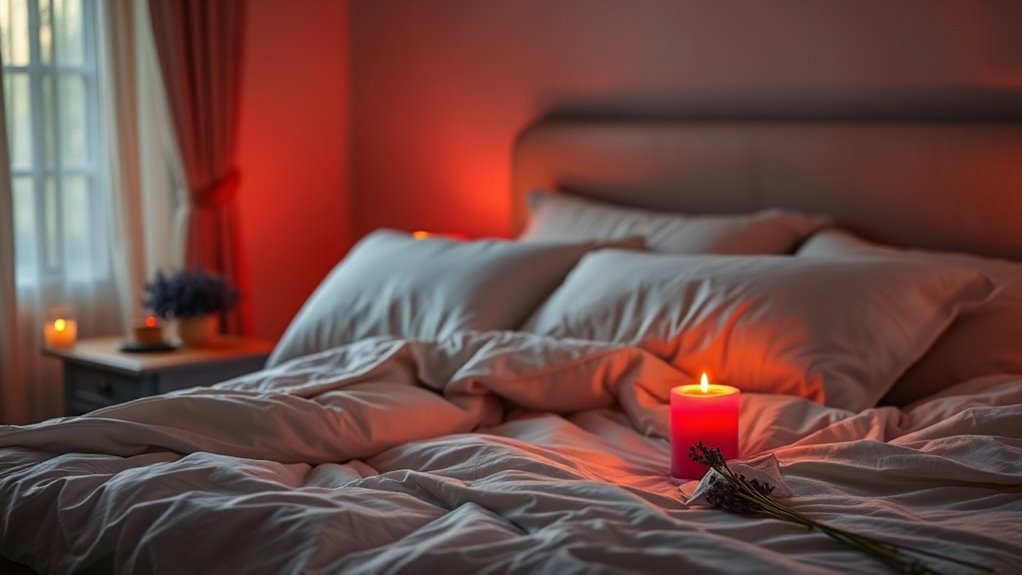
Red and amber candle colors offer notable advantages for sleep by emitting warm, low-blue light that minimally suppresses melatonin. This gentle illumination supports your natural circadian rhythm, helping your body recognize it’s time to wind down. Unlike bright, blue-rich lighting, the soft glow of a red candle or amber light creates a calming environment, reducing alertness and promoting relaxation before bed. Research indicates that using red or amber candles in the evening can extend sleep duration by up to 30 minutes, enhancing overall sleep quality. These colors do not interfere with melatonin production or delay sleep onset, allowing your body to shift smoothly into restful sleep. Incorporating red or amber candles into your nighttime lighting signals to your brain that it’s time to relax, helping you establish a more consistent sleep routine. In this way, choosing warm, low-blue lighting can considerably improve your sleep health and overall well-being.
Safety Precautions When Using Candles Before Bed
Ensuring your safety while using candles before bed is essential to prevent fire hazards and protect your loved ones. Always place candles on stable, heat-resistant surfaces away from flammable materials, and never leave them unattended once lit. Trimming wicks to about 1/4 inch and following manufacturer instructions further reduces risks, helping you enjoy a peaceful, safe night.
Fire Safety Measures
Because candles can pose a fire risk if not used carefully, it’s essential to follow strict fire safety measures before bed. Always keep candles on heat-resistant, stable surfaces away from flammable objects like curtains and bedding to prevent accidental fires. Ensure wicks are trimmed to about 1/4 inch, promoting even burning and reducing soot buildup. Never leave candles unattended while burning—extinguish them before sleeping or leaving the room. Follow manufacturer safety instructions closely, especially when burning in drafty or high-traffic areas.
Here are four key fire safety steps:
- Place candles on heat-resistant, stable surfaces.
- Keep wicks trimmed to prevent excessive flames.
- Extinguish candles before sleep or leaving the room.
- Avoid placing candles near flammable objects.
Candle Placement Tips
Proper candle placement is fundamental to enjoying a calming glow before bed while maintaining safety. You should always place candles on heat-resistant, stable surfaces to prevent accidental tipping or heat damage. Keep candles away from flammable materials like curtains, bedding, and papers to minimize fire risks. Trim the wicks to about 1/4 inch to ensure an even burn, reduce soot, and improve flame safety. Never leave a burning candle unattended, especially when falling asleep or leaving the room. Extinguish candles completely before sleeping, and keep them out of reach of children and pets to prevent accidents. Thoughtful candle placement not only enhances your relaxation but also safeguards your home, allowing you to enjoy the benefits of gentle candlelight without compromising safety.
Transforming Your Sleep Environment for Better Rest
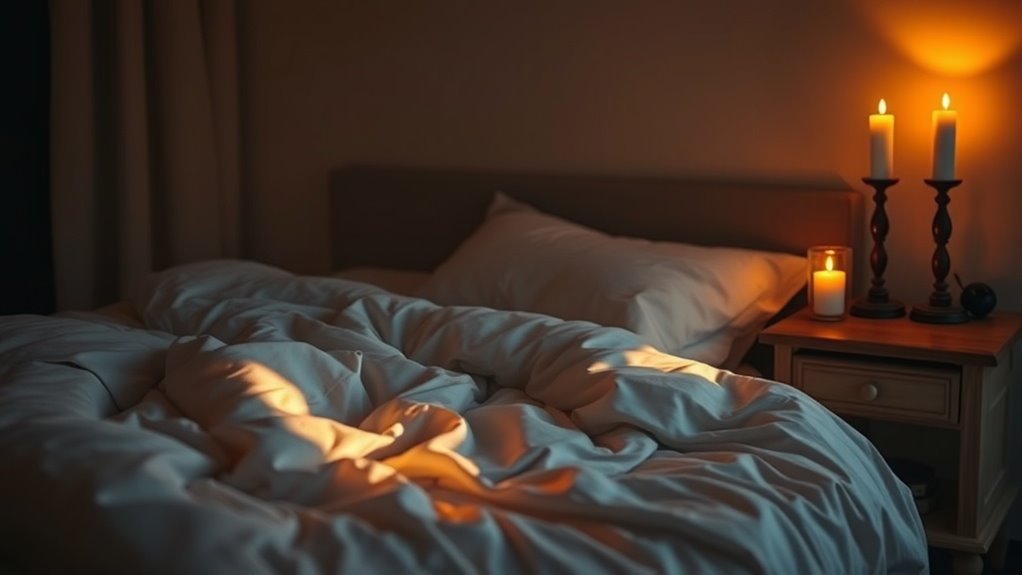
Transforming your sleep environment can considerably improve your rest by creating a calming space that aligns with your body’s natural circadian rhythms. Replacing blue light with candlelight in the evening fosters relaxation, as candles emit low levels of red and amber wavelengths that minimally suppress melatonin. This supports your body’s natural sleep signals, making it easier to shift into restful sleep. Incorporating calming scents like lavender or chamomile further enhances relaxation, preparing your mind and body for sleep. Dimming overhead lights and relying on candles at least an hour before bed encourages your body’s move to sleep mode, reducing blue light exposure that can disrupt melatonin production. To optimize your sleep environment, consider:
- Replacing artificial lighting with candles during evening hours
- Using candles with calming scents to promote relaxation
- Dimming or turning off overhead lights an hour before sleep
- Creating a consistent, soothing bedtime routine that respects your circadian rhythms
This mindful adjustment can lead to better sleep quality and overall well-being.
Common Questions
Does Removing Blue Light Help You Sleep?
Removing blue light helps you sleep by reducing its impact on melatonin production, which is essential for sleep cycle regulation. Electronic device effects, like blue light exposure in the evening, can delay sleep onset and disrupt your circadian rhythm. Choosing evening lighting options that minimize blue light, such as candlelight, supports natural melatonin levels, leading to faster sleep onset, deeper rest, and improved overall sleep quality.
Does Candle Light Help You Sleep?
Candlelight creates a relaxing ambiance that’s like a gentle lullaby for your senses, helping you wind down. It minimally suppresses melatonin production, making your sleep environment more conducive to rest. The soft, warm glow enhances your mood and offers eye comfort, reducing strain. Incorporating candlelight into your evening routines can ease mental clutter, promote relaxation, and support better sleep quality, guiding your mind gently into a restful state.
Does Candlelight Emit Blue Light?
Candlelight doesn’t emit significant blue light, as its spectrum mainly consists of warm, yellow-orange light with longer wavelengths around 200-1000 nm. This light wavelength minimally impacts your circadian rhythm or melatonin production, unlike blue light from screens, which can disrupt your sleep cycle. By reducing blue light exposure through candlelight, you support healthier sleep patterns and better sleep quality, especially during evening hours.
Which Color Light Is Best for Sleeping?
Research shows that red or amber light, with a warm color temperature, is best for sleep. It supports your circadian rhythm, enhances sleep hygiene, and promotes eye health by minimizing blue light exposure. Using these hues in your bedroom ambiance, especially during light therapy or evening routines, can substantially improve sleep quality. Switching to warm-colored lighting helps your body naturally prepare for rest, making it easier to fall asleep and stay asleep.
Summary
So, next time you’re tempted to scroll under your blue-lit glow, imagine trading it for cozy candlelight—your own personal sleep fairy. While it might seem trivial, small changes can markedly boost melatonin production, easing your shift to restful slumber. Embrace the gentle flicker, and give your brain a break from artificial bombardment. After all, isn’t it worth swapping a harsh screen for a warm, calming glow that whispers, “Sleep well”?