
You’ll sleep deeper when you let go of late-night distractions like screens, social media, and constant notifications. Blue light from devices suppresses melatonin, delaying sleep, while mental engagement from scrolling or notifications heightens alertness and cortisol levels. Establishing a calming bedtime routine, turning off devices at least 30 minutes before sleep, and managing FOMO helps reduce mental arousal. Focusing on relaxation and creating a peaceful environment can markedly improve your sleep quality—if you stay tuned, you’ll learn how to implement these strategies effectively.
Key Takeaways
- Reducing screen time 30 minutes before bed minimizes blue light exposure, supporting melatonin production and easier sleep onset.
- Engaging in calming activities like journaling or meditation clears mental clutter and prepares the mind for restful sleep.
- Turning off notifications and leaving devices outside the bedroom prevents mental hyperarousal from social media and alerts.
- Establishing a consistent, distraction-free bedtime routine signals your body to relax and enhances sleep quality.
- Disconnecting from digital devices lowers cortisol levels and mental stimulation, promoting deeper, more restorative sleep.
The Impact of Screen Time on Your Sleep Quality
Since exposure to blue light from screens can considerably disrupt sleep, it’s important to understand its effects on your sleep quality. Excessive screen time before bed suppresses melatonin production by up to 23%, making it harder to fall asleep. On average, using devices in the hour before sleep increases the time it takes to drift off by 10 to 20 minutes. This delay can reduce your overall sleep duration and diminish sleep quality. Additionally, the bright light from screens shifts your circadian rhythm, blunting your natural sleep-wake cycle and making waking up feeling rested more difficult. The mental stimulation from engaging with screens late at night also heightens alertness, further interfering with your ability to wind down. Reducing screen time before bed can help normalize melatonin levels, promote quicker sleep onset, and enhance overall sleep quality, leading to more restorative rest.
How Distractions Increase Mental Arousal and Delay Rest
Distractions before sleep can considerably increase your mental arousal, making it harder to wind down. Engaging with notifications, social media, or work tasks triggers dopamine release, boosting alertness and hindering relaxation. Multitasking fragments your attention, creating mental hyperarousal that delays the shift to sleep. The attention residue from switching between tasks stays active, prolonging cognitive arousal and pushing back sleep onset. Constant external stimuli, like messages and alerts, activate your stress response, raising cortisol levels and disrupting natural sleep patterns. Focusing on stimulating content keeps your prefrontal cortex engaged, preventing the mental quiet necessary for restorative rest.
To understand this better, consider these effects of distractions on mental arousal:
- Heightened alertness due to dopamine from notifications
- Fragmented attention from multitasking
- Prolonged cognitive activity from attention residue
- Elevated cortisol levels from external stimuli
- Persistent prefrontal cortex engagement from stimulating content
Reducing distractions before bed is key to lowering mental arousal and improving sleep quality.
Strategies to Unplug and Create a Calm Bedtime Environment
Setting digital boundaries by dimming screens and using blue light glasses an hour before bed can help your body prepare for sleep. Establishing a relaxing routine, like reading or meditation, signals your brain to wind down. Creating a clutter-free, calming environment with minimal noise and comfortable lighting further supports restful sleep.
Establish Digital Boundaries
Have you ever noticed how screens can interfere with your ability to unwind before bed? Establishing digital boundaries is essential for improving sleep hygiene. Setting a digital curfew, like turning off devices an hour before bed, reduces blue light exposure that delays melatonin production. Using apps such as Cold Turkey or StayFocusd to block distracting websites for at least 30 minutes before sleep helps lower screen time. Creating a physical boundary by leaving devices outside the bedroom prevents the temptation to check notifications during the night. Turning on “Do Not Disturb” mode or enabling airplane mode minimizes interruptions from calls and alerts. These strategies help foster a calm, screen-free environment, making it easier to relax and sleep more deeply.
Cultivate Relaxing Routines
Establishing a calming bedtime routine can considerably improve your sleep quality by signaling your body to wind down. Engaging in relaxing activities like reading or listening to soothing music reduces stress and promotes mental calmness. Incorporating mindfulness practices such as deep breathing or gentle stretching during your routine decreases cortisol levels, aiding deeper sleep. Creating a sleep-friendly environment—cool, dark, and quiet—minimizes disruptions. Avoid screens at least 30 minutes before bed to boost melatonin production. Consider this simple routine:
| Relaxing Activities | Environmental Tips |
|---|---|
| Reading a book | Dim lights, cool room |
| Gentle stretching | Silence or calming sounds |
| Meditation | Technology-free zone |
Consistency with these habits helps your body associate these cues with sleep, making restful nights more attainable.
The Role of Mindfulness and Relaxation Techniques in Sleep Deepening
Because pre-sleep cognitive arousal can interfere with deep sleep, incorporating mindfulness and relaxation techniques can be highly effective. These practices help lower mental and physical tension, making it easier to shift into restorative sleep. Mindfulness meditation before bed has been shown to increase slow-wave sleep by reducing pre-sleep cognitive arousal. Relaxation techniques like progressive muscle relaxation decrease sympathetic nervous system activity, fostering deeper sleep stages. Practicing mindful breathing can lower cortisol levels, which are associated with alertness and lighter sleep. Regular use of these techniques enhances parasympathetic activation, promoting calmness.
Consider incorporating:
- Mindfulness meditation sessions
- Deep breathing exercises
- Progressive muscle relaxation
- Body scans before bed
- Gentle stretching routines
Building a Nighttime Routine to Reduce Mental Clutter
Creating a consistent nighttime routine can considerably reduce mental clutter and enhance sleep quality. Establishing a “Power-Down Hour” that includes calming activities, hygiene, and preparation helps clear your mind before bed. Ending screen time at least 30 minutes prior reduces blue light exposure, which can inhibit melatonin production and delay sleep onset. Incorporate relaxing practices like journaling or meditation to quiet racing thoughts and promote mental calmness. Creating a distraction-free environment by dimming lights and removing electronic devices minimizes external stimuli that contribute to mental overload. Using specific if-then plans, such as “If I feel restless, then I will practice deep breathing,” reinforces your routine and helps you shift smoothly into sleep. This structured approach minimizes mental clutter, signals to your brain that it’s time to unwind, and fosters a peaceful mental state conducive to deeper, more restorative sleep.
The Benefits of Setting Boundaries With Technology Before Bed
Setting boundaries with technology before bed can markedly improve your sleep quality by reducing blue light exposure that disrupts melatonin production. Establishing a calming, tech-free routine helps lower mental clutter and promotes relaxation. Limiting screen time and notifications before sleep can lead to deeper, more restorative rest.
Reduces Blue Light Exposure
Reducing blue light exposure before bed is essential for maintaining healthy sleep patterns, as blue light from screens can suppress melatonin production. This hormone is crucial for regulating sleep, and exposure in the evening can delay sleep onset and reduce sleep quality. Limiting screen time in the hour before bed helps your body prepare for restful sleep. Using blue light filters or glasses can further shield your internal clock from disruptive wavelengths. To improve sleep, consider:
- Turning off devices an hour before bed
- Using night mode or blue light filters
- Wearing blue light blocking glasses
- Creating a tech-free bedroom environment
- Establishing a consistent pre-sleep routine
Creates Calm Evening Routine
Limiting screen time before bed not only minimizes blue light exposure but also fosters a calm, focused environment that signals your body it’s time to unwind. Establishing a technology-free hour helps lower mental stimulation, making it easier to relax and prepare for restful sleep. Using digital curfews and turning off devices prevents notifications and social media alerts from disrupting your calm evening routines. These boundaries reduce cognitive arousal caused by work emails and news, promoting a peaceful mental state. Consistent routines without screens are linked to better sleep quality and longer durations.
| Benefit | How It Helps | Example |
|---|---|---|
| Calms the mind | Lowers mental stimulation | Reading a book instead of scrolling |
| Promotes relaxation | Reduces cognitive arousal | Gentle stretching or meditation |
| Improves sleep quality | Establishes routine | Turning off devices 30 mins before bed |
| Enhances focus | Signals bedtime | Creating tech-free wind-down time |
Minimizes Mental Clutter
By establishing boundaries with technology before bed, you can considerably reduce mental clutter that often interferes with relaxation. Limiting exposure to stimulating notifications and screens prevents your mind from overthinking. Research shows that turning off devices or using blue light filters at least 30 minutes before sleep boosts melatonin production and improves sleep quality. Digital boundaries help decrease cognitive arousal, allowing your brain to shift smoothly from wakefulness to rest. Avoiding late-night social media, emails, and news reduces racing thoughts and overthinking, which can disrupt sleep. A tech-free wind-down routine fosters a calmer mental state, making it easier to let go of distractions and sleep more deeply. These practices help clear mental clutter, paving the way for restorative sleep and mental clarity.
Tips for Managing FOMO and Avoiding Late-Night Scrolling
Since engaging with social media or emails late at night can boost alertness and disrupt your melatonin production, managing FOMO and avoiding late-night scrolling is essential for better sleep. As a night owl, you might feel compelled to check updates, fearing you’ll miss out. To combat this, set specific ‘tech-free’ hours at least an hour before bed, reducing your FOMO and decreasing the urge to scroll. Using app blockers like StayFocusd or Freedom during evening hours can prevent impulsive browsing, helping you resist late-night temptations. Remember, blue light from screens delays sleep onset by up to 30 minutes and disrupts your circadian rhythm. Instead of scrolling, try replacing that habit with relaxing activities like reading or journaling. These strategies help you disconnect, lower FOMO, and create a calmer changeover to sleep, improving both sleep quality and overall well-being.
How Disconnecting Enhances Sleep and Mental Well-Being
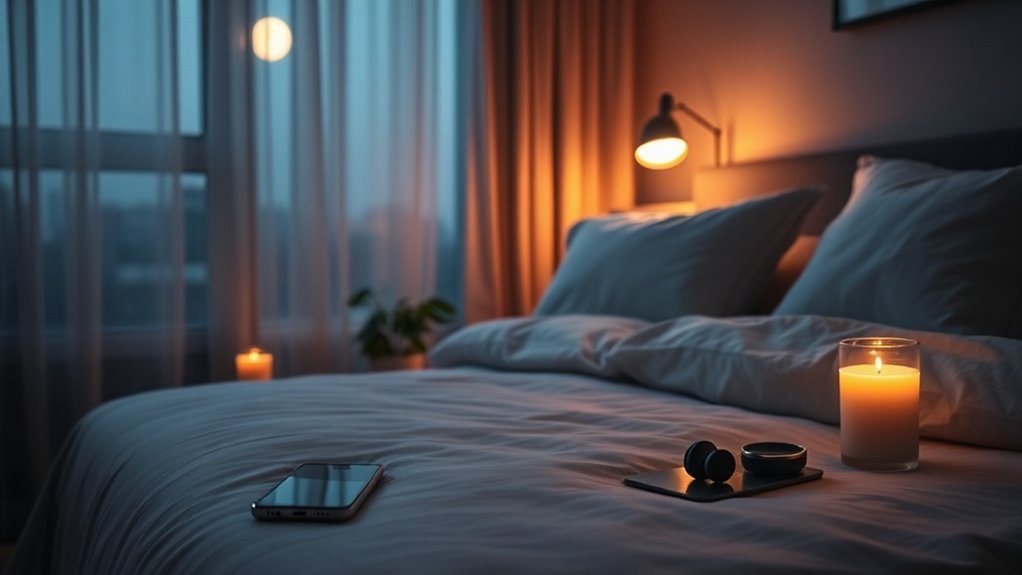
Disconnecting from digital devices at least 30 minutes before bed can considerably improve your sleep and mental well-being. Exposure to blue light delays melatonin production, making it harder to fall asleep. Limiting notifications and social media reduces mental stimulation, easing your passage to rest. Engaging in offline activities like reading or meditation activates the parasympathetic nervous system, promoting deeper, restorative sleep. Regular disconnection decreases cognitive arousal and intrusive thoughts, which often cause sleep disturbances. Studies show that unplugging at night leads to fewer sleep disruptions and better mental health. By removing digital distractions, you create a calmer environment that supports relaxation. This not only helps you fall asleep faster but also enhances overall mental well-being, reducing stress and anxiety. Implementing a digital sunset can be a simple yet effective step toward a more restful night and improved mental health.
Practical Steps to Cultivate a Peaceful, Distraction-Free Night
Creating a peaceful, distraction-free night begins with practical adjustments to your environment and routines. First, make sure to reduce screen time at least 30 minutes before bed, as blue light delays melatonin production, making it harder to fall asleep. Creating a dedicated, clutter-free sleep space with dim lighting and calming scents signals to your brain that it’s time to wind down. Feeling relaxed in this environment can considerably improve sleep quality. Establishing a consistent bedtime and a calming pre-sleep routine—like reading or gentle stretches—helps train your mind to let go of distractions. Using noise-canceling headphones or white noise machines can minimize external sounds that may disturb your rest. Limiting stimulating activities, such as checking news or work emails, fosters mental calmness. Make sure these habits become part of your nightly routine to create an environment conducive to deeper, restorative sleep.
Common Questions
What Is Your Biggest Sleep Distraction?
Your biggest sleep distraction might be screen time, especially social media use before bed. The blue light from screens suppresses melatonin, making it harder to fall asleep. Additionally, engaging with social media can stimulate your brain, increasing alertness and racing thoughts. To improve sleep quality, try reducing screen time at least an hour before bed and opt for relaxing activities that promote relaxation instead.
Is It Better to Sleep Late or Not at All?
It’s better to sleep late than not at all, but maintaining good sleep hygiene is essential. When you delay sleep excessively, it disrupts your circadian rhythm, leading to poorer sleep quality and health risks. Prioritizing consistent sleep times aligns with your body’s natural rhythm, supporting restorative sleep. Even if you’re a night owl, going to bed earlier when possible helps improve overall sleep depth and mental clarity.
Summary
Letting go of late-night distractions truly improves sleep quality. For example, Lisa started unplugging an hour before bed and noticed deeper, more restorative sleep within a week. Research shows reducing screen time lowers mental arousal, making it easier to fall asleep and stay asleep. By setting boundaries and practicing relaxation techniques, you can enjoy more restful nights, boost your mental health, and wake up feeling refreshed. Small changes lead to significant improvements in your overall well-being.