
Just 15 to 20 minutes in nature can markedly lower stress hormones like cortisol and instantly boost your mood. Natural scenes such as trees, water, and fractal patterns activate your brain’s relaxation centers, releasing mood-enhancing chemicals like serotonin, dopamine, and endorphins. Even brief walks reduce anxiety and negative thoughts quickly. If you’re curious about how these simple outdoor moments create such fast mental shifts, you’ll discover more about the science behind this powerful effect.
Key Takeaways
- Even a 10-20 minute walk in nature can boost mood and reduce negative thoughts almost immediately.
- Natural environments activate relaxation centers in the brain within minutes, elevating serotonin and dopamine levels.
- Exposure to green spaces and natural sounds quickly lowers stress hormones like cortisol.
- Fractal patterns and natural visuals promote calmness and mental clarity in just a few minutes.
- Short outdoor walks rapidly enhance emotional resilience and emotional stability through sensory engagement.
The Rapid Psychological Impact of Natural Environments
Spending just 20 minutes in nature can produce immediate psychological benefits, often within moments of stepping outdoors. Natural environments and green spaces have a powerful, rapid effect on your mental state. When you walk through these areas, your body responds by lowering cortisol levels, signaling quick stress relief. Exposure to natural scenes, like trees or water, activates your brain’s relaxation centers almost instantly, leading to mood elevation. This isn’t just about feeling calmer; it also enhances your attention span and cognitive function within minutes. Research shows that even a single session in green spaces can decrease feelings of anxiety and depression more effectively than urban walks. Physiological changes, such as increased serotonin production and reduced inflammation, can occur in as little as 15 to 30 minutes. These findings highlight how natural environments are essential tools for immediate mental health benefits, offering a simple yet powerful way to lift your mood quickly.
How Green Spaces Reduce Stress Hormones Instantly
Spending time in green spaces can immediately lower cortisol levels, helping your body relax quickly. Just 20 minutes surrounded by nature’s fractal patterns activates your involuntary attention, easing stress hormones. This natural response supports faster calming, making green environments a powerful tool for instant stress relief.
Natural Environment Lowers Cortisol
Have you ever noticed how a quick walk through a park can make you feel calmer almost instantly? Spending time in a natural environment can markedly lower cortisol, the body’s primary stress hormone. Even brief exposure to green spaces activates the body’s relaxation response, providing immediate stress relief. Here’s how it works:
- Brief walks in natural environments can reduce cortisol by up to 20%
- Green spaces with abundant vegetation trigger involuntary attention, calming the nervous system
- Viewing greenery or strolling through parks causes rapid cortisol decreases within 15-20 minutes
- Natural elements like trees and flowing water promote relaxation
- Swaying leaves and fractal patterns help suppress stress hormones
These findings highlight how immersing yourself in green spaces can promote quick, effective stress reduction, supporting your mental well-being.
Green Spaces Calm Mind
When you step into a green space, the calming effects happen almost instantly. Natural environments with lush vegetation trigger a rapid decrease in stress hormones like cortisol, helping you feel calmer. Studies show that just a brief exposure to green spaces can lower blood pressure and heart rate within minutes, easing physical tension. A 20-minute walk in a park considerably reduces adrenaline and noradrenaline, key markers of stress. The presence of trees and plants in urban areas correlates with immediate reductions in anxiety and mental fatigue. Visual exposure to natural greenery engages involuntary attention, giving your brain a chance to rest and lowering stress hormones swiftly. This natural calming effect underscores how green spaces can instantly soothe your mind and promote a more positive mood.
Nature Promotes Relaxation
Stepping into green spaces can instantly trigger a reduction in stress hormones like cortisol, helping you relax within minutes. Natural environments filled with lush vegetation and trees have been shown to lower blood pressure and heart rate quickly, promoting immediate relaxation. When you view or walk through parks, feelings of anxiety decrease, and calmness sets in almost right away. The natural fractal patterns in green spaces activate involuntary attention, calming your mind instantly. Short walks in nature are linked to quick drops in stress-related chemicals, improving your mood in as little as 10 minutes. To enhance your relaxation experience, consider:
- Breathing deeply amidst trees
- Observing natural patterns
- Listening to nature sounds
- Walking slowly through greenery
- Taking mindful pauses in parks
The Science Behind Mood Boosts in Minutes of Walking
Research shows that just a few minutes of walking in nature can rapidly enhance your mood by triggering biochemical and psychological responses. When you step into a natural environment, your brain responds by increasing positive emotions and reducing stress. Exposure to fractal patterns like leaves and trees activates soft fascination, helping restore focus and lift your mood swiftly.
| Natural Environment | Mood Benefits |
|---|---|
| Activates neurotransmitters | Boosts serotonin and dopamine levels |
| Lowers cortisol | Reduces stress hormone by up to 20% |
| Enhances focus | Promotes immediate calmness and well-being |
Within minutes, your body reacts, elevating neurotransmitters linked to happiness and well-being. Even brief exposure to green spaces can lead to noticeable improvements, decreasing negative thoughts and fostering a sense of calm. This rapid response underscores the profound impact of nature on mental health in just a few moments of walking.
Natural Sounds and Their Role in Elevating Happiness
Have you ever noticed how the sound of rustling leaves or flowing water can instantly lift your spirits? Natural sounds like bird songs, waterfalls, and gentle breezes activate soothing stimuli that support attention restoration and boost your mood. During outdoor walks, these sounds help reduce stress hormones and foster feelings of happiness and relaxation. Engaging with natural soundscapes triggers positive emotional responses by capturing involuntary attention without mental fatigue. Studies show that natural sounds improve mood more effectively than urban noise, enhancing emotional well-being after a walk. Incorporating these sounds into your routine can foster a sense of calm and joy, leading to quicker mood recovery and increased resilience. To enjoy this effect:
Natural sounds like bird songs and waterfalls boost mood and promote relaxation during outdoor activities.
- Listen to natural sound recordings
- Take walks near water or trees
- Focus on sounds during outdoor activities
- Practice mindful listening
- Create a natural sound environment at home
Fractals in Nature and Their Soothing Effects on the Brain
Natural sounds are known to boost mood by engaging involuntary attention and fostering relaxation, but visual patterns in nature also play a significant role in calming the mind. Fractals—complex, self-similar patterns like snowflakes, coastlines, and tree branches—are especially influential. Your brain processes these fractal patterns more easily than irregular shapes, reducing cognitive load and mental fatigue. This effortless processing activates the brain’s soft fascination response, which engages involuntary attention and promotes mental relaxation. Environments rich in fractals, such as forests and rivers, help restore your attention span and improve mood more quickly than urban scenes. The repetitive, scale-free nature of fractals in nature offers a soothing visual experience, easing the mind’s stress and fostering a sense of calm. As you walk through such natural settings, your brain benefits from these fractal patterns, supporting relaxation and emotional well-being.
The Connection Between Nature and Neurotransmitter Release
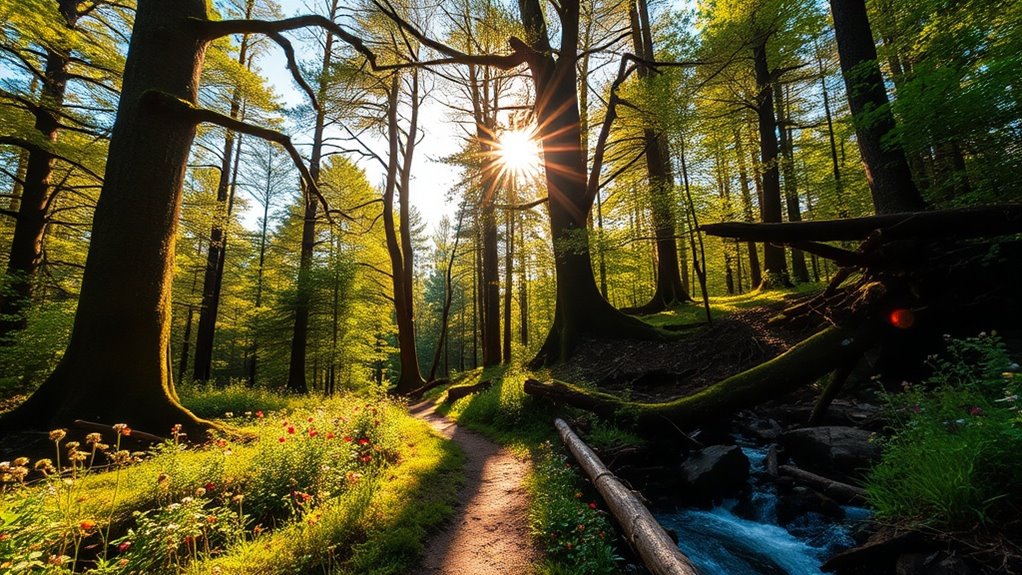
When you spend time in nature, your brain responds by releasing neurotransmitters like serotonin, dopamine, and endorphins, which can instantly lift your mood. Exposure to green environments naturally increases serotonin, supporting emotional stability, while fractal patterns found in nature help boost dopamine, enhancing motivation and pleasure. This biological response not only reduces stress but also reinforces the emotional benefits of taking a walk outdoors.
Natural Stimuli Boost Neurotransmitters
Spending time in natural environments can directly influence your brain chemistry by activating involuntary attention, which in turn triggers the release of mood-boosting neurotransmitters like serotonin and dopamine. Natural stimuli—such as water, leaves, and fractal patterns—stimulate your brain’s natural processing, boosting neurotransmitter activity. This process not only enhances happiness but also plays a role in stress reduction. When you engage with nature, you may experience:
- Increased endorphin production for improved mood
- Elevated serotonin levels supporting emotional balance
- Dopamine release linked to motivation and pleasure
- Higher oxytocin levels fostering trust and connection
- Enhanced brain processing through fractal complexity
All these responses contribute to a more resilient, positive mental state, showing how nature’s stimuli can quickly elevate your well-being.
Stress Reduction Enhances Serotonin
Since stress can substantially impact your mental health, engaging with nature offers a practical way to counteract its effects. Stress reduction in natural environments has been shown to boost serotonin levels, which are crucial for regulating mood and promoting feelings of happiness. Spending time outdoors, especially during nature walks, stimulates natural serotonin pathways through exposure to natural light and fractal patterns like trees and water. This activation helps reduce stress and fosters emotional well-being quickly—often within minutes. Regular interactions with natural scenery not only provide immediate mood improvements but also support sustained serotonin levels over time, strengthening resilience against depression. In essence, connecting with a natural environment can be a powerful, accessible tool for enhancing mental health through neurochemical balance.
Fractal Patterns Promote Dopamine
Connecting with natural environments not only reduces stress and boosts serotonin but also influences dopamine levels through the presence of fractal patterns. These intricate, self-similar designs in coastlines, snowflakes, and trees are effortlessly processed by your brain, activating the soft fascination response. This response decreases cognitive load and triggers dopamine release, which enhances your feelings of pleasure and motivation. Exposure to environments rich in fractal complexity, like forests and rivers, can help stabilize your mood and support emotional resilience.
You might notice that:
- Fractal patterns are naturally engaging and calming
- They promote dopamine production, lifting your mood
- Repetitive, patterned designs regulate neural activity
- Natural fractals stimulate feelings of motivation
- These effects occur quickly in natural environments, boosting overall well-being
Quick Walks: A Simple Strategy for Immediate Emotional Relief

Even a brief 10-minute walk in nature can provide immediate emotional relief by elevating serotonin and endorphin levels, which are key mood regulators. When you walk outdoors, especially through green spaces, your body responds quickly, reducing cortisol—the stress hormone—in just minutes. Short walks in nature can reset your emotional state, leaving you feeling calmer, more focused, and less anxious. Scientific studies show that even 15 minutes of walking in natural surroundings enhances happiness and mental clarity, making it an effective strategy for immediate mood improvement. These brief outdoor excursions are simple yet powerful tools to combat daily stress and emotional fatigue. Whether you’re feeling overwhelmed or just need a mental reset, a quick walk in nature offers a practical, evidence-based way to boost your mood quickly and effectively. It’s a straightforward approach to nurturing your mental well-being, even during busy days.
The Brain’s Response to Natural vs. Urban Settings
Research shows that your brain responds quite differently when you’re in natural environments compared to urban settings. Natural settings activate involuntary attention networks through soft fascination, allowing your mind to rest and recover. In contrast, urban environments with sharp angles and high fractal complexity demand more cognitive effort, increasing your cognitive load.
When you’re surrounded by natural environments:
- Your attention span and working memory improve
- Your brain processes fractals in leaves and coastlines more efficiently
- Mental fatigue decreases
- Emotional uplift occurs more readily
- Cortisol levels drop, boosting mood
Urban settings, with their less fractal, uniform structures, tend to drain mental resources and elevate stress levels. This difference explains why natural environments support mental restoration and emotional well-being better than urban landscapes, helping you feel calmer, sharper, and more centered after even brief exposure.
Personal Stories of Mood Transformation After Short Nature Walks
Many people find that just a short walk in nature can lead to noticeable mood improvements, often within minutes. When you step into a park or walk beside water, you may feel stress melting away as your mind shifts away from worries. Personal stories reveal that even a brief 10-15 minute walk helps people break free from toxic thoughts, replacing anxiety with feelings of gratitude and happiness. Scientific research supports these experiences, showing that exposure to green spaces can quickly lower cortisol levels, the hormone linked to stress, and improve attention span. This immediate mood boost isn’t just anecdotal; it’s backed by evidence demonstrating rapid emotional recovery after brief outdoor walks. Whether you’re battling daily stress or simply seeking a mental reset, these personal accounts highlight how a simple walk in nature can transform your mood—offering an accessible, natural remedy with powerful, immediate effects.
Incorporating Nature Walks Into Your Daily Routine for Lasting Benefits
Integrating a 20-minute walk into your daily routine is a simple but effective way to boost mental resilience and improve mood. Even small, consistent steps—like walking during lunch or after dinner—can lead to lasting emotional benefits supported by research. Making this a habit helps create a sustainable practice that enhances your overall well-being over time.
Easy Ways to Start
Starting a daily nature walk can be an easy and effective way to boost your mood and overall well-being. To get started, consider these simple steps:
- Choose scenic routes or nearby parks for your daily walks to maximize the outdoor benefits.
- Use smartphone apps to plan routes and track progress, helping you stay consistent.
- Schedule your walks during natural light hours, like early mornings or late afternoons, to enhance mood through sunlight.
- Incorporate mindfulness practices such as deep breathing or gratitude during your walks for deeper emotional benefits.
- Invite friends or family to walk with you, making it a social activity that increases motivation and shared positivity.
These small adjustments can smoothly integrate outdoor activity into your routine, turning daily walks into a reliable mood booster.
Boosts Mental Resilience
Incorporating daily nature walks into your routine can considerably bolster your mental resilience, helping you better manage stress and emotional setbacks. Regular outdoor walks in green spaces boost emotional regulation by increasing oxytocin and reducing cortisol levels. This hormonal balance supports resilience, making it easier to recover from mental fatigue. Even brief 10-15 minute walks restore attention and mental clarity, enabling you to face daily challenges more effectively. Imagine the calming scene:
| Nature’s Patterns | Mental Benefits |
|---|---|
| Fractal shapes in trees | Soft fascination fostering attention recovery |
| Flowing water | Stress reduction and emotional stabilization |
| Green leaves | Mood enhancement and resilience building |
| Sunlight filtering | Boosted mood and mental clarity |
These natural interactions strengthen your capacity to adapt, creating a resilient mindset rooted in nature’s restorative power.
Common Questions
Does Nature Boost Your Mood?
Yes, nature definitely boosts your mood. When you walk in green spaces, it helps reduce urban stress and improves mental clarity, making you feel more centered. Plus, spending time outdoors fosters social connection and enhances environmental awareness, which can elevate happiness and satisfaction. Evidence shows that even brief exposure to nature decreases cortisol levels, helping you feel calmer and more emotionally balanced.
How Does Walking Improve Mood?
Imagine your mind as a tangled garden; walking acts like gentle pruning. It boosts mood through physical exercise, releasing feel-good chemicals, and promotes mindfulness meditation by grounding your thoughts. Plus, outdoor walks foster social connection, easing emotional burdens. Scientific evidence shows this simple act reduces stress and emotional fatigue, helping you feel calmer, happier, and more balanced—proving that movement in nature truly cultivates mental well-being.
How Does Walking in Nature Make You Feel?
Walking in nature, like forest therapy, leaves you feeling refreshed and calmer. The sensory engagement with greenery and natural sounds reduces stress and promotes mental rejuvenation. You’ll notice a boost in mood, clarity, and emotional resilience, thanks to the release of mood-enhancing chemicals like serotonin. This experience fosters a sense of peacefulness and happiness, making you feel more grounded and emotionally resilient after just a short walk outdoors.
What Are the Life Changing Powers of Taking More Walks?
Ever wondered how taking more walks can transform your life? They boost your physical health, enhance mindfulness practices, and foster social interactions, all while reducing stress. Regular walks help clear your mind, improve mood, and promote emotional resilience. Scientific studies confirm that consistent outdoor activity lowers cortisol levels and increases happiness hormones, making you feel more balanced and connected. Isn’t it time to step outside and experience these powerful, life-changing benefits?
Summary
So, next time life feels overwhelming, remember that a simple walk in nature can be your modern-day elixir—like a balm for the soul. Scientific studies show it quickly lowers stress hormones and boosts happiness. In just minutes, you can transform your mood, much like a healer from a bygone era. Embrace these brief escapes regularly; they’re powerful tools for lasting emotional well-being, proving that sometimes, the simplest remedies are the most profound.