
To quiet anxiety with simple grounding techniques, focus on bringing your attention to the present through your senses and body. Try identifying five things you see, hear, touch, smell, and taste. Practice deep breathing or visualization of a calming space. Gentle movements or rubbing textured objects can also help reconnect you with your body. Incorporating these quick strategies regularly can strengthen your resilience. Keep exploring these easy methods to find what works best for you.
Key Takeaways
- Focus on your senses by identifying five objects, sounds, or smells to redirect attention from anxious thoughts.
- Practice slow, deep breathing exercises like 4-7-8 or box breathing to activate relaxation.
- Engage in gentle physical movements such as stretching, muscle tensing, or yoga poses to reconnect with your body.
- Visualize a calming, safe space with detailed sensory elements to promote mindfulness and reduce stress.
- Use a grounding kit with textured items or soothing scents to enhance sensory awareness during anxious moments.
Understanding the Purpose of Grounding Techniques
Understanding the purpose of grounding techniques is essential because they serve as immediate tools to help you stay connected to the present moment when anxiety strikes. These techniques work by redirecting your focus away from distressing thoughts and feelings, anchoring you in sensory awareness—such as noticing sights, sounds, or physical sensations. This shift can interrupt the body’s fight-or-flight response, promoting calm during moments of heightened anxiety or dissociation. Using grounding strategies provides quick relief, helping you manage overwhelming emotions and regain control. Over time, regular practice can strengthen your emotional resilience, making it easier to handle future stressors. Grounding techniques are valuable for supporting your mental well-being because they empower you to return to the here and now, fostering a sense of stability amid distress. By engaging your senses, you create a foundation for calmness and clarity, essential components in quieting anxiety.
Mental Strategies to Shift Focus and Calm the Mind
Focusing your mind on a calming scene, like visualizing a safe place with rich sensory details, can help shift your attention away from anxiety. Additionally, mentally categorizing objects around you by color, size, or texture provides a structured distraction that promotes relaxation. These simple mental strategies can effectively redirect racing thoughts and foster a sense of calm and control.
Visualize a Safe Space
Visualizing a safe space is a powerful mental tool you can use to calm your mind and reduce anxiety. This visualization technique involves creating a detailed mental image of a secure, comforting environment that promotes relaxation and calmness. Engage all your senses—imagine the warmth of sunlight, gentle sounds, soothing smells, and textures that evoke feelings of security. By focusing on these sensory details, you redirect your attention away from anxious thoughts and into a peaceful scene. Regular practice of visualizing your safe space can lower stress hormones like cortisol and foster a sense of control. During moments of heightened anxiety, this mental image offers immediate relief, anchoring your mind in a calming, familiar environment.
Use Mental Categorization
Using mental categorization is a simple yet effective way to shift your focus away from anxious thoughts and calm your mind. By engaging in categorization, you direct your attention to grouping objects or thoughts into specific categories, like colors, shapes, or types of foods. This grounding technique promotes mental clarity and transforms unorganized thinking into a structured task that reduces rumination. Sorting physical objects by attributes such as size or texture also anchors you in the present moment. Engaging in these mental exercises activates your prefrontal cortex, which helps regulate emotional responses and calm the nervous system. Overall, mental categorization can help you regain control, foster focused awareness, and ease anxiety through organized thinking.
Physical Actions to Reconnect With Your Body
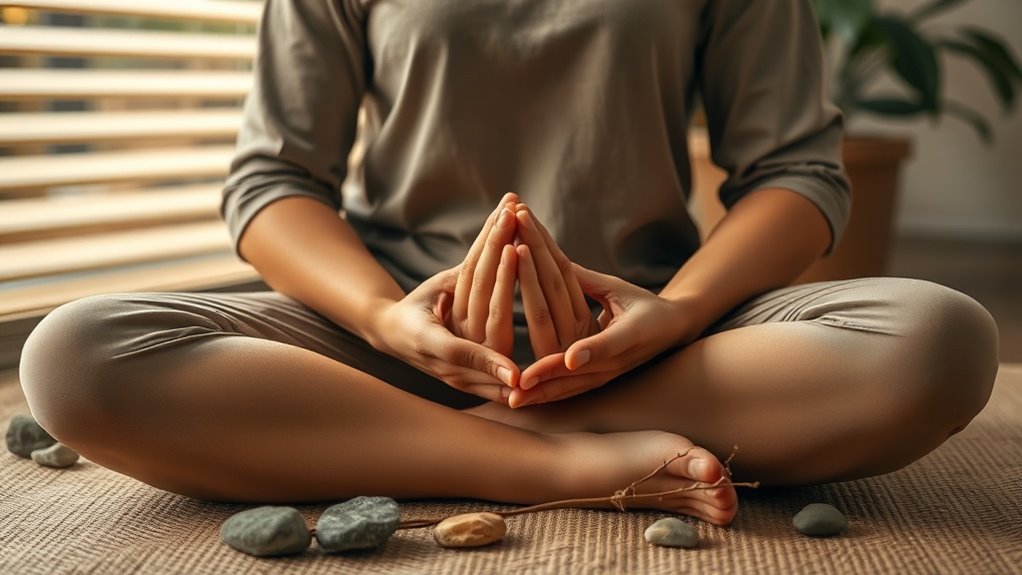
Engaging in simple physical movements can help you reconnect with your body and ease anxiety. These grounding techniques involve gentle physical actions that promote body awareness and reduce tension. For example, stretching or practicing yoga poses like Child’s pose can deepen relaxation and foster mindfulness. Incorporating muscle exercises, such as clenching and relaxing fists or lifting knees, helps release physical tension linked to anxious feelings. Paying attention to tactile sensations—feeling textures or pressing into a stable surface—anchors your awareness in the present moment. Body-based techniques like lying with legs up the wall or doing neck circles encourage relaxation and bring your focus back to your body. These simple movements and tactile cues serve as effective tools to shift attention away from racing thoughts, helping you feel more centered and calm. By integrating physical actions into your grounding routine, you can cultivate a greater sense of body awareness and emotional regulation.
Using Your Senses to Anchor Yourself in the Present
Focusing on your senses can be a powerful way to bring yourself back to the present when anxiety feels overwhelming. Sensory grounding helps anchor you by engaging your sensory awareness, shifting focus away from distressing thoughts. Start by identifying five things you see, touch, hear, smell, and taste in your environment. Noticing textures, like holding a textured object, quickly redirects your attention, promoting relaxation. Listening for specific sounds, like birds or traffic, connects you to your surroundings, fostering mindfulness. Smelling familiar scents, such as lavender or coffee, activates your olfactory system for calmness. Paying attention to sensations like water contact, like dipping toes in a pool, enhances physical awareness and calms the nervous system. These simple techniques encourage mindfulness and relaxation, helping you find relief from anxiety and stay grounded in the present moment. Sensory grounding is a quick, effective tool for easing distress and cultivating calm.
Breathing Exercises for Immediate Stress Relief
Breathing exercises like the 4-7-8 technique and box breathing can quickly calm your mind by activating your body’s relaxation response. Focusing fully on each inhale and exhale helps shift your attention away from anxious thoughts, lowering stress hormones. Practicing these patterns regularly strengthens your ability to find calm in moments of immediate stress.
Deep Breathing Patterns
When anxiety strikes, deep breathing exercises can provide quick relief by activating your body’s relaxation response. These breathing patterns, like the 4-7-8 method or box breathing, help regulate your nervous system and calm your stress response. By focusing on inhale and exhale, you increase oxygen flow, slow your heart rate, and lower cortisol levels, promoting a sense of calm. Practicing slow, intentional breaths also enhances mindfulness, anchoring you in the present moment. Visualize it like this:
- Inhale slowly, filling your lungs with oxygen
- Hold briefly, feeling your body settle
- Exhale fully, releasing tension
- Repeat, embracing the calm your breath creates
These simple breathing techniques can be a powerful tool to manage anxiety and restore emotional balance.
Focused Breath Awareness
During moments of acute stress or anxiety, practicing focused breath awareness can provide immediate relief by grounding your mind and calming your nervous system. By paying close attention to each inhale and exhale, you activate the parasympathetic nervous system, encouraging relaxation and calm. Techniques like deep breathing or the 4-7-8 method help reduce stress hormones, lowering heart rate and blood pressure, which supports emotional regulation and anxiety reduction. Mindfulness of your breath can be practiced anywhere and often in just a few minutes, offering quick stress relief during panic or overwhelm. Regular focused breath awareness not only provides immediate calm but also strengthens your resilience to stress over time, leading to better sleep and improved overall emotional well-being.
Breath Counting Techniques
Focusing your attention through simple breath counting can be an effective way to calm your mind quickly. By gently inhaling for a count of four, then exhaling for the same duration, you create a rhythm that anchors you in the present moment. This breathing technique promotes relaxation and mindfulness, helping to reduce anxiety and stress. As you focus on each breath and count silently, your mind becomes grounded, slowing racing thoughts and calming your heart rate. Regular practice enhances your ability to access a sense of calm in moments of distress, providing immediate relief. Imagine:
- Feeling the cool air fill your lungs
- Hearing the steady rhythm of your breath
- Sensing the rise and fall of your chest
- Experiencing a peaceful, centered state
This simple grounding technique can transform your stress response.
Incorporating Grounding Practices Into Daily Life
Incorporating grounding practices into your daily routine can be a simple yet effective way to manage anxiety throughout the day. By consistently practicing grounding techniques, you strengthen your coping strategies and build resilience. Start with brief moments of sensory awareness—like deep breathing or noticing textures—during routine activities such as commuting or waiting in line. Using the 5-4-3-2-1 method helps you stay present and focused, reducing stress. Creating a grounding kit with textured stones, scented oils, or calming images allows quick access during stressful moments, fostering a physical connection to the present. Incorporate movement-based grounding, like stretching or walking barefoot in nature, to deepen your physical connection and promote mindfulness. Even on calm days, practicing these techniques helps reinforce familiarity, making it easier to employ them when anxiety spikes. Regular integration of grounding exercises into your daily life enhances your overall resilience and sense of calm.
Common Questions
What Is the 5 Things Grounding for Anxiety?
The 5 things grounding for anxiety involves engaging your sensory awareness to stay present. Focus on five things you see, like calming scents or grounding objects, four you touch, such as muscle relaxation or a body scan, three you hear, like soothing sounds, two you smell, perhaps during a nature walk, and one you taste. Incorporating mindful breathing and visual focus helps calm your mind and reduce anxiety effectively.
What Is the Grounding Trick for Anxiety?
The grounding trick for anxiety is like anchoring yourself in calm amidst a storm. You can do this with mindful breathing, focusing on sensory awareness, and visualizing a peaceful place. Use grounding objects, rhythmic counting, and body scans to shift your focused attention. Deep inhalation combined with positive affirmations and calming visualization helps activate your relaxation response, making you feel safe, centered, and in control during anxious moments.
What Is the 3 3 3 Rule for Anxiety?
The 3-3-3 rule for anxiety is a grounding technique that enhances sensory awareness to promote emotional regulation. You identify three objects you see, three sounds you hear, and three sensations you feel, helping you stay present. Combining this with mindful breathing or a calming visualization can improve stress management and serve as a useful coping strategy. Regular practice strengthens your self-care routines and supports meditation techniques for ongoing anxiety relief.
What Is the 5 5 5 Rule for Anxiety?
The 5-5-5 rule for anxiety guides you to identify five things you see, hear, and feel, promoting sensory awareness and mindfulness. Incorporate mindful breathing, a quick body scan, or calming visuals while acknowledging your emotions. Focused listening and positive affirmations can help release tension and stay present. This simple technique reduces anxiety by grounding you in the moment, fostering emotional acknowledgment and a sense of control.
Summary
Remember, grounding techniques are like anchors in a storm—they steady you amidst chaos. When anxiety rises, use simple actions to reconnect with the present, grounding your mind and body. Each moment you practice, you’re planting seeds of calm that grow stronger over time. Trust in this process; just as a lighthouse guides ships safely home, grounding guides you back to peace. You’re not alone—peace is within your reach, one gentle step at a time.