
Gentle movement can markedly ease mental fatigue by increasing blood flow to your brain, boosting mood-regulating chemicals like serotonin, and activating your body’s relaxation response. Practices such as stretching, slow yoga, or mindful breathing help lower stress hormones like cortisol, promoting calmness and mental clarity. Regular, brief movement breaks can improve focus, reduce exhaustion, and support emotional balance. Keep exploring these gentle techniques to discover even more ways they can refresh your mind and boost resilience.
Key Takeaways
- Gentle movement increases blood flow to the brain, enhancing mental clarity and reducing fatigue.
- Slow, mindful actions activate relaxation responses, lowering stress hormones like cortisol.
- Movement paired with deep breathing boosts mood, supports emotional resilience, and alleviates mental exhaustion.
- Short movement breaks improve focus, sharpen attention, and prevent mental cloudiness throughout the day.
- Regular gentle activities promote better sleep quality and sustained mental energy, combating fatigue long-term.
The Connection Between Movement and Mental Clarity
When you engage in gentle movement, it can considerably clear your mind and sharpen your focus. This type of activity increases blood flow to your brain, which supports enhanced mental clarity and alertness. Gentle movement also stimulates the release of neurochemicals like dopamine and serotonin, vital for mood regulation and cognitive function. Slow, deliberate actions activate the parasympathetic nervous system, fostering relaxation and reducing mental fatigue. Incorporating brief movement breaks throughout your day not only helps alleviate stress but also prevents mental cloudiness by lowering cortisol levels. These relaxation responses can improve your attention span and mental sharpness, making it easier to stay focused on tasks. Overall, gentle movement serves as a simple yet effective way to support your mental health, providing a foundation for clearer thinking and emotional balance. Regularly integrating these practices can help you maintain mental resilience amidst daily stressors.
How Gentle Exercises Help Reduce Stress and Anxiety
Gentle exercises like yoga and stretching activate your body’s relaxation response, helping to lower stress hormones and calm your mind. By practicing mindful movement and controlled breathing, you can regulate your heart rate and reduce feelings of anxiety. Incorporating these low-impact activities into your routine can also improve sleep quality, supporting overall mental resilience.
Mindful Movement Techniques
Engaging in mindful movement techniques such as slow yoga, tai chi, and qigong can be highly effective in reducing stress and anxiety. These gentle exercises activate your parasympathetic nervous system, encouraging relaxation and lowering stress hormones like cortisol. By focusing on deliberate, slow movements, you enhance body awareness, which helps disrupt negative thought patterns and fosters emotional resilience. Additionally, mindful movement stimulates the production of endorphins and serotonin, boosting your mood and mental clarity. Regular practice can also lower heart rate and blood pressure, contributing to a calmer mind. Incorporating these techniques into your routine supports relaxation, stress reduction, and mental well-being, making it easier to manage mental fatigue and stay centered throughout the day.
- Improve emotional resilience through focused attention and gentle exercises
- Increase mental clarity by calming the nervous system
- Support stress reduction via activation of the parasympathetic nervous system
Breathing and Relaxation
By incorporating breathing and relaxation techniques into your routine, you can effectively reduce stress and anxiety through simple yet powerful practices. Deep breathing activates your parasympathetic nervous system, encouraging relaxation and lowering stress hormones like cortisol. Engaging in mindful breathing or diaphragmatic breathing during gentle exercises helps improve oxygen flow, supporting mental clarity and emotional regulation. Controlled breathing, such as slow inhalations and exhalations, can lower your heart rate and blood pressure, easing feelings of anxiety. Just five to ten minutes of breathing exercises daily can interrupt negative thought cycles and foster a sense of calm. These practices not only promote relaxation but also enhance focus, helping you manage mental fatigue more effectively.
Simple Activities to Refresh Your Mind

When you’re feeling mentally exhausted, simple activities like walking, stretching, or seated yoga can make a noticeable difference. These gentle activities promote mindful movement, which increases blood flow to your brain, boosting mental clarity and reducing fatigue. Engaging in short, mindful movement breaks throughout the day can sharpen focus and decrease feelings of mental exhaustion. Simple movements such as deep breathing or slow arm circles activate relaxation responses, helping to refresh your mind quickly. Incorporating these gentle activities not only supports stress reduction but also elevates endorphin levels, improving your mood and energy. Regular practice of slow, mindful movements can lead to better sleep and sustained mental energy, making daily routines more manageable. By integrating these easy, intentional activities, you give your mind the necessary reset, fostering resilience against mental fatigue without overwhelming yourself.
The Role of Mindful Breathing in Movement Practices
Incorporating mindful breathing into movement practices can considerably enhance your awareness of the body and calm your mind. Deep breathing techniques activate the relaxation response, lowering stress hormones and supporting emotional balance. When synchronized with movement, this approach not only reduces mental fatigue but also boosts cognitive function and overall well-being.
Deep Breathing Techniques
Deep breathing plays a pivotal role in movement practices by activating the parasympathetic nervous system, which helps you relax and lower stress hormones like cortisol. When you focus on slow, mindful inhalations and exhalations, your heart rate and blood pressure decrease, promoting a sense of calm awareness. This not only enhances relaxation but also improves oxygen flow to the brain, boosting mental clarity and focus. Incorporating deep breathing into your movement routines can synchronize breath with motion, amplifying stress reduction. Regular practice fosters a state of calm and resilience, helping you manage anxiety and improve sleep quality.
- Experience how mindful breathing enhances your overall relaxation and mental clarity
- Discover the connection between breath, heart rate, and blood pressure
- Learn how deep breathing supports sustained calm awareness during movement
Enhancing Mind-Body Awareness
Bringing mindful breathing into your movement routines can considerably enhance your awareness of how your body responds in the present moment. When you focus on mindful breathing during gentle movement, you deepen your body awareness and cultivate relaxation. Paying attention to breath patterns helps anchor your attention, grounding you in the present-moment experience. This heightened mind-body awareness not only promotes physical calm but also supports emotional regulation, reducing mental fatigue. Research indicates that controlled breathing activates the parasympathetic nervous system, aiding recovery from stress. As you synchronize breath with movement, you create a mindful practice that fosters a sense of calm and clarity. Integrating mindful breathing into your routine offers a powerful way to reconnect with your body and soothe mental exhaustion.
Stress Reduction Benefits
Mindful breathing plays a essential role in movement practices like yoga and tai chi by actively promoting relaxation and reducing stress. When you focus on deep, deliberate breaths during gentle movement, it activates your parasympathetic nervous system, encouraging calmness. This calming effect helps slow your heart rate and improve oxygen flow to your brain, which can enhance mental clarity and reduce mental fatigue. Incorporating controlled breathing techniques into your routine also regulates cortisol levels, lowering stress and preventing burnout. Studies show that synchronized breath and movement decrease oxygen consumption and adrenaline, fostering a more relaxed mental state. By practicing mindful breathing, you create a mindful space that reduces rumination and supports overall stress reduction, making your movement practice both calming and restorative.
- Activates your parasympathetic nervous system for deeper relaxation
- Regulates cortisol, helping prevent burnout
- Enhances mental clarity through improved oxygen flow
Incorporating Movement Into Daily Routines for Mental Wellness
Integrating gentle movement into your daily routine can be a simple yet effective way to boost mental wellness. Just 5–10 minutes of gentle exercise, like walking or stretching, can markedly relieve fatigue and sharpen focus. Regular movement breaks during work or study sessions help reset your mind, preventing burnout and supporting emotional resilience. Practicing seated stretches or chair yoga during short breaks offers accessible options, especially if mobility is limited. Engaging in mindful movement, such as slow yoga or tai chi, enhances mental clarity and promotes stress reduction without demanding much time. Incorporating these habits into your daily routines encourages a sustainable approach to mental wellness, cultivating mindfulness and emotional balance over time. By making movement a consistent part of your day, you create a supportive environment for mental resilience, helping you manage fatigue and maintain clarity amidst life’s demands.
The Benefits of Chair Yoga and Light Stretching
Since many of us spend hours seated at desks or in front of screens, incorporating chair yoga and light stretching into your routine offers a practical way to combat muscle tension and mental fatigue. These gentle movements improve flexibility, boost circulation, and promote relaxation—all essential for mental clarity. Regularly engaging in chair yoga can help lower cortisol levels, reducing stress and enhancing overall well-being. Simple seated poses like twists and forward folds are easy to perform during work breaks, providing immediate relief from stiffness and mental fatigue. Light stretching targets common areas of tension, such as the neck, shoulders, and back, increasing comfort and focus. These practices are accessible for all fitness levels and adaptable to individual mobility needs, making them effective tools for mental health and physical resilience. Incorporating these gentle movements into your day can foster a calmer mind and a more comfortable body.
Combining Movement With Relaxation Techniques
Pairing gentle movement with relaxation techniques can substantially amplify their stress-reducing effects, helping you recover mental energy more effectively. When you combine slow, deliberate movements—like those in mindful yoga or moving meditation—with practices such as deep breathing or mindfulness, you activate your body’s relaxation response. This synergy can lower cortisol levels by up to 30%, easing mental fatigue and promoting a sense of calm. Movement and relaxation work together to regulate your nervous system, improving mental clarity and emotional balance. Techniques like chair yoga or gentle stretching facilitate tension release while enhancing focus. Regularly integrating these methods can also improve sleep quality and reduce symptoms of mental exhaustion. Ultimately, this holistic approach offers a practical way to combat mental fatigue, fostering resilience and restoring your capacity to handle daily stressors with greater ease.
Tips for Staying Consistent With Gentle Movement Practices
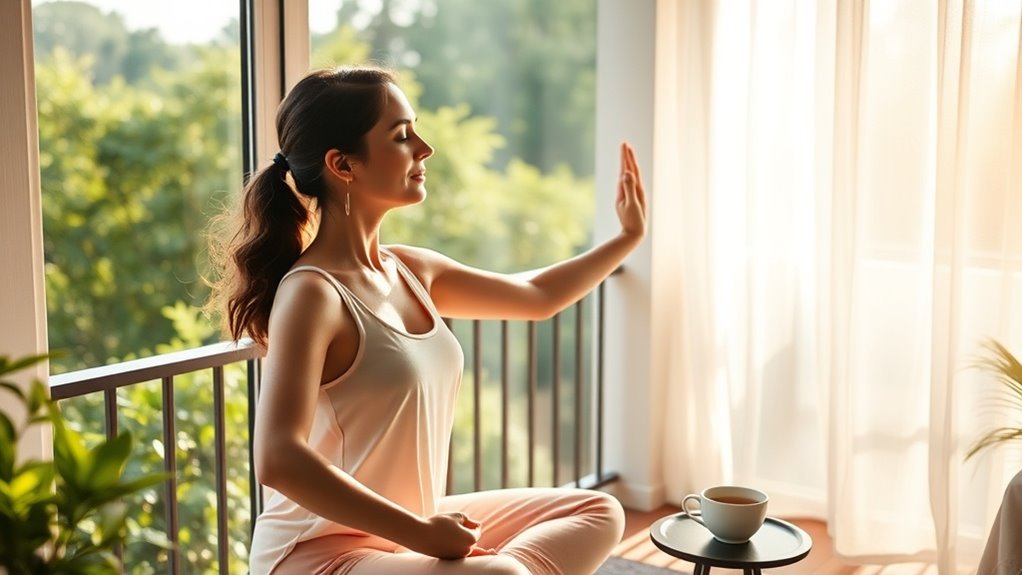
Maintaining consistency with gentle movement practices can be challenging, especially when you’re balancing a busy schedule or dealing with mental fatigue. To stay on track, focus on small, achievable goals like 5-minute walks or gentle stretches—these build habits without feeling overwhelming. Incorporate movement into daily routines, such as desk stretches or outdoor breaks, making it easier to integrate into your day. Use reminders or alarms to prompt regular sessions, ensuring you don’t forget. Tracking your progress with a journal or app can boost motivation and help you see your growth over time. Remember to be compassionate if you miss a session; gentle re-engagement is key.
- Set simple, consistent habits like short stretches or walks
- Use reminders to prompt regular movement
- Celebrate progress to stay motivated
Common Questions
How to Quickly Recover From Mental Fatigue?
To quickly recover from mental fatigue, try mindfulness exercises like deep breathing techniques and short stretching routines to boost circulation and relax your mind. Incorporate meditation practices for mental clarity, stay hydrated, and opt for energy-boosting snacks. Additionally, focus on ergonomic adjustments at your workspace and maintain good sleep hygiene. These evidence-based strategies help reset your mental energy, reduce stress, and improve focus efficiently.
Does the 7 Minute Chair Workout Really Work?
Yes, the 7-minute chair workout really works. It combines gentle exercises like seated stretches, posture correction, and mindful breathing to boost energy and reduce stress. Research shows these short routines enhance circulation and release endorphins, improving mood and mental alertness. Incorporating chair yoga and relaxation techniques into your day can effectively combat mental fatigue, making it a practical, evidence-based way to feel more energized and less stressed during busy schedules.
What Is the 555 Rule for Anxiety?
The 555 rule for anxiety is a simple mindfulness technique involving three rounds of deep, diaphragmatic breaths—inhale for five seconds, hold, then exhale for five seconds. This breathing exercise activates your relaxation response, aiding stress reduction and emotional regulation. It complements grounding strategies and visualization methods, making it an effective tool in meditation practices. Regular practice can help lower cortisol levels and improve overall mental clarity, especially during anxious moments.
What Are the Benefits of Gentle Movements?
Gentle movements can transform your mental state more than you’d believe. These mindfulness practices, like stretching routines and breathing exercises, help reduce stress and boost energy. They improve your posture, enhance focus, and promote relaxation techniques that fight mental fatigue. Regular activity increases blood flow to your brain, supporting cognitive function and emotional resilience—making you feel calmer, clearer, and more centered, even during the busiest, most overwhelming days.
Summary
By gently weaving movement into your day, you create a subtle sanctuary for your mind to breathe and reset. These small acts act as quiet anchors amidst life’s chaos, gently easing mental fatigue without overwhelming your senses. Research shows that mindful, light activity nurtures mental clarity and emotional resilience. Embrace these practices patiently—over time, they become your trusted companions, guiding you toward a calmer, more centered state where clarity and calm can quietly flourish.