
Natural environments calm your nervous system instantly by engaging your senses with sounds like flowing water or bird songs, which reduce stress and promote relaxation. Touching natural objects or walking barefoot activates calming pathways and boosts immune health. Expansive views and natural light help shift focus from worries, lowering cortisol and increasing mood. Aromas like pine or soil aromas trigger relaxation quickly. Incorporating these simple interactions can provide fast stress relief—find out more ways nature supports your well-being.
Key Takeaways
- Listening to natural sounds like water and bird songs reduces stress and shifts brain activity to relaxed states within minutes.
- Touching natural objects or walking barefoot activates calming sensory pathways and promotes emotional balance.
- Viewing expansive landscapes, night skies, or fractal patterns lowers stress by up to 60% and induces awe.
- Exposure to natural light and aromas like pine or soil triggers relaxation and boosts mood quickly.
- Engaging with water environments and natural scenery fosters mental restoration and strengthens emotional resilience.
The Immediate Effects of Natural Sounds on Stress Reduction
Natural sounds, such as bird songs and flowing water, can quickly reduce your perceived stress levels and promote mental restoration. Listening to natural soundscapes has been shown to directly influence brain activity, shifting it from high-alert beta waves to more relaxed alpha and theta states within minutes. This rapid change helps calm your nervous system, easing feelings of anxiety and paranoia. The acoustic qualities and aesthetic appeal of natural sounds are key factors in their effectiveness for stress reduction. Even brief exposure to these sounds can restore attention and promote emotional balance. Incorporating natural sounds into your daily routine offers an immediate, non-invasive method for managing stress. This simplicity makes natural soundscapes a powerful tool for mental restoration, helping you recover cognitive focus and emotional stability quickly. By engaging with these sounds regularly, you support your nervous system’s natural ability to relax and recover from stress.
How Touching Natural Objects Calms Your Nervous System
Touching natural objects like leaves or stones stimulates your skin with calming sensory input, activating your parasympathetic nervous system. This tactile interaction creates a grounding effect, shifting your body from stress to relaxation. As a result, your heart rate and cortisol levels decrease, promoting emotional and physical calm.
Sensory Calm Through Touch
When you make physical contact with natural objects like leaves, stones, or water, it can directly activate your parasympathetic nervous system, promoting relaxation. Engaging with natural textures through skin contact provides tactile engagement that fosters grounding and reduces stress. Touching soil, bark, or water introduces beneficial bacteria that support immune health and help calm the nervous system. Walking barefoot on natural surfaces, or earthing, enhances this effect by decreasing inflammation and balancing nervous activity. These sensory experiences deliver immediate input, shifting your nervous system from a state of high alert to one of calm. By consciously connecting through touch with nature, you harness the power of tactile grounding to promote stress reduction and overall relaxation.
Grounding With Natural Elements
Engaging with natural elements such as leaves, stones, or water can have a profound calming effect on your nervous system. This process, known as grounding, involves tactile engagement with natural objects to activate your parasympathetic nervous system, promoting relaxation and reducing stress. Touching or holding these objects provides sensory input that helps shift your brain waves from high-alert beta to relaxed alpha and theta states. Walking barefoot on grass or soil enhances this effect, exposing you to beneficial bacteria and phytoncides that support emotional well-being. Incorporating these simple natural interactions into your routine offers an accessible way to instantly calm your nervous system and foster stress reduction.
- Activates parasympathetic nervous system
- Promotes relaxation through tactile engagement
- Supports immune and emotional health
- Facilitates stress reduction through grounding
Nervous System Regulation
Because natural objects like leaves, stones, and water provide immediate sensory input, they can directly activate your parasympathetic nervous system, which promotes relaxation. Tactile grounding with these objects offers sensory input that helps regulate your nervous system, reducing stress rapidly. When you hold or feel water, soil, or plant surfaces, it creates a soothing effect, calming hyperactive nerves and easing anxiety. This physical contact with nature’s textures shifts your nervous system from a state of stress to one of calm, supporting nervous system regulation. Natural tactile experiences are simple, accessible tools for self-regulation, enabling you to manage stress effectively through direct, calming sensory input. Engaging with natural objects fosters relaxation and enhances your body’s ability to recover from stress quickly.
The Power of Visual Perspectives and Expansive Views
Viewing distant horizons and expansive landscapes can help you relax by shifting your focus from immediate worries to a broader perspective. Wide views, like open skies or mountain ranges, often evoke awe, fostering feelings of connectedness and calm. Incorporating large windows or uncluttered scenery in your space enhances mental clarity and reduces stress levels.
Distant Horizons Foster Calm
Distant horizons, such as expansive skies or mountain ranges, have a unique ability to shift your focus from daily stressors to a broader perspective, which can markedly reduce mental tension. Natural views with wide-open spaces promote a calming effect by encouraging feelings of awe and connectedness, fostering relaxation. These visual perspectives help ease anxiety by creating a sense of openness that enhances mental clarity. Night skies and distant landscapes evoke awe, activating the parasympathetic nervous system and promoting calmness. Creating visual spaciousness through large windows or outdoor vistas can considerably lower cortisol levels and boost emotional well-being.
- Broader perspective reduces mental tension
- Awe stimulates the relaxation response
- Spacious views promote mental clarity
- Connection with nature fosters calmness
Spacious Views Reduce Stress
Spacious views in natural environments can considerably reduce stress by shifting your focus from daily worries to a broader perspective. Viewing expansive scenic landscapes, like distant mountains or open skies, enhances visual perspectives that promote mental relaxation. These natural views activate calming effects, lowering cortisol levels and decreasing mental fatigue by up to 60%. Night skies and distant horizons evoke awe, stimulating the parasympathetic nervous system and calming your nervous system. Even indoors, arranging furniture to maximize views of natural landscapes can foster feelings of calm and reduce stress. By creating spacious visual perspectives, you connect with nature’s vastness, diminishing feelings of overwhelm and supporting mental clarity.
| Natural Views | Stress Reduction |
|---|---|
| Scenic landscapes | Calming effects |
| Night skies | Mental relaxation |
| Expansive horizons | Connection & calm |
Awe-Inspiring Perspectives Shift Focus
Natural scenes that evoke awe can profoundly shift your focus from stress to a sense of wonder and connection. Viewing expansive natural scenes, like distant horizons or starry skies, activates brain regions linked to humility and perspective, helping to reduce anxiety. These awe-inspiring views promote stress reduction by calming the nervous system and fostering emotional resilience. By embracing the vastness of natural scenes, you experience a “small self” perspective, decreasing perceived threats. This shift enhances mental clarity and well-being, making it easier to progress from high alert to relaxed states. Incorporating expansive views into your environment can be a simple yet powerful way to regulate your nervous system and cultivate a sense of calm.
- Activation of brain regions associated with humility
- Decrease in perceived threats through a “small self” experience
- Regulation of the nervous system for relaxation
- Enhancement of emotional resilience
The Role of Water and Water-Related Environments in Relaxation
Water environments like rivers, lakes, and streams play a significant role in promoting relaxation and emotional well-being. Being near water can induce a state of calmness, supporting mental well-being by reducing stress and anxiety. Watching flowing water creates a semi-meditative state called “drifting,” which captures your attention gently and diminishes mental fatigue. Even brief exposure, such as listening to water sounds, can shift brainwaves from high alert beta to relaxed alpha and theta states, fostering mental clarity. The “Blue Mind” concept explains how proximity to water enhances happiness, lowers stress levels, and encourages social connection. Engaging with water through observation or sound activates calming responses and strengthens emotional resilience. These water-related experiences help you reconnect with nature, providing instant relief from mental overload. Ultimately, water environments serve as accessible, powerful tools for calming your nervous system and supporting overall well-being.
The Significance of Nature’s Fractal Patterns for Nervous System Regulation
Because our nervous system is inherently complex, it often mirrors the fractal patterns found in nature, such as those in trees, leaves, and river networks. These natural fractals resemble the intricate structures of neural and vascular systems, highlighting the interconnectedness within biological systems. Viewing or engaging with fractal patterns can considerably enhance nervous system regulation by providing a calming visual stimulus. This exposure promotes stress reduction by engaging the nervous system in a gentle, repetitive manner, helping to shift focus away from stressors. Creating or observing natural fractals evokes feelings of awe and harmony, fostering mental clarity and relaxation. As a result, natural fractals serve as powerful tools for calming your nervous system and promoting overall well-being. Incorporating fractal patterns into your environment or routine can be a simple yet effective way to support nervous system regulation and reduce mental fatigue.
- Mimicry of neural structures in natural fractals
- Stress reduction through visual stimulus
- Engagement of nervous system in gentle patterns
- Evoking interconnectedness and harmony
How Sunlight and Natural Light Influence Mental Calmness
Exposure to natural light plays a crucial role in calming your mental state by regulating your body’s internal clock, known as circadian rhythms. This regulation improves sleep quality and reduces stress levels, contributing to overall mental health. Natural light increases serotonin production in your brain, which boosts mood and fosters feelings of calmness. When you spend time outdoors during daylight hours, your body also triggers the release of endorphins, enhancing emotional well-being and relaxation. Outdoor exposure to sunlight helps decrease cortisol levels, an essential factor in instantly calming your nervous system. Bright, natural lighting environments have been shown to reduce symptoms of anxiety and improve mental clarity. By incorporating regular outdoor exposure and maximizing natural light in your daily routine, you support a more balanced, calm, and resilient nervous system. This simple yet effective approach leverages nature’s power to promote immediate and lasting mental calmness.
The Impact of Nature’s Aromas and Scents on Emotional Balance
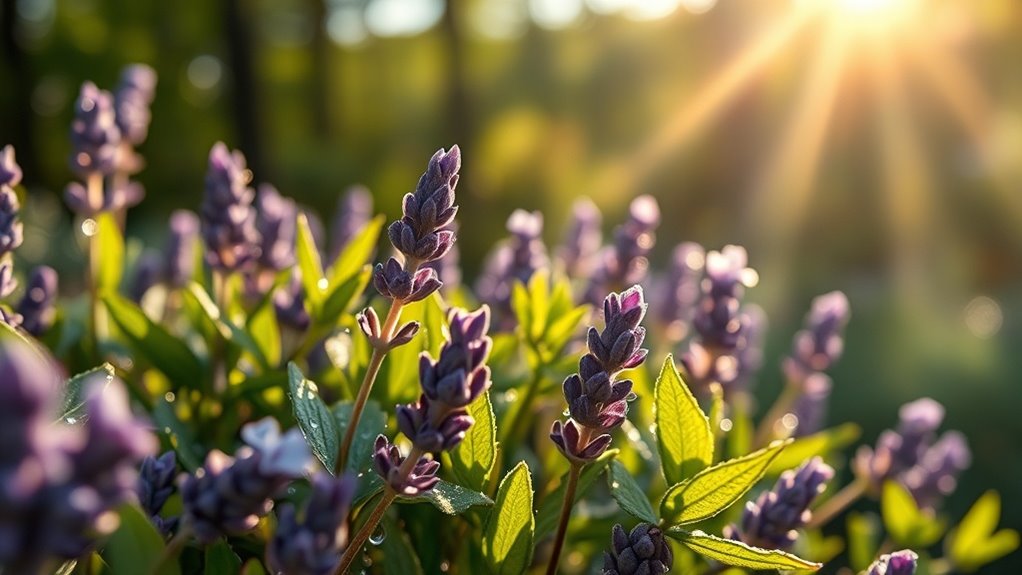
Natural aromas and scents from trees, soil, and plants can markedly influence your emotional balance by triggering relaxation responses. When inhaled, organic compounds called phytoncides pass into your bloodstream, promoting calming effects. For example, the pine scent can induce a sense of calmness within just 90 seconds, with effects lasting around 10 minutes. Even infants, with no prior associations, can be soothed by natural aromas like pine or soil scents. Aromas associated with calming substances, such as limonene, can influence emotional responses, helping to reduce stress. Using essential oils or diffusers infused with natural scents enhances emotional balance and alleviates anxiety effectively. These calming aromas work by engaging your olfactory system, which directly impacts your nervous system, fostering immediate relaxation. Incorporating these scents into your environment can provide a simple, natural way to promote emotional stability and reduce nervous tension.
Incorporating Nature-Based Activities for Quick Nervous System Relief
Engaging in activities that connect you with nature can provide quick relief for your nervous system. Immersing yourself in water-related environments, like sitting near lakes or watching flowing streams, promotes relaxation through a meditative state that captures your attention gently. Listening to natural sounds such as bird songs or water streams can markedly reduce perceived stress and mental fatigue within minutes. Touching natural objects, like holding leaves or walking barefoot on natural surfaces, activates sensory pathways that soothe the nervous system. Observing natural visual patterns, such as fractal designs in trees or water, can lower stress levels by up to 60%. Additionally, incorporating natural scents like pine or soil into your environment triggers immediate calming responses within 90 seconds of inhalation. These activities leverage nature’s inherent calming properties, providing a quick and effective way to calm your nervous system and restore relaxation in any setting.
Common Questions
How Nature Calms the Nervous System?
Nature calms your nervous system through forest therapy and outdoor meditation, which promote relaxation by reducing stress hormones. Natural sounds like bird songs and flowing water activate your parasympathetic nervous system, while sensory engagement with green spaces and wildlife encounters lowers blood pressure and heart rate. Even brief exposure to these elements enhances alpha and theta brain waves, instantly shifting you from stress to calm, helping you feel more relaxed and centered.
How to Immediately Calm the Nervous System?
To immediately calm your nervous system, try mindful breathing by taking slow, deep breaths, focusing on each inhale and exhale. Incorporate grounding exercises like touching natural objects or standing barefoot to enhance sensory awareness. Practice gentle stretching to release tension. Surround yourself with calming visuals like nature scenes and listen to relaxing sounds like water or bird calls. These combined actions can quickly shift your brain into a more relaxed state.
What Is the 20 Minute Park Effect?
The 20-minute park effect reduces urban stress, boosts mental clarity, and promotes relaxation through sensory immersion in green spaces. During this time, natural sounds and wildlife encounters help calm your nervous system, acting as outdoor therapy. This brief exposure activates your parasympathetic nervous system, lowering cortisol levels and heart rate, making it an accessible, effective way to instantly improve your mood and well-being with just a short walk or time in nature.
What Are the Symptoms of an Overstimulated Nervous System?
When your nervous system is overstimulated, you might notice symptoms like rapid heartbeat, shallow breathing, muscle tension, and feeling “on edge.” To manage these, practice mindful breathing, sensory grounding, or visualization techniques. Engaging in progressive relaxation or therapeutic touch can also help ease stress. Being aware of these signs allows you to activate calming methods, reducing symptoms like irritability, difficulty sleeping, and a heightened startle response.
Summary
You might worry that connecting with nature takes time or requires special settings, but even brief moments matter. Whether you listen to natural sounds, touch a leaf, or look at a calming view, these simple actions can quickly soothe your nervous system. Incorporating small, natural interactions into your day is accessible and effective. Don’t let perceived obstacles prevent you—nature’s calming power is always within reach, ready to help you find instant relief.